7Z5I image
Deposition Date 2022-03-09
Release Date 2023-03-22
Last Version Date 2025-01-15
Entry Detail
PDB ID:
7Z5I
Keywords:
Title:
Transcription factor MYF5 bound to symmetrical site
Biological Source:
Source Organism:
Homo sapiens (Taxon ID: 9606)
Method Details:
Experimental Method:
Resolution:
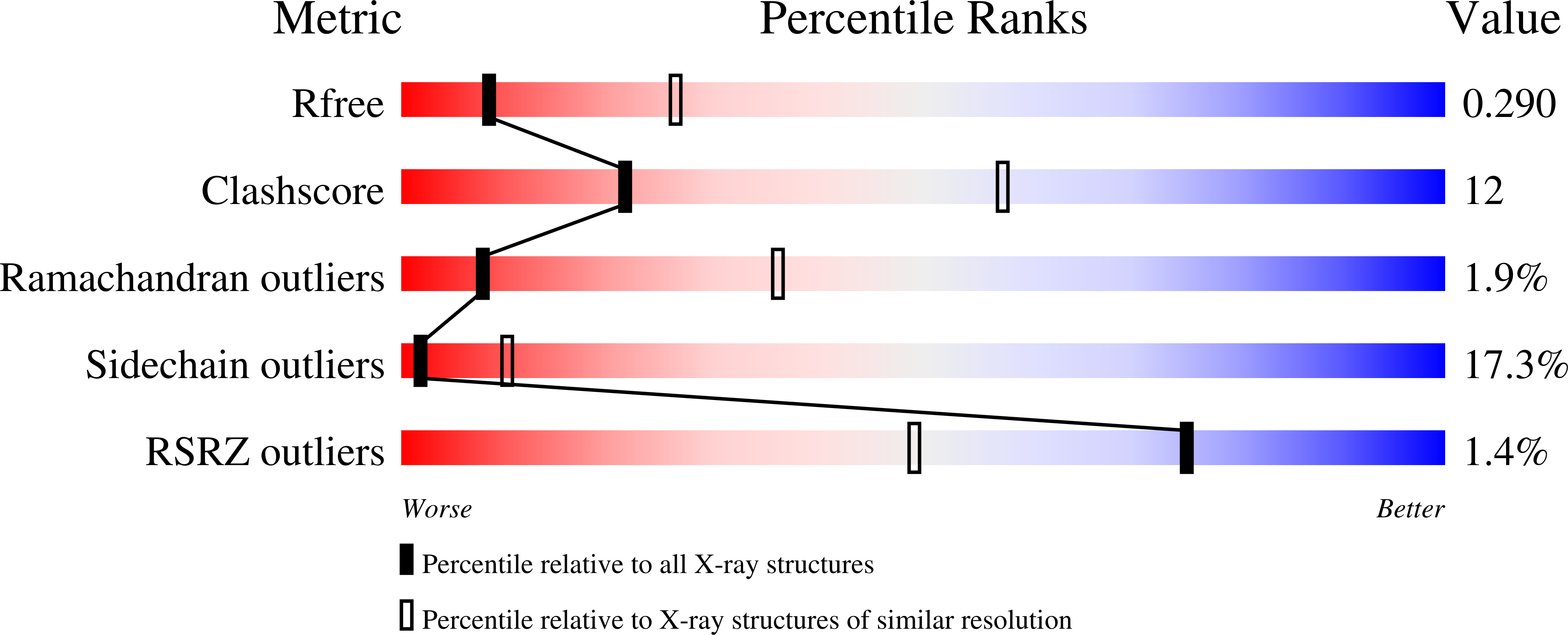
3.00 Å
R-Value Free:
0.28
R-Value Work:
0.22
R-Value Observed:
0.23
Space Group:
C 1 2 1
Macromolecular Entities
Structures with similar UniProt ID
Protein Blast
Polymer Type:polypeptide(L)
Molecule:Myogenic factor 5
Gene (Uniprot):MYF5
Chain IDs:A, B
Chain Length:56
Number of Molecules:2
Biological Source:Homo sapiens
Polymer Type:polydeoxyribonucleotide
Molecule:DNA (5'-D(P*GP*CP*GP*CP*GP*TP*CP*AP*GP*CP*TP*GP*AP*CP*GP*CP*GP*T)-3')
Chain IDs:C (auth: E)
Chain Length:18
Number of Molecules:1
Biological Source:Homo sapiens
Polymer Type:polydeoxyribonucleotide
Molecule:DNA (5'-D(P*AP*CP*GP*CP*GP*TP*CP*AP*GP*CP*TP*GP*AP*CP*GP*CP*GP*C)-3')
Chain IDs:D (auth: F)
Chain Length:18
Number of Molecules:1
Biological Source:Homo sapiens
Primary Citation
Interfacial water confers transcription factors with dinucleotide specificity.
Nat.Struct.Mol.Biol. ? ? ? (2025)
PMID: 39753777 DOI: 10.1038/s41594-024-01449-6

Abstact

Transcription factors (TFs) recognize specific bases within their DNA-binding motifs, with each base contributing nearly independently to total binding energy. However, the energetic contributions of particular dinucleotides can deviate strongly from the additive approximation, indicating that some TFs can specifically recognize DNA dinucleotides. Here we solved high-resolution (<1 Å) structures of MYF5 and BARHL2 bound to DNAs containing sets of dinucleotides that have different affinities to the proteins. The dinucleotides were recognized either enthalpically, by an extensive water network that connects the adjacent bases to the TF, or entropically, by a hydrophobic patch that maintained interfacial water mobility. This mechanism confers differential temperature sensitivity to the optimal sites, with implications for thermal regulation of gene expression. Our results uncover the enigma of how TFs can recognize more complex local features than mononucleotides and demonstrate that water-mediated recognition is important for predicting affinities of macromolecules from their sequence.

Legend

Protein

Chemical

Disease

Primary Citation of related structures
Feedback Form
Name
Email
Institute
Feedback