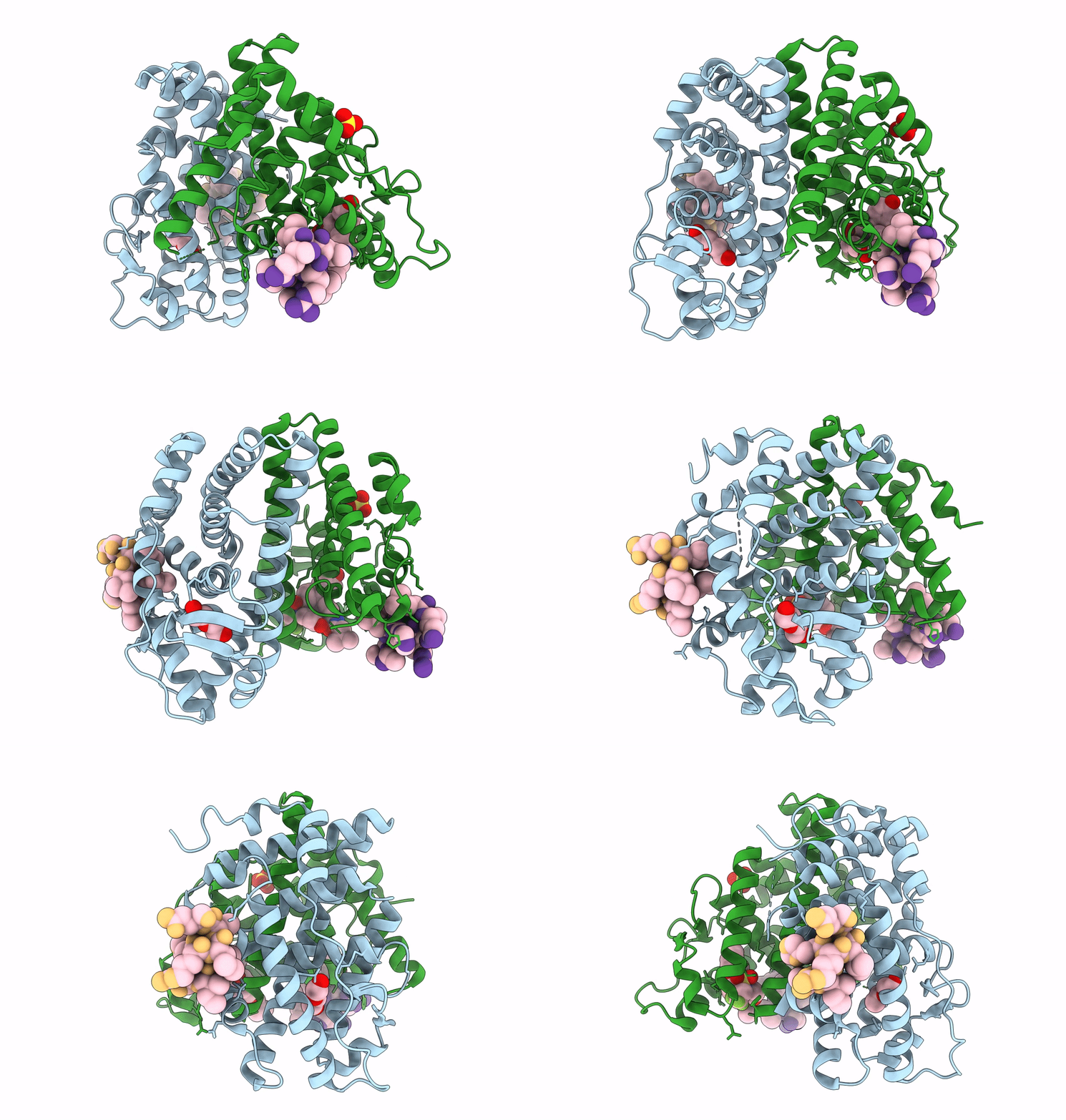
7YMK image
Deposition Date 2022-07-28
Release Date 2023-05-31
Last Version Date 2023-12-20
Entry Detail
PDB ID:
7YMK
Title:
Estrogen Receptor Alpha Ligand Binding Domain C381S C417S Y537S Mutant in Complex with an Covalent Selective Estrogen Receptor Degrader 29c and GRIP Peptide
Biological Source:
Source Organism:
Homo sapiens (Taxon ID: 9606)
Method Details:
Experimental Method:
Resolution:
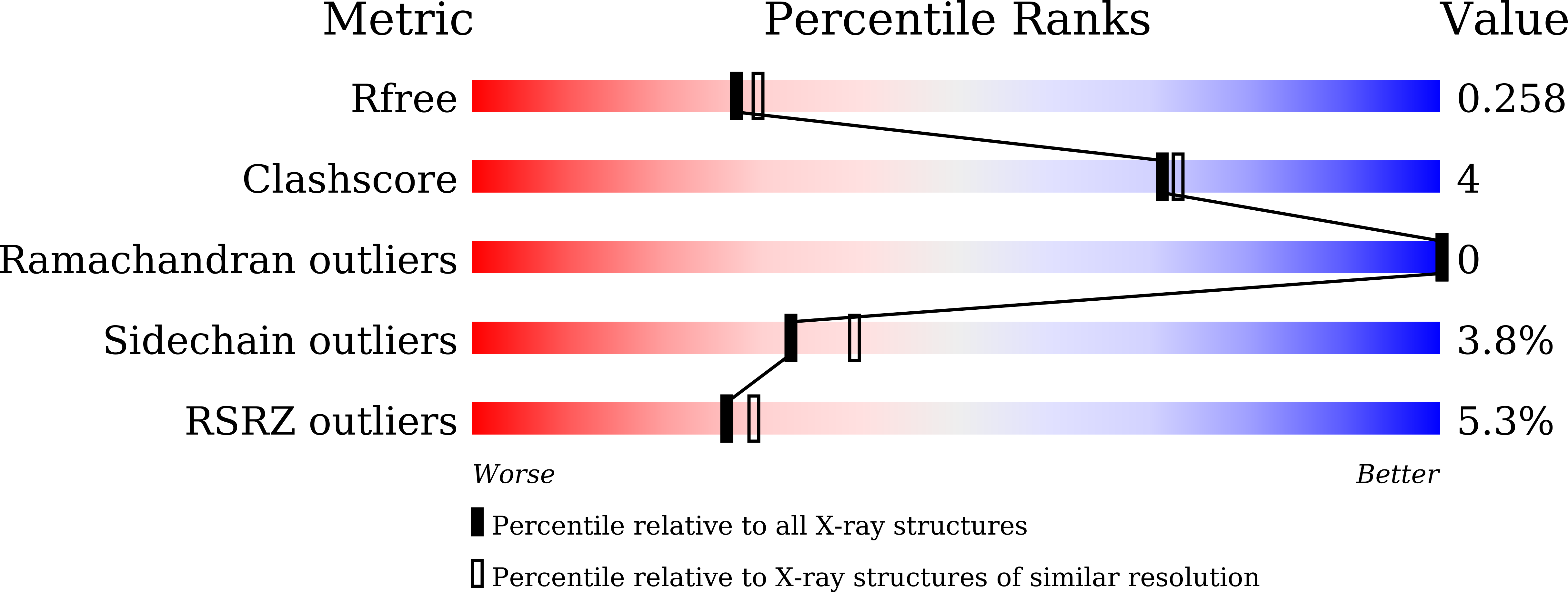
2.25 Å
R-Value Free:
0.25
R-Value Work:
0.19
R-Value Observed:
0.19
Space Group:
C 2 2 21
Macromolecular Entities
Structures with similar UniProt ID
Protein Blast
Polymer Type:polypeptide(L)
Molecule:Estrogen receptor
Gene (Uniprot):ESR1
Mutagens:C381S,C417S,Y531S
Chain IDs:A, C (auth: B)
Chain Length:260
Number of Molecules:2
Biological Source:Homo sapiens
Structures with similar UniProt ID
Protein Blast
Polymer Type:polypeptide(L)
Molecule:Grip peptide
Chain IDs:B (auth: C), D
Chain Length:8
Number of Molecules:2
Biological Source:Homo sapiens
Primary Citation
Discovery of novel covalent selective estrogen receptor degraders against endocrine-resistant breast cancer.
Acta Pharm Sin B 13 4963 4982 (2023)
PMID: 38045063 DOI: 10.1016/j.apsb.2023.05.005

Abstact

Endocrine-resistance remains a major challenge in estrogen receptor α positive (ERα+) breast cancer (BC) treatment and constitutively active somatic mutations in ERα are a common mechanism. There is an urgent need to develop novel drugs with new mode of mechanism to fight endocrine-resistance. Given aberrant ERα activity, we herein report the identification of novel covalent selective estrogen receptor degraders (cSERDs) possessing the advantages of both covalent and degradation strategies. A highly potent cSERD 29c was identified with superior anti-proliferative activity than fulvestrant against a panel of ERα+ breast cancer cell lines including mutant ERα. Crystal structure of ERα‒29c complex alongside intact mass spectrometry revealed that 29c disrupted ERα protein homeostasis through covalent targeting C530 and strong hydrophobic interaction collied on H11, thus enforcing a unique antagonist conformation and driving the ERα degradation. These significant effects of the cSERD on ERα homeostasis, unlike typical ERα degraders that occur directly via long side chains perturbing the morphology of H12, demonstrating a distinct mechanism of action (MoA). In vivo, 29c showed potent antitumor activity in MCF-7 tumor xenograft models and low toxicity. This proof-of-principle study verifies that novel cSERDs offering new opportunities for the development of innovative therapies for endocrine-resistant BC.

Legend

Protein

Chemical

Disease

Primary Citation of related structures
Feedback Form
Name
Email
Institute
Feedback