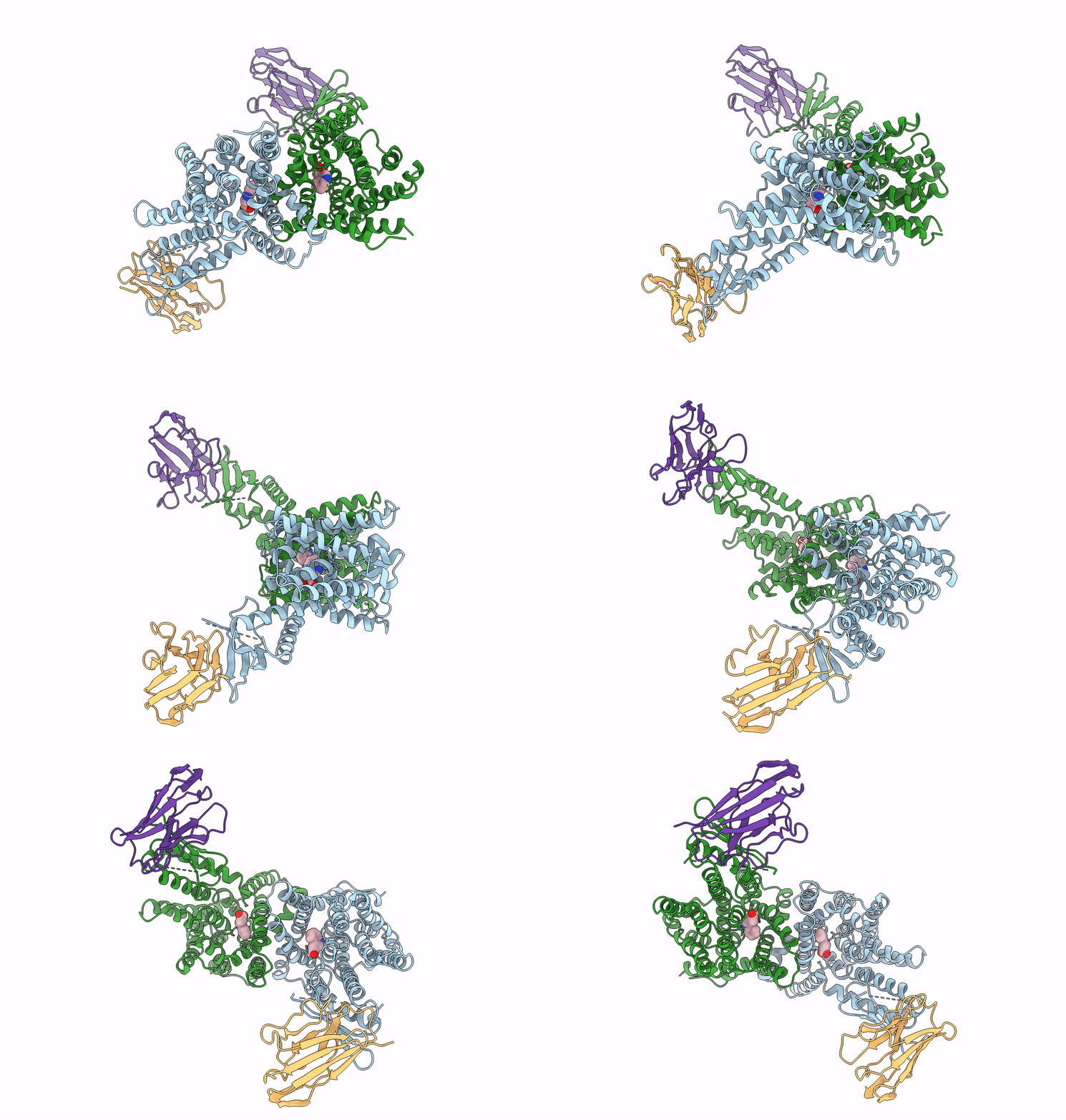
7Y9V image
Deposition Date 2022-06-26
Release Date 2022-09-07
Last Version Date 2024-11-13
Entry Detail
PDB ID:
7Y9V
Title:
Structure of the auxin exporter PIN1 in Arabidopsis thaliana in the IAA-bound state
Biological Source:
Source Organism:
Host Organism:
Method Details:
Experimental Method:
Resolution:
3.20 Å
Aggregation State:
PARTICLE
Reconstruction Method:
SINGLE PARTICLE
Macromolecular Entities
Structures with similar UniProt ID
Protein Blast
Polymer Type:polypeptide(L)
Molecule:Auxin efflux carrier component 1
Gene (Uniprot):PIN1
Chain IDs:A, D (auth: B)
Chain Length:622
Number of Molecules:2
Biological Source:Arabidopsis thaliana
Polymer Type:polypeptide(L)
Molecule:nanobody
Chain IDs:B (auth: C), C (auth: D)
Chain Length:123
Number of Molecules:2
Biological Source:Escherichia coli
Ligand Molecules
Primary Citation
Structural insights into auxin recognition and efflux by Arabidopsis PIN1.
Nature 609 611 615 (2022)
PMID: 35917925 DOI: 10.1038/s41586-022-05143-9

Abstact

Polar auxin transport is unique to plants and coordinates their growth and development1,2. The PIN-FORMED (PIN) auxin transporters exhibit highly asymmetrical localizations at the plasma membrane and drive polar auxin transport3,4; however, their structures and transport mechanisms remain largely unknown. Here, we report three inward-facing conformation structures of Arabidopsis thaliana PIN1: the apo state, bound to the natural auxin indole-3-acetic acid (IAA), and in complex with the polar auxin transport inhibitor N-1-naphthylphthalamic acid (NPA). The transmembrane domain of PIN1 shares a conserved NhaA fold5. In the substrate-bound structure, IAA is coordinated by both hydrophobic stacking and hydrogen bonding. NPA competes with IAA for the same site at the intracellular pocket, but with a much higher affinity. These findings inform our understanding of the substrate recognition and transport mechanisms of PINs and set up a framework for future research on directional auxin transport, one of the most crucial processes underlying plant development.

Legend

Protein

Chemical

Disease

Primary Citation of related structures
Feedback Form
Name
Email
Institute
Feedback