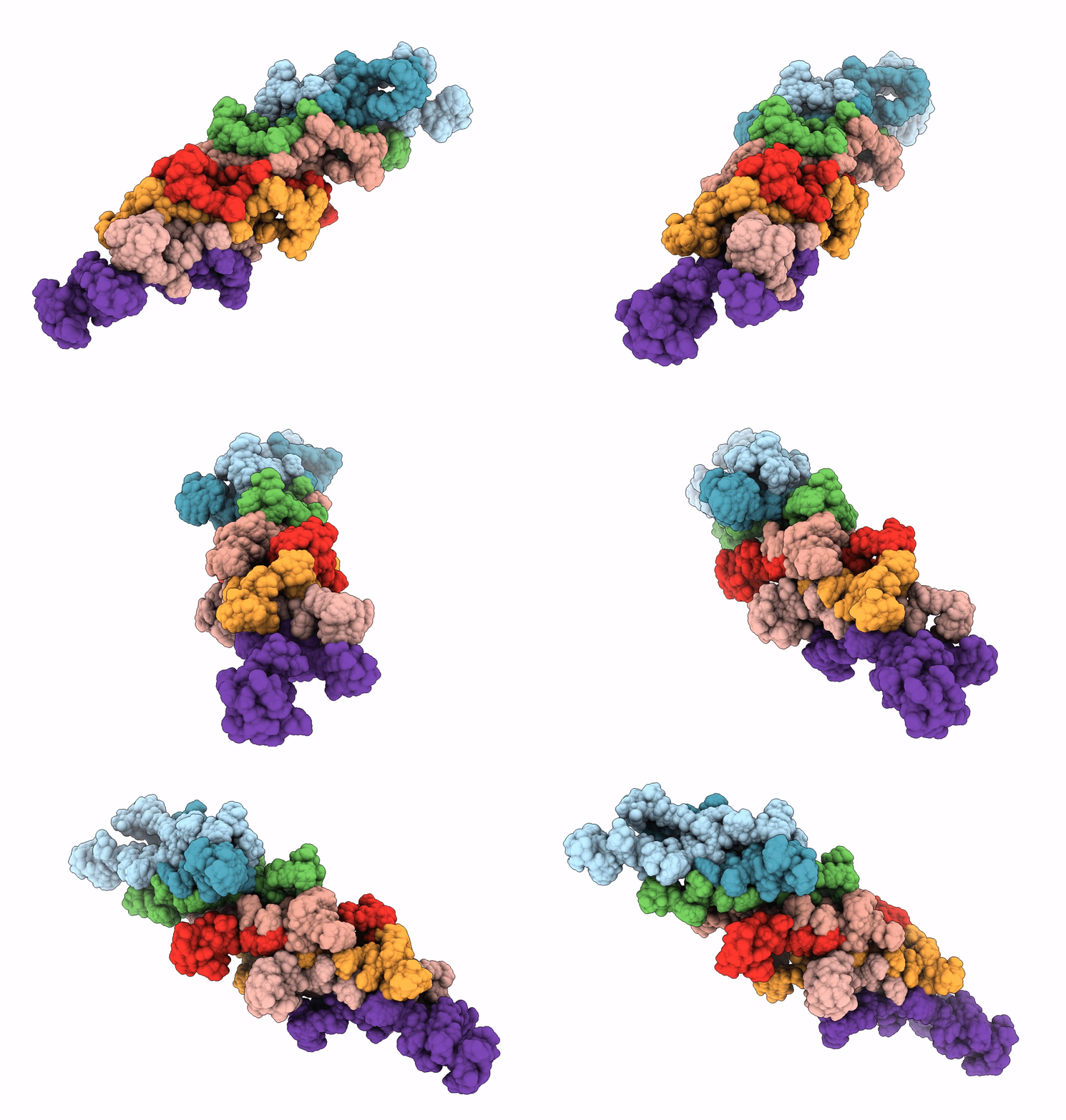
7Y8Q image
Deposition Date 2022-06-24
Release Date 2023-07-05
Last Version Date 2024-05-15
Entry Detail
PDB ID:
7Y8Q
Keywords:
Title:
Amyloid-beta assemblage on GM1-containing membranes
Biological Source:
Source Organism:
Homo sapiens (Taxon ID: 9606)
Host Organism:
Method Details:
Experimental Method:
Conformers Calculated:
10
Conformers Submitted:
10
Selection Criteria:
structures with the lowest energy

Macromolecular Entities
Structures with similar UniProt ID
Protein Blast
Polymer Type:polypeptide(L)
Molecule:Amyloid-beta protein 40
Gene (Uniprot):APP
Chain IDs:A, B, C, D, E, F, G, H
Chain Length:40
Number of Molecules:8
Biological Source:Homo sapiens
Ligand Molecules
Primary Citation
The Double-Layered Structure of Amyloid-beta Assemblage on GM1-Containing Membranes Catalytically Promotes Fibrillization.
Acs Chem Neurosci 14 2648 2657 (2023)
PMID: 37482658 DOI: 10.1021/acschemneuro.3c00192

Abstact

Alzheimer's disease (AD) is associated with progressive accumulation of amyloid-β (Aβ) cross-β fibrils in the brain. Aβ species tightly associated with GM1 ganglioside, a glycosphingolipid abundant in neuronal membranes, promote amyloid fibril formation; therefore, they could be attractive clinical targets. However, the active conformational state of Aβ in GM1-containing lipid membranes is still unknown. The present solid-state nuclear magnetic resonance study revealed a nonfibrillar Aβ assemblage characterized by a double-layered antiparallel β-structure specifically formed on GM1 ganglioside clusters. Our data show that this unique assemblage was not transformed into fibrils on GM1-containing membranes but could promote conversion of monomeric Aβ into fibrils, suggesting that a solvent-exposed hydrophobic layer provides a catalytic surface evoking Aβ fibril formation. Our findings offer structural clues for designing drugs targeting catalytically active Aβ conformational species for the development of anti-AD therapeutics.

Legend

Protein

Chemical

Disease

Primary Citation of related structures
Feedback Form
Name
Email
Institute
Feedback