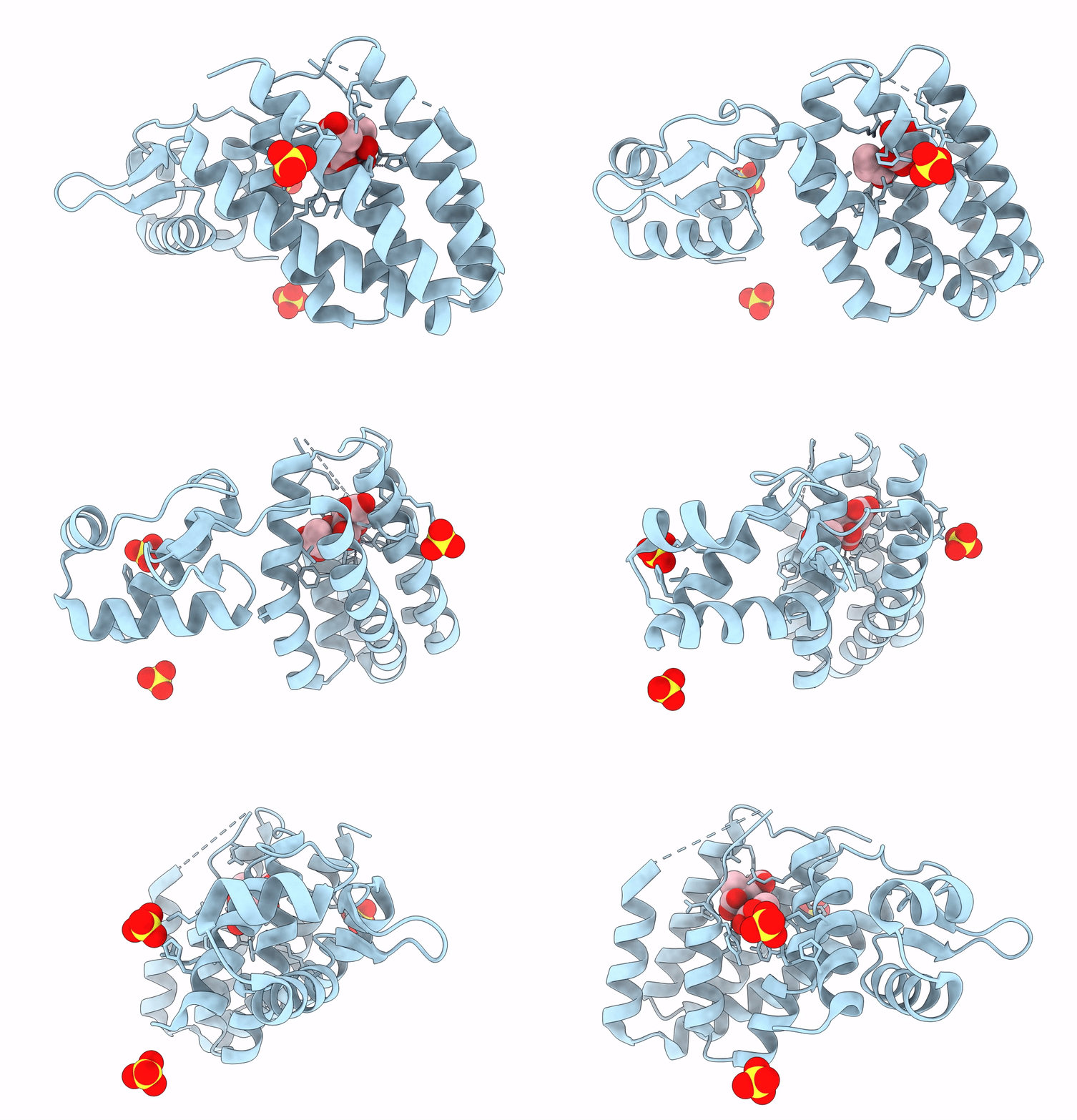
7XP1 image
Deposition Date 2022-05-02
Release Date 2023-04-12
Last Version Date 2023-11-29
Entry Detail
PDB ID:
7XP1
Title:
Crystal structure of PmiR from Pseudomonas aeruginosa
Biological Source:
Source Organism:
Host Organism:
Method Details:
Experimental Method:
Resolution:
2.50 Å
R-Value Free:
0.26
R-Value Work:
0.21
R-Value Observed:
0.21
Space Group:
I 41 2 2

Macromolecular Entities
Structures with similar UniProt ID
Protein Blast
Polymer Type:polypeptide(L)
Molecule:Probable transcriptional regulator
Gene (Uniprot):PA0797
Chain IDs:A
Chain Length:218
Number of Molecules:1
Biological Source:Pseudomonas aeruginosa PAO1
Primary Citation
PmiR senses 2-methylisocitrate levels to regulate bacterial virulence in Pseudomonas aeruginosa.
Sci Adv 8 eadd4220 eadd4220 (2022)
PMID: 36475801 DOI: 10.1126/sciadv.add4220

Abstact

To adapt to changes in environmental cues, Pseudomonas aeruginosa produces an array of virulence factors to survive the host immune responses during infection. Metabolic products contribute to bacterial virulence; however, only a limited number of these signaling receptors have been explored in detail for their ability to modulate virulence in bacteria. Here, we characterize the metabolic pathway of 2-methylcitrate cycle in P. aeruginosa and unveil that PmiR served as a receptor of 2-methylisocitrate (MIC) to govern bacterial virulence. Crystallographic studies and structural-guided mutagenesis uncovered several residues crucial for PmiR's allosteric activation by MIC. We also demonstrated that PmiR directly repressed the pqs quorum-sensing system and subsequently inhibited pyocyanin production. Moreover, mutation of pmiR reduces bacterial survival in a mouse model of acute pneumonia infection. Collectively, this study identified P. aeruginosa PmiR as an important metabolic sensor for regulating expression of bacterial virulence genes to adapt to the harsh environments.

Legend

Protein

Chemical

Disease

Primary Citation of related structures
Feedback Form
Name
Email
Institute
Feedback