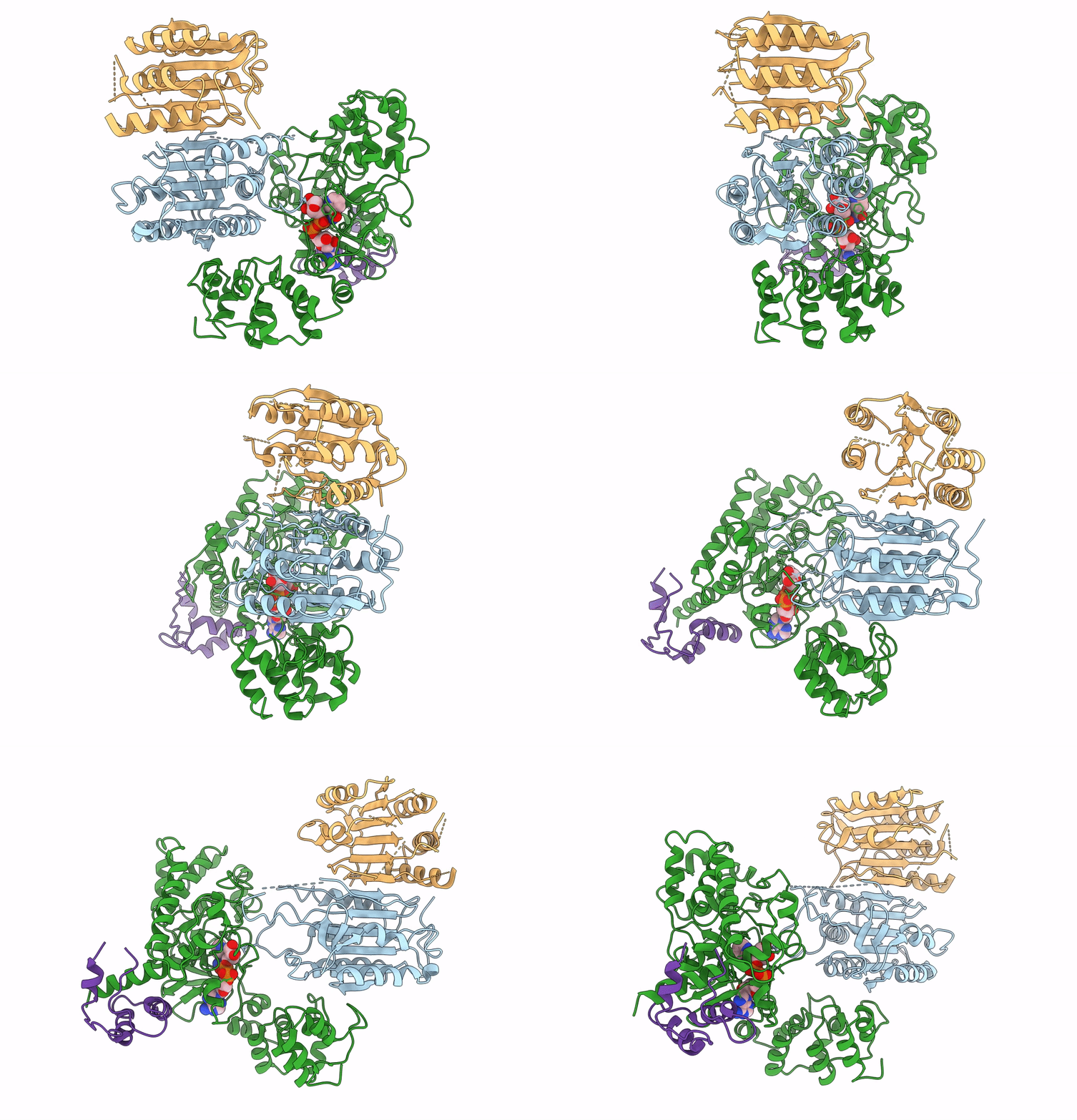
7XN5 image
Deposition Date 2022-04-28
Release Date 2022-12-14
Last Version Date 2024-07-03
Entry Detail
PDB ID:
7XN5
Keywords:
Title:
Cryo-EM structure of CopC-CaM-caspase-3 with ADPR
Biological Source:
Source Organism:
Method Details:
Experimental Method:
Resolution:
3.18 Å
Aggregation State:
PARTICLE
Reconstruction Method:
SINGLE PARTICLE
Macromolecular Entities
Structures with similar UniProt ID
Protein Blast
Polymer Type:polypeptide(L)
Molecule:Caspase-3
Gene (Uniprot):CASP3
Chain IDs:A, C
Chain Length:277
Number of Molecules:2
Biological Source:Homo sapiens
Structures with similar UniProt ID
Protein Blast
Polymer Type:polypeptide(L)
Molecule:Arginine ADP-riboxanase CopC
Gene (Uniprot):copC
Chain IDs:B
Chain Length:487
Number of Molecules:1
Biological Source:Chromobacterium violaceum
Structures with similar UniProt ID
Protein Blast
Polymer Type:polypeptide(L)
Molecule:Calmodulin-1
Gene (Uniprot):CALM1
Chain IDs:D
Chain Length:149
Number of Molecules:1
Biological Source:Homo sapiens
Primary Citation
Structural insights into caspase ADPR deacylization catalyzed by a bacterial effector and host calmodulin.
Mol.Cell 82 4712 4726.e7 (2022)
PMID: 36423631 DOI: 10.1016/j.molcel.2022.10.032

Abstact

Programmed cell death and caspase proteins play a pivotal role in host innate immune response combating pathogen infections. Blocking cell death is employed by many bacterial pathogens as a universal virulence strategy. CopC family type III effectors, including CopC from an environmental pathogen Chromobacterium violaceum, utilize calmodulin (CaM) as a co-factor to inactivate caspases by arginine ADPR deacylization. However, the molecular basis of the catalytic and substrate/co-factor binding mechanism is unknown. Here, we determine successive cryo-EM structures of CaM-CopC-caspase-3 ternary complex in pre-reaction, transition, and post-reaction states, which elucidate a multistep enzymatic mechanism of CopC-catalyzed ADPR deacylization. Moreover, we capture a snapshot of the detachment of modified caspase-3 from CopC. These structural insights are validated by mutagenesis analyses of CopC-mediated ADPR deacylization in vitro and animal infection in vivo. Our study offers a structural framework for understanding the molecular basis of arginine ADPR deacylization catalyzed by the CopC family.

Legend

Protein

Chemical

Disease

Primary Citation of related structures
Feedback Form
Name
Email
Institute
Feedback