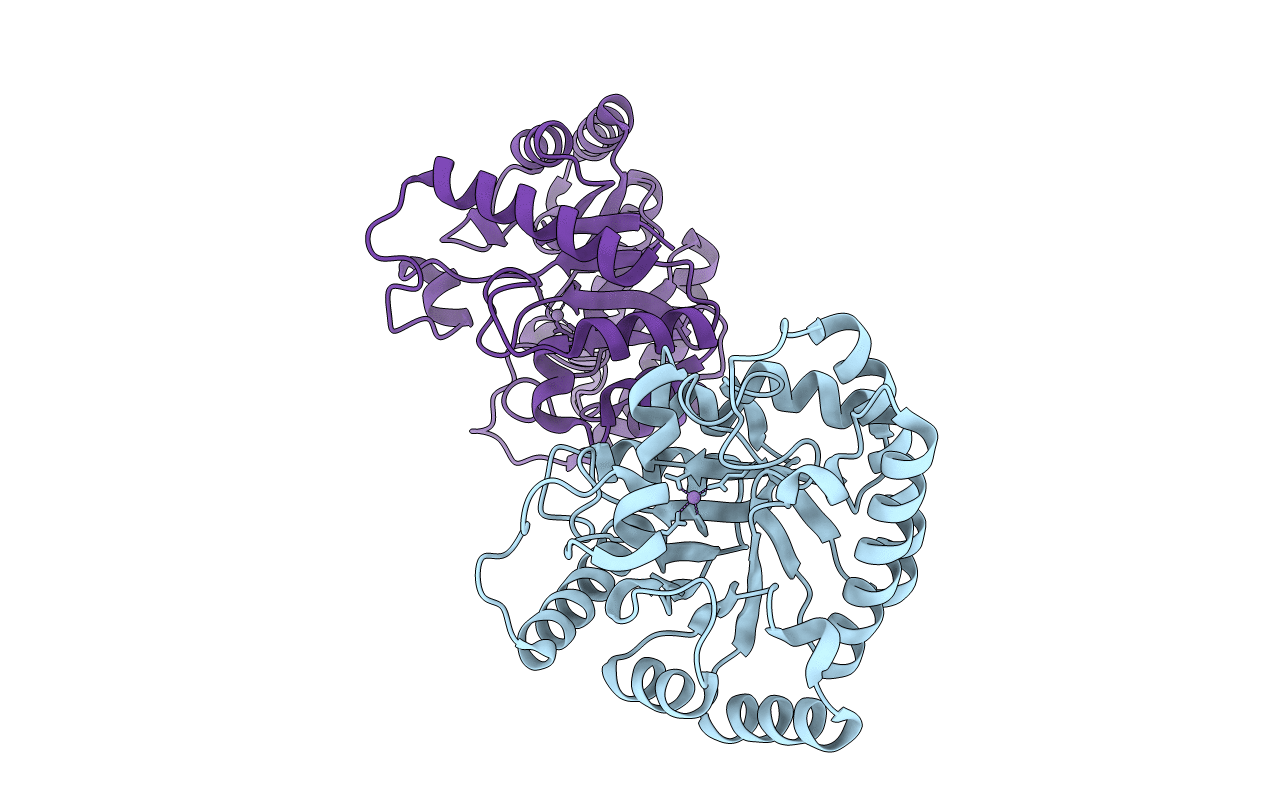
7X7W image
Deposition Date 2022-03-10
Release Date 2022-09-07
Last Version Date 2025-08-06
Entry Detail
PDB ID:
7X7W
Keywords:
Title:
The X-ray Crystallographic Structure of D-Psicose 3-epimerase from Clostridia bacterium
Biological Source:
Source Organism(s):
Expression System(s):
Method Details:
Experimental Method:
Resolution:
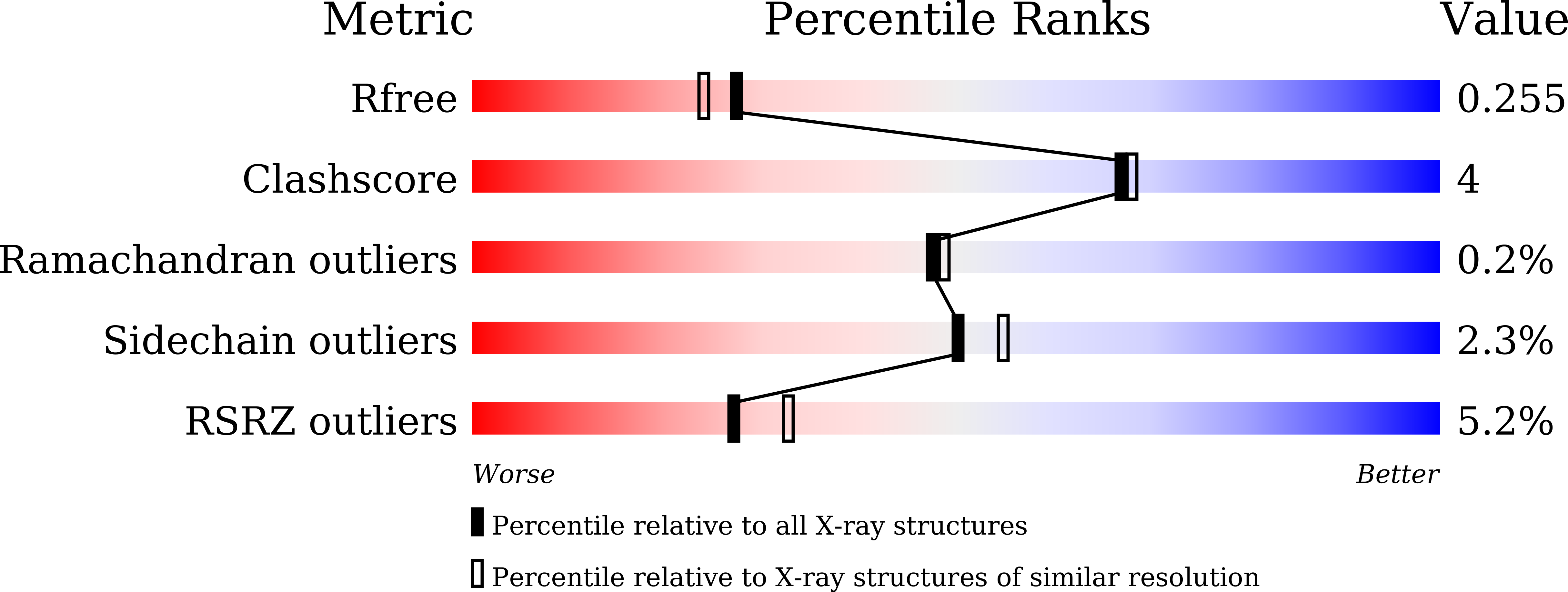
2.10 Å
R-Value Free:
0.25
R-Value Work:
0.20
R-Value Observed:
0.20
Space Group:
I 1 2 1
Macromolecular Entities
Structures with similar UniProt ID
Protein Blast
Polymer Type:polypeptide(L)
Molecule:D-PSICOSE 3-EPIMERASE
Chain IDs:A, B
Chain Length:288
Number of Molecules:2
Biological Source:Clostridia bacterium
Ligand Molecules
Primary Citation
Crystal structure of a novel homodimeric D-allulose 3-epimerase from a Clostridia bacterium.
Acta Crystallogr D Struct Biol 78 1180 1191 (2022)
PMID: 36048157 DOI: 10.1107/S2059798322007707

Abstact

D-Allulose, a low-calorie rare sugar with various physiological functions, is mainly produced through the isomerization of D-fructose by ketose 3-epimerases (KEases), which exhibit various substrate specificities. A novel KEase from a Clostridia bacterium (CDAE) was identified to be a D-allulose 3-epimerase and was further characterized as thermostable and metal-dependent. In order to explore its structure-function relationship, the crystal structure of CDAE was determined using X-ray diffraction at 2.10 Å resolution, revealing a homodimeric D-allulose 3-epimerase structure with extensive interactions formed at the dimeric interface that contribute to structure stability. Structural analysis identified the structural features of CDAE, which displays a common (β/α)8-TIM barrel and an ordered Mn2+-binding architecture at the active center, which may explain the positive effects of Mn2+ on the activity and stability of CDAE. Furthermore, comparison of CDAE and other KEase structures revealed several structural differences, highlighting the remarkable differences in enzyme-substrate binding at the O4, O5 and O6 sites of the bound substrate, which are mainly induced by distinct hydrophobic pockets in the active center. The shape and hydrophobicity of this pocket appear to produce the differences in specificity and affinity for substrates among KEase family enzymes. Exploration of the crystal structure of CDAE provides a better understanding of its structure-function relationship, which might provide a basis for molecular modification of CDAE and further provides a reference for other KEases.

Legend

Protein

Chemical

Disease

Primary Citation of related structures
Feedback Form
Name
Email
Institute
Feedback