7WM6 image
Deposition Date 2022-01-14
Release Date 2022-06-29
Last Version Date 2023-11-29
Entry Detail
PDB ID:
7WM6
Keywords:
Title:
Crystal structure of SAH-bound TrmM from Mycoplasma capricolum
Biological Source:
Method Details:
Experimental Method:
Resolution:
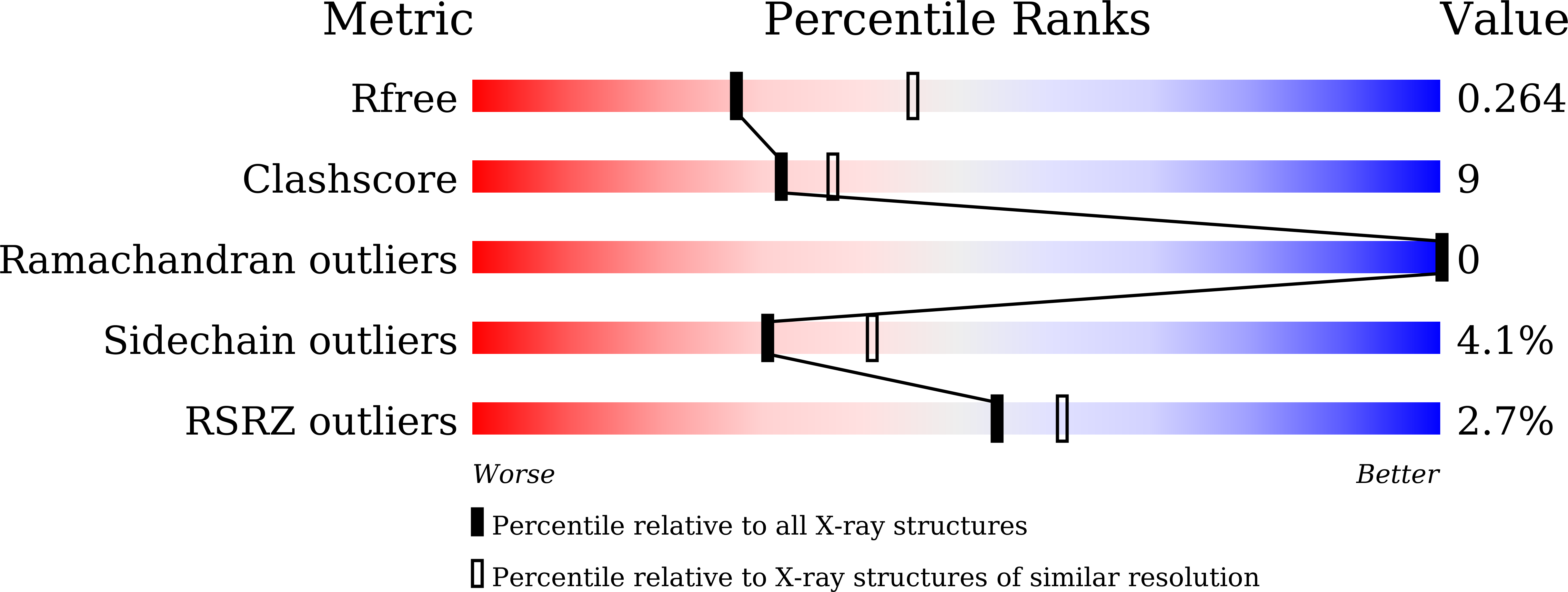
2.54 Å
R-Value Free:
0.26
R-Value Work:
0.20
R-Value Observed:
0.21
Space Group:
P 1 21 1
Macromolecular Entities
Structures with similar UniProt ID
Protein Blast
Polymer Type:polypeptide(L)
Molecule:Methyltransferase
Gene (Uniprot):MCGM508_01850
Chain IDs:A, B, C, D
Chain Length:248
Number of Molecules:4
Biological Source:Mycoplasma capricolum subsp. capricolum
Primary Citation
Structural and functional characterization of TrmM in m 6 A modification of bacterial tRNA.
Protein Sci. 31 e4319 e4319 (2022)
PMID: 35481631 DOI: 10.1002/pro.4319

Abstact

N6 -methyladenosine (m6 A), widely distributed in both coding and noncoding RNAs, regulates the epigenetic signals and RNA metabolism in eukaryotes. Although this posttranscriptional modification is frequently observed in messenger and ribosomal RNA, it is relatively rare in transfer RNA. In Escherichia coli, TrmM encoded by yfiC is the tRNA-specific N6 methyltransferase, which modifies the A37 residue of tRNAVal (cmo5 UAC) using S-adenosyl-l-methionine as a methyl donor. However, the structure-function relationship of this enzyme is not completely understood. In this report, we determined two x-ray crystal structures of Mycoplasma capricolum TrmM with and without S-adenosyl-l-homocysteine, which is a reaction product. We also demonstrated the cellular and in vitro activities of this enzyme in the m6 A modification of tRNA and the requirement of a divalent metal ion for its function, which is unprecedented in other RNA N6 methyltransferases, including the E. coli TrmM. Our results reveal that the dimeric form of M. capricolum TrmM is important for efficient tRNA binding and catalysis, thereby offering insights into the distinct substrate specificity of the monomeric E. coli homolog.

Legend

Protein

Chemical

Disease

Primary Citation of related structures
Feedback Form
Name
Email
Institute
Feedback