Planned Maintenance: Some services may turn out to be unavailable from 15th January, 2026 to 16th January, 2026. We apologize for the inconvenience!

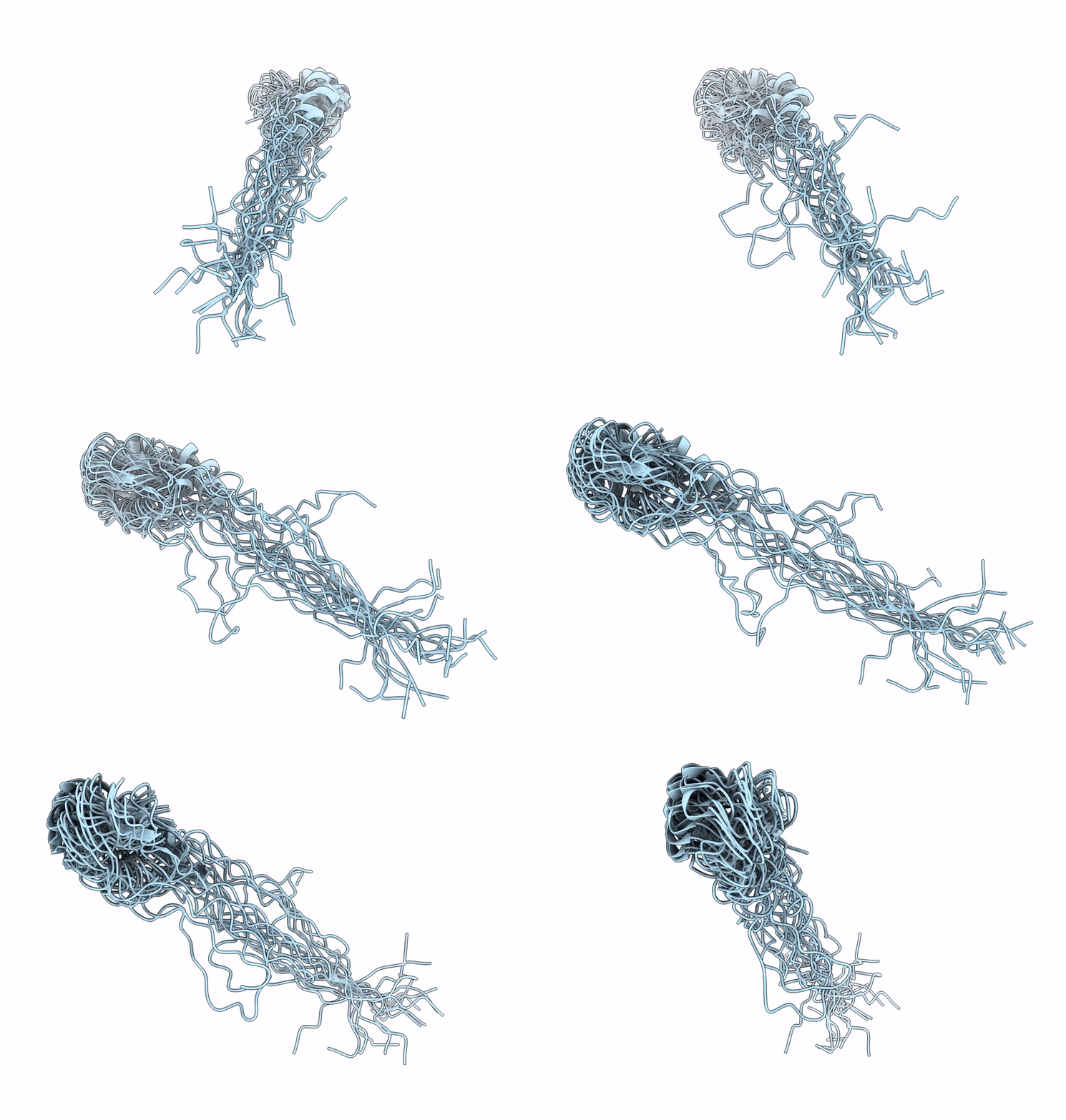
7WKF image
Deposition Date 2022-01-09
Release Date 2023-04-05
Last Version Date 2024-11-13
Entry Detail
PDB ID:
7WKF
Title:
Antimicrobial peptide-LaIT2
Biological Source:
Source Organism(s):
Expression System(s):
Method Details:
Experimental Method:
Conformers Calculated:
100
Conformers Submitted:
20
Selection Criteria:
target function
Macromolecular Entities
Structures with similar UniProt ID
Protein Blast
Polymer Type:polypeptide(L)
Molecule:Beta-KTx-like peptide LaIT2
Chain IDs:A
Chain Length:59
Number of Molecules:1
Biological Source:Liocheles australasiae
Ligand Molecules
Primary Citation
Structural and functional studies of LaIT2, an antimicrobial and insecticidal peptide from Liocheles australasiae.
Toxicon 214 8 17 (2022)
PMID: 35490851 DOI: 10.1016/j.toxicon.2022.04.015

Abstact

LaIT2, composed of 59 amino acid residues, is a peptide toxin isolated from the venom of the Yaeyama scorpion, Liocheles australasiae. LaIT2 is toxic to insects but not most mammals. The N- and C-domains of LaIT2 are known to possess antimicrobial and insecticidal activities, respectively. However, the molecular mechanisms are largely unknown because of the lack of a three-dimensional structure of LaIT2. Thus, we elucidated the solution NMR structure of LaIT2. LaIT2 adopts a β-KTx-like two-domain structure, in which the N- and C-terminal domains form a random coil and an α-β-β motif, respectively. Trifluoro ethanol and liposomes titration experiments showed that the unstructured N-domain of LaIT2 has the ability to form an α-helix. The N-terminal helix is amphiphilic, and one side of the helix is positively charged. Measurements of the antimicrobial and insecticidal activities of LaIT2 mutants suggested K15 in the N-domain was found to be responsible for the antimicrobial activities, whereas L53 and L54 in the C-domain were key residues involved in the insecticidal activity. Moreover, K21 in the N-domain is important for both activities. Therefore, two domains are suggested that they work together to show antimicrobial and insecticidal activity.

Legend

Protein

Chemical

Disease

Primary Citation of related structures
Feedback Form
Name
Email
Institute
Feedback