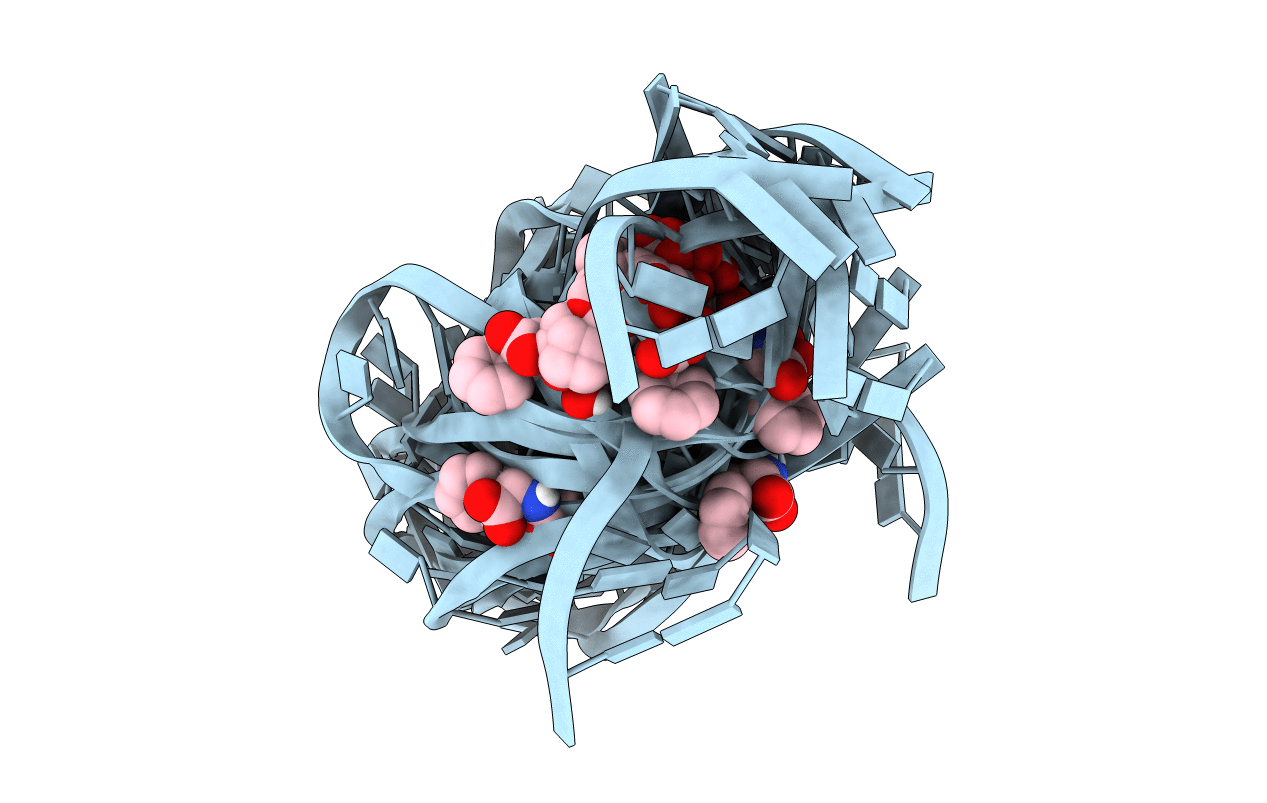
7W9N image
Deposition Date 2021-12-10
Release Date 2022-01-19
Last Version Date 2024-05-15
Entry Detail
PDB ID:
7W9N
Keywords:
Title:
THE STRUCTURE OF OBA33-OTA COMPLEX
Biological Source:
Source Organism:
Method Details:
Experimental Method:
Conformers Calculated:
100
Conformers Submitted:
10
Selection Criteria:
structures with the lowest energy

Macromolecular Entities
Polymer Type:polydeoxyribonucleotide
Molecule:OTA DNA APTAMER (33-MER)
Chain IDs:A
Chain Length:33
Number of Molecules:1
Biological Source:synthetic construct
Ligand Molecules
Primary Citation
Structural Insights into the Mechanism of High-Affinity Binding of Ochratoxin A by a DNA Aptamer.
J.Am.Chem.Soc. 144 7731 7740 (2022)
PMID: 35442665 DOI: 10.1021/jacs.2c00478

Abstact

A 36-mer guanine (G)-rich DNA aptamer (OBA36) is able to distinguish one atomic difference between ochratoxin analogues A (OTA) and B (OTB), showing prominent recognition specificity and affinity among hundreds of aptamers for small molecules. Why OBA36 has >100-fold higher binding affinity to OTA than OTB remains a long-standing question due to the lack of high-resolution structure. Here we report the solution NMR structure of the aptamer-OTA complex. It was found that OTA binding induces the aptamer to fold into a well-defined unique duplex-quadruplex structural scaffold stabilized by Mg2+ and Na+ ions. OTA does not directly interact with the G-quadruplex, but specifically binds at the junction between the double helix and G-quadruplex through π-π stacking, halogen bonding (X-bond), and hydrophobic interaction. OTB has the same binding site as OTA but lacks the X-bond. The strong X-bond formed between the chlorine atom of OTA and the aromatic ring of C5 is the key to discriminating the strong binding toward OTA. The present research contributes to a deeper insight of aptamer molecular recognition, reveals structural basis of the high-affinity binding of aptamers, and provides a foundation for further aptamer engineering and applications.

Legend

Protein

Chemical

Disease

Primary Citation of related structures
Feedback Form
Name
Email
Institute
Feedback