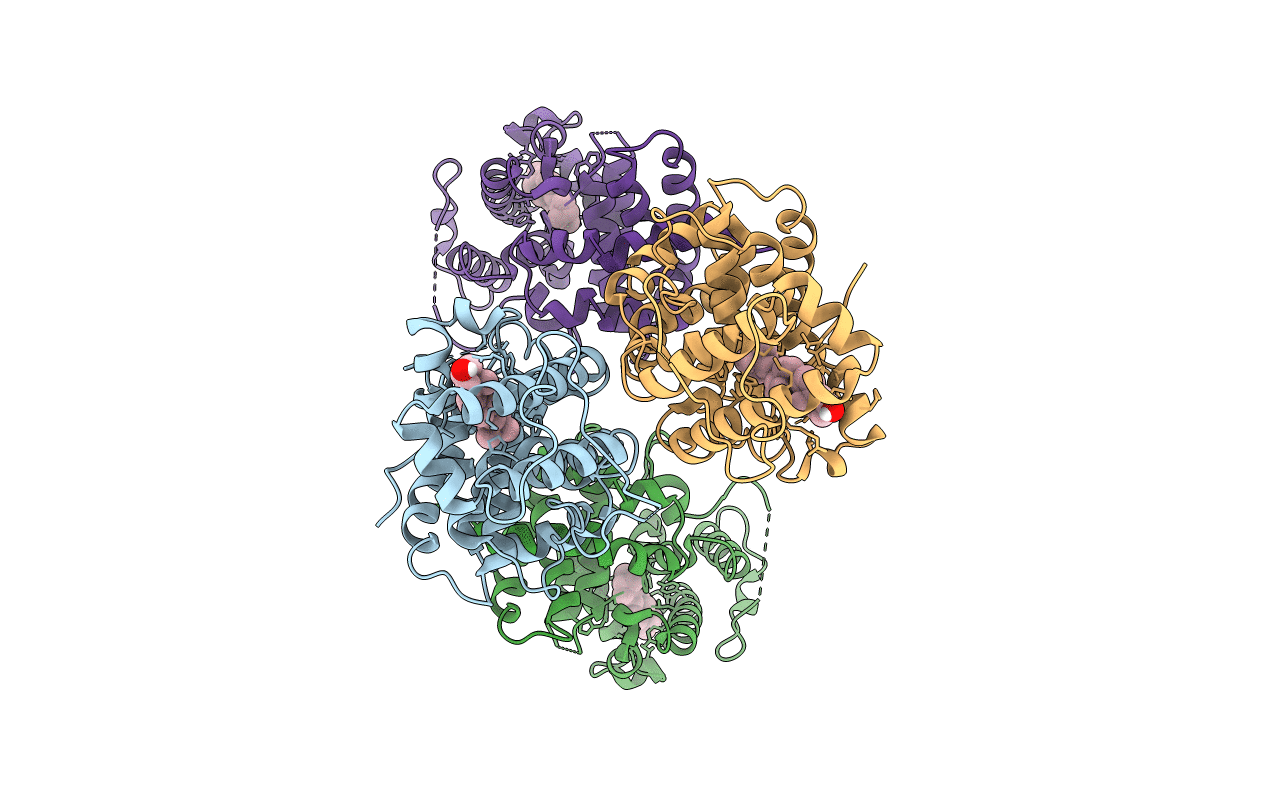
7VPU image
Deposition Date 2021-10-18
Release Date 2022-08-24
Last Version Date 2024-11-06
Entry Detail
PDB ID:
7VPU
Keywords:
Title:
Crystal structure of the ligand-binding domain of L. thermotolerans Upc2 in complex with ergosterol
Biological Source:
Source Organism:
Method Details:
Experimental Method:
Resolution:
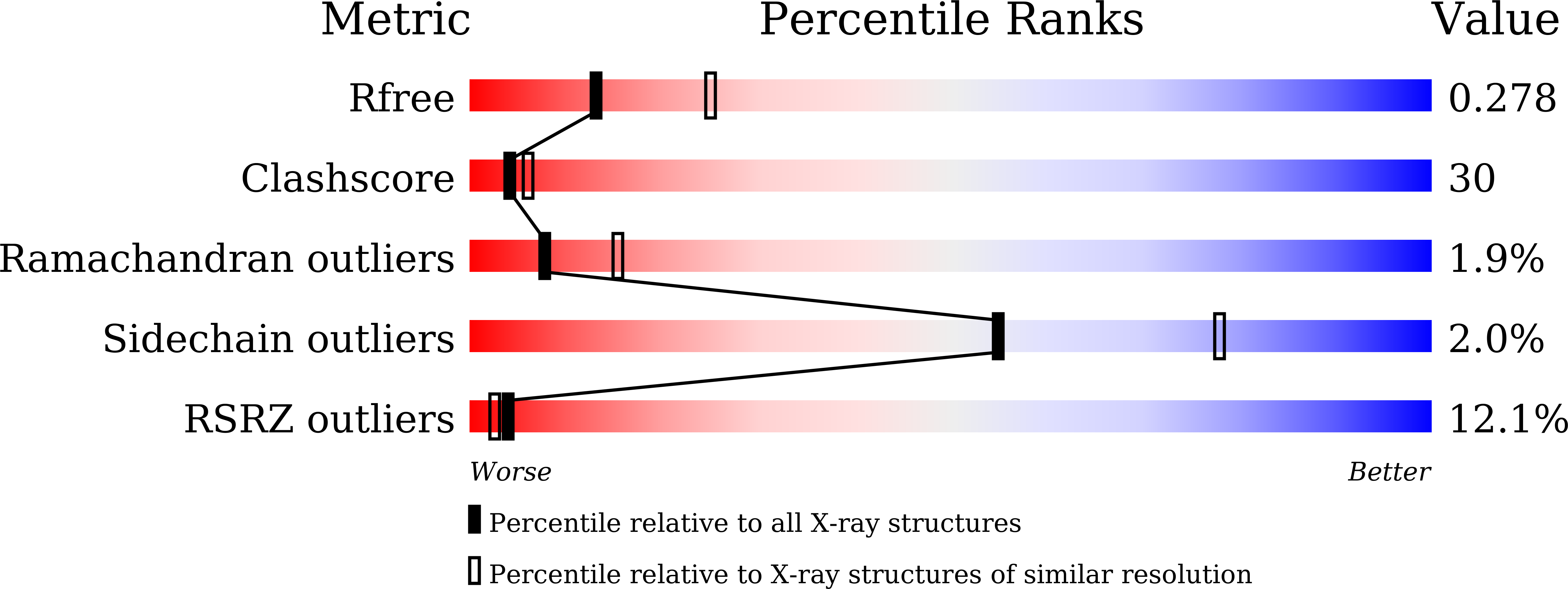
2.59 Å
R-Value Free:
0.27
R-Value Work:
0.22
R-Value Observed:
0.23
Space Group:
P 1 21 1
Macromolecular Entities
Structures with similar UniProt ID
Protein Blast
Polymer Type:polypeptide(L)
Molecule:Sterol uptake control protein 2 (Upc2)
Gene (Uniprot):KLTH0F07854g
Mutagens:587-600 deletion, S599V, M600D
Chain IDs:A, B, C, D
Chain Length:332
Number of Molecules:4
Biological Source:Lachancea thermotolerans CBS 6340
Ligand Molecules
Primary Citation
Structural basis for activation of fungal sterol receptor Upc2 and azole resistance.
Nat.Chem.Biol. 18 1253 1262 (2022)
PMID: 36229681 DOI: 10.1038/s41589-022-01117-0

Abstact

Fungal transcription factor Upc2 senses ergosterol levels and regulates sterol biosynthesis and uptake. Constitutive activation of Upc2 causes azole resistance in Candida species. We determined the structure of ergosterol-bound Upc2, revealing the ligand specificity and transcriptional regulation. Ergosterol binding involves conformational changes of the ligand-binding domain, creating a shape-complementary hydrophobic pocket. The conserved helix α12 and glycine-rich loop are critical for sterol recognition by forming the pocket wall. The mutations of the glycine-rich loop inhibit ligand binding by steric clashes and constitutively activate Upc2. The translocation of Upc2 is regulated by Hsp90 chaperone in a sterol-dependent manner. Ergosterol-bound Upc2 associates with Hsp90 using the C-terminal tail, which retains the inactive Upc2 in the cytosol. Ergosterol dissociation induces a conformational change of the C-terminal tail, releasing Upc2 from Hsp90 for nuclear transport by importin α. The understanding of the regulatory mechanism provides an antifungal target for the treatment of azole-resistant Candida infections.

Legend

Protein

Chemical

Disease

Primary Citation of related structures
Feedback Form
Name
Email
Institute
Feedback