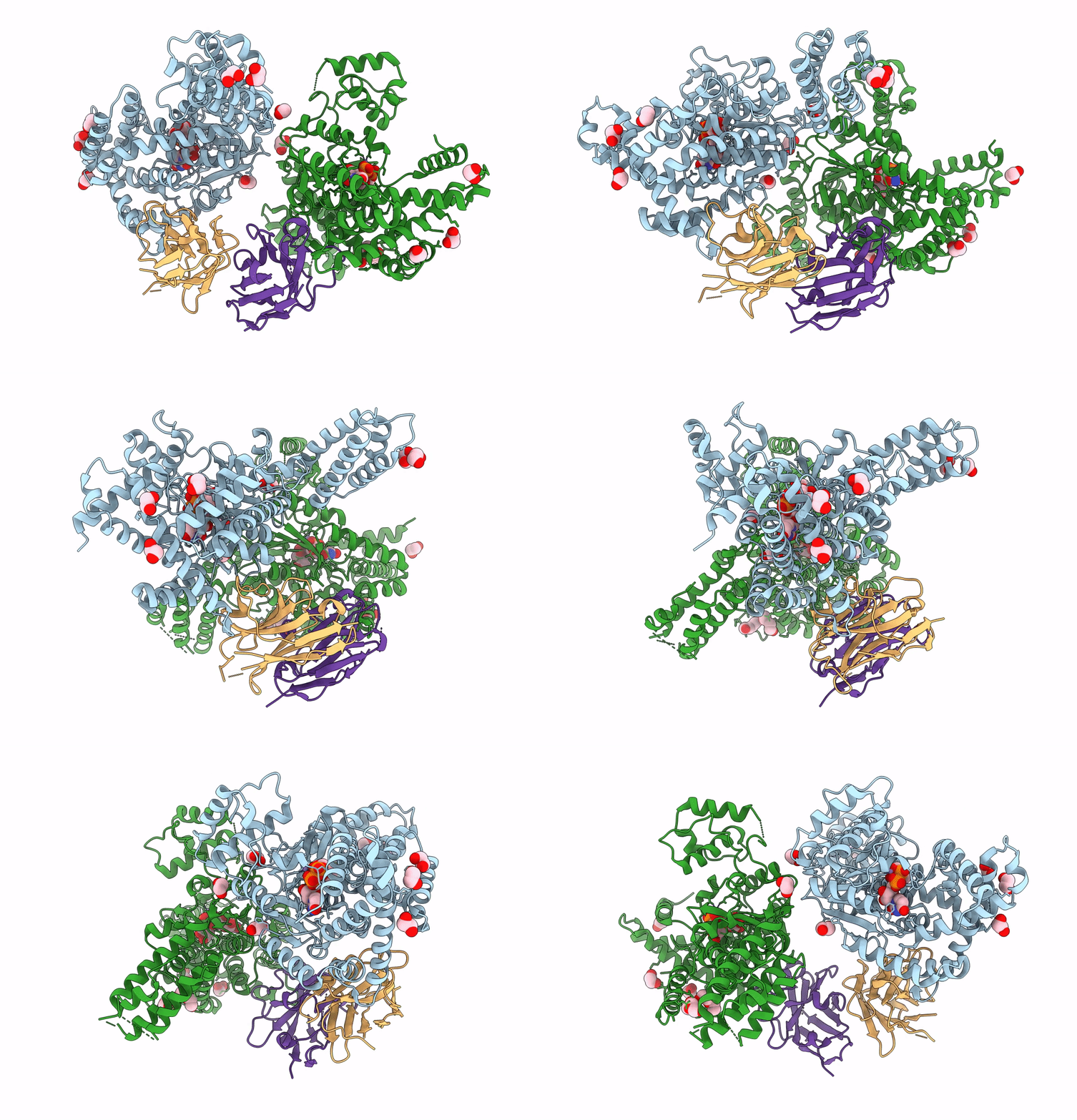
7UBY image
Deposition Date 2022-03-15
Release Date 2022-11-16
Last Version Date 2024-11-20
Entry Detail
PDB ID:
7UBY
Keywords:
Title:
Structure of the GTD domain of Clostridium difficile toxin A in complex with VHH AH3
Biological Source:
Source Organism:
Host Organism:
Method Details:
Experimental Method:
Resolution:
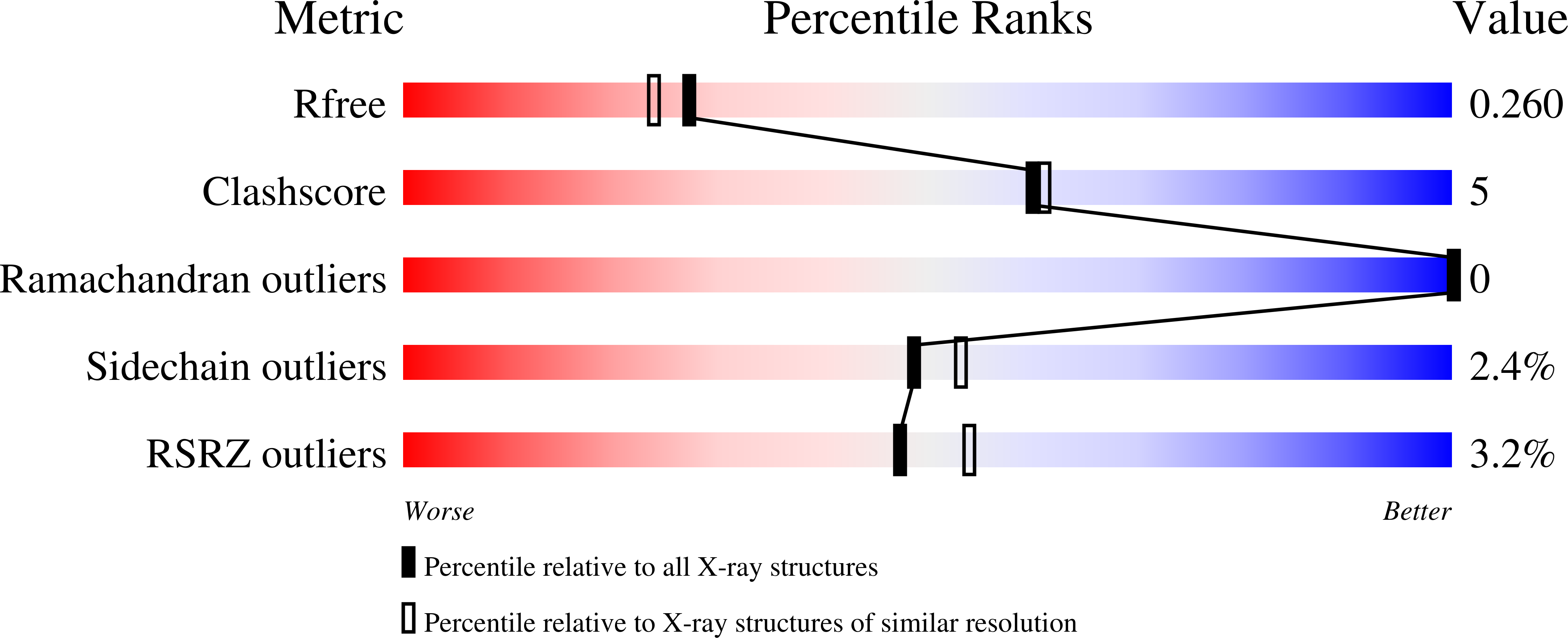
2.10 Å
R-Value Free:
0.26
R-Value Work:
0.21
R-Value Observed:
0.21
Space Group:
P 1 21 1
Macromolecular Entities
Structures with similar UniProt ID
Protein Blast
Polymer Type:polypeptide(L)
Molecule:Glucosyltransferase TcdA
Gene (Uniprot):tcdA
Mutagens:K190A
Chain IDs:A (auth: B), C (auth: A)
Chain Length:543
Number of Molecules:2
Biological Source:Clostridioides difficile
Polymer Type:polypeptide(L)
Molecule:Nanobody VHH AH3
Chain IDs:B (auth: D), D (auth: C)
Chain Length:151
Number of Molecules:2
Biological Source:Camelidae
Primary Citation
Neutralizing epitopes on Clostridioides difficile toxin A revealed by the structures of two camelid VHH antibodies.
Front Immunol 13 978858 978858 (2022)
PMID: 36466927 DOI: 10.3389/fimmu.2022.978858

Abstact

Toxin A (TcdA) and toxin B (TcdB) are two key virulence factors secreted by Clostridioides difficile, which is listed as an urgent threat by the CDC. These two large homologous exotoxins are mainly responsible for diseases associated with C. difficile infection (CDI) with symptoms ranging from diarrhea to life threatening pseudomembranous colitis. Single-domain camelid antibodies (VHHs) AH3 and AA6 are two potent antitoxins against TcdA, which when combined with two TcdB-targeting VHHs showed effective protection against both primary and recurrent CDI in animal models. Here, we report the co-crystal structures of AH3 and AA6 when they form complexes with the glucosyltransferase domain (GTD) and a fragment of the delivery and receptor-binding domain (DRBD) of TcdA, respectively. Based on these structures, we find that AH3 binding enhances the overall stability of the GTD and interferes with its unfolding at acidic pH, and AA6 may inhibit the pH-dependent conformational changes in the DRBD that is necessary for pore formation of TcdA. These studies reveal two functionally critical epitopes on TcdA and shed new insights into neutralizing mechanisms and potential development of epitope-focused vaccines against TcdA.

Legend

Protein

Chemical

Disease

Primary Citation of related structures
Feedback Form
Name
Email
Institute
Feedback