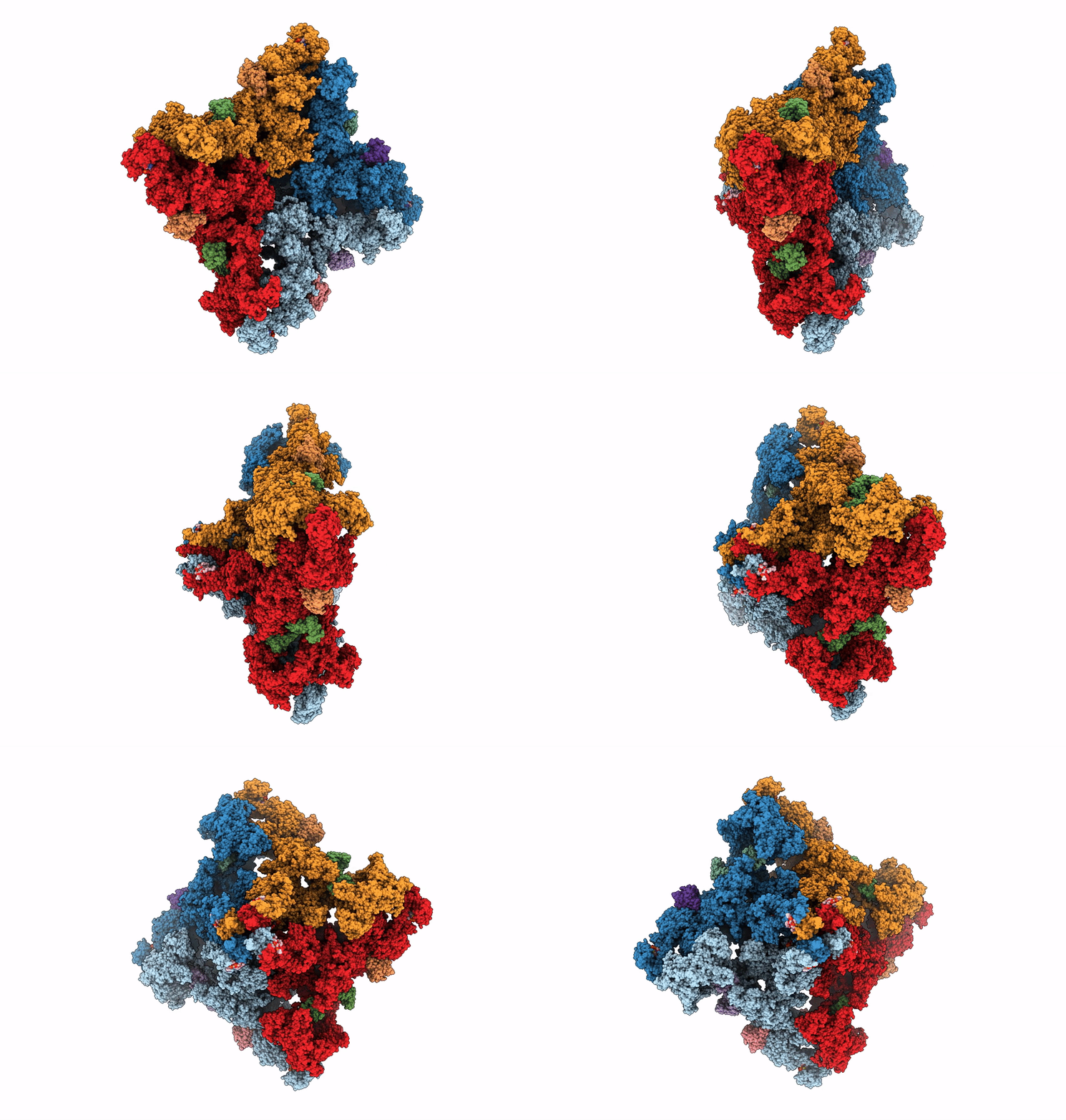
7TZC image
Deposition Date 2022-02-15
Release Date 2022-05-18
Last Version Date 2024-11-13
Entry Detail
PDB ID:
7TZC
Title:
A drug and ATP binding site in type 1 ryanodine receptor
Biological Source:
Source Organism(s):
Expression System(s):
Method Details:
Experimental Method:
Resolution:
2.45 Å
Aggregation State:
PARTICLE
Reconstruction Method:
SINGLE PARTICLE
Macromolecular Entities
Structures with similar UniProt ID
Protein Blast
Polymer Type:polypeptide(L)
Molecule:Ryanodine receptor 1
Gene (Uniprot):RYR1
Chain IDs:F (auth: A), G (auth: B), H (auth: G), I
Chain Length:5037
Number of Molecules:4
Biological Source:Oryctolagus cuniculus
Structures with similar UniProt ID
Protein Blast
Polymer Type:polypeptide(L)
Molecule:Peptidyl-prolyl cis-trans isomerase FKBP1A
Gene (Uniprot):FKBP1A
Chain IDs:B (auth: F), J (auth: H), K (auth: J), L (auth: O)
Chain Length:107
Number of Molecules:4
Biological Source:Oryctolagus cuniculus
Structures with similar UniProt ID
Protein Blast
Polymer Type:polypeptide(L)
Molecule:Calmodulin-1
Gene (Uniprot):CALM1
Chain IDs:A (auth: K), C (auth: D), D (auth: E), E (auth: C)
Chain Length:150
Number of Molecules:4
Biological Source:Homo sapiens
Primary Citation
A drug and ATP binding site in type 1 ryanodine receptor.
Structure 30 1025 ? (2022)
PMID: 35580609 DOI: 10.1016/j.str.2022.04.010

Abstact

The ryanodine receptor (RyR)/calcium release channel on the sarcoplasmic reticulum (SR) is required for excitation-contraction coupling in skeletal and cardiac muscle. Inherited mutations and stress-induced post-translational modifications result in an SR Ca2+ leak that causes skeletal myopathies, heart failure, and exercise-induced sudden death. A class of therapeutics known as Rycals prevent the RyR-mediated leak, are effective in preventing disease progression and restoring function in animal models, and are in clinical trials for patients with muscle and heart disorders. Using cryogenic-electron microscopy, we present a model of RyR1 with a 2.45-Å resolution before local refinement, revealing a binding site in the RY1&2 domain (3.10 Å local resolution), where the Rycal ARM210 binds cooperatively with ATP and stabilizes the closed state of RyR1.

Legend

Protein

Chemical

Disease

Primary Citation of related structures
Feedback Form
Name
Email
Institute
Feedback