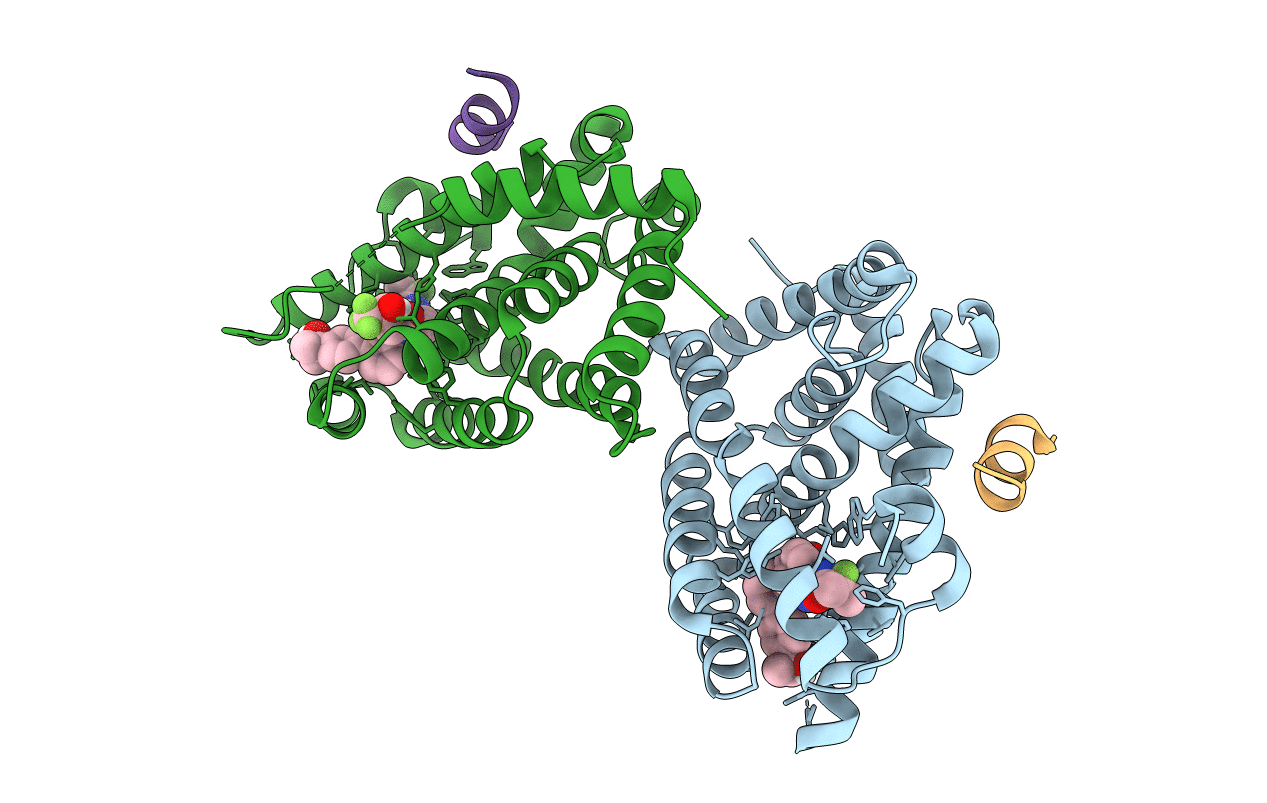
7TRB image
Deposition Date 2022-01-28
Release Date 2022-06-29
Last Version Date 2023-10-18
Entry Detail
PDB ID:
7TRB
Keywords:
Title:
CRYSTAL STRUCTURE OF FARNESOID X-ACTIVATED RECEPTOR COMPLEXED WITH COMPOUND-32 AKA (1S,3S)-N-({4-[5-(2-FLUOROPR OPAN-2-YL)-1,2,4-OXADIAZOL-3-YL]BICYCLO[2.2.2]OCTAN-1-YL}M ETHYL)-3-HYDROXY-N-[4'-(2-HYDROXYPROPAN-2-YL)-[1,1'-BIPHEN YL]-3-YL]-3-(TRIFLUOROMETHYL)CYCLOBUTANE-1-CARBOXAMIDE
Biological Source:
Source Organism:
Homo sapiens (Taxon ID: 9606)
Host Organism:
Method Details:
Experimental Method:
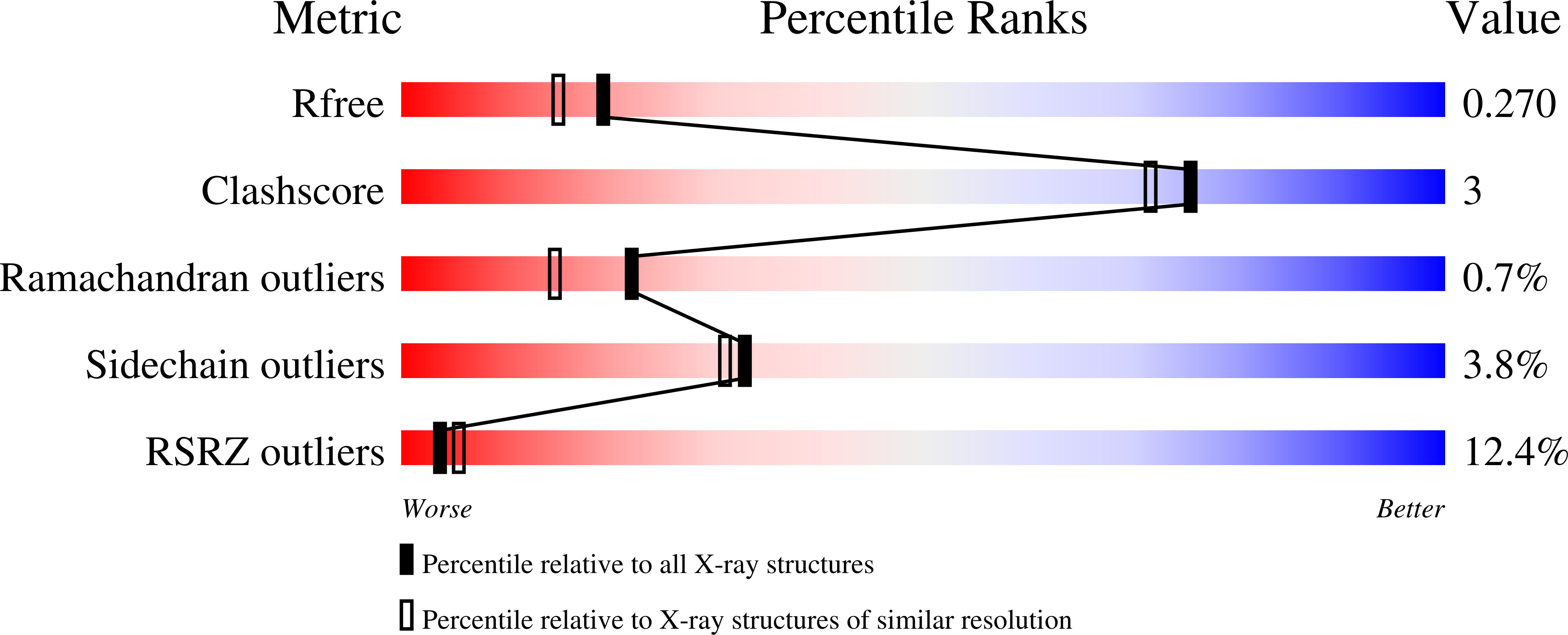
Resolution:
2.15 Å
R-Value Free:
0.25
R-Value Work:
0.21
R-Value Observed:
0.21
Space Group:
P 21 21 2
Macromolecular Entities
Structures with similar UniProt ID
Protein Blast
Polymer Type:polypeptide(L)
Molecule:Bile acid receptor
Gene (Uniprot):NR1H4
Chain IDs:A, B
Chain Length:251
Number of Molecules:2
Biological Source:Homo sapiens
Structures with similar UniProt ID
Protein Blast
Polymer Type:polypeptide(L)
Molecule:co-activator
Chain IDs:C, D
Chain Length:14
Number of Molecules:2
Biological Source:Homo sapiens
Ligand Molecules
Primary Citation
Discovery of BMS-986339, a Pharmacologically Differentiated Farnesoid X Receptor Agonist for the Treatment of Nonalcoholic Steatohepatitis.
J.Med.Chem. 65 8948 8960 (2022)
PMID: 35704802 DOI: 10.1021/acs.jmedchem.2c00165

Abstact

While several farnesoid X receptor (FXR) agonists under clinical investigation for the treatment of nonalcoholic steatohepatitis (NASH) have shown beneficial effects, adverse effects such as pruritus and elevation of plasma lipids have limited their clinical efficacy and approvability. Herein, we report the discovery and preclinical evaluation of compound 32 (BMS-986339), a nonbile acid FXR agonist with a pharmacologically distinct profile relative to our previously reported agonist BMS-986318. Compound 32 exhibited potent in vitro and in vivo activation of FXR, albeit with a context-dependent profile that resulted in tissue-selective effects in vivo. To our knowledge, this is the first report that demonstrates differential induction of Fgf15 in the liver and ileum by FXR agonists in vivo. Compound 32 demonstrated robust antifibrotic efficacy despite reduced activation of certain genes in the liver, suggesting that the additional pharmacology of BMS-986318 does not further benefit efficacy, possibly presenting an opportunity for reduced adverse effects. Further evaluation in humans is warranted to validate this hypothesis.

Legend

Protein

Chemical

Disease

Primary Citation of related structures
Feedback Form
Name
Email
Institute
Feedback