7TOW image
Deposition Date 2022-01-24
Release Date 2022-02-16
Last Version Date 2024-11-20
Entry Detail
PDB ID:
7TOW
Title:
Antibody DH1058 Fab fragment bound to SARS-CoV-2 fusion peptide
Biological Source:
Host Organism:
Method Details:
Experimental Method:
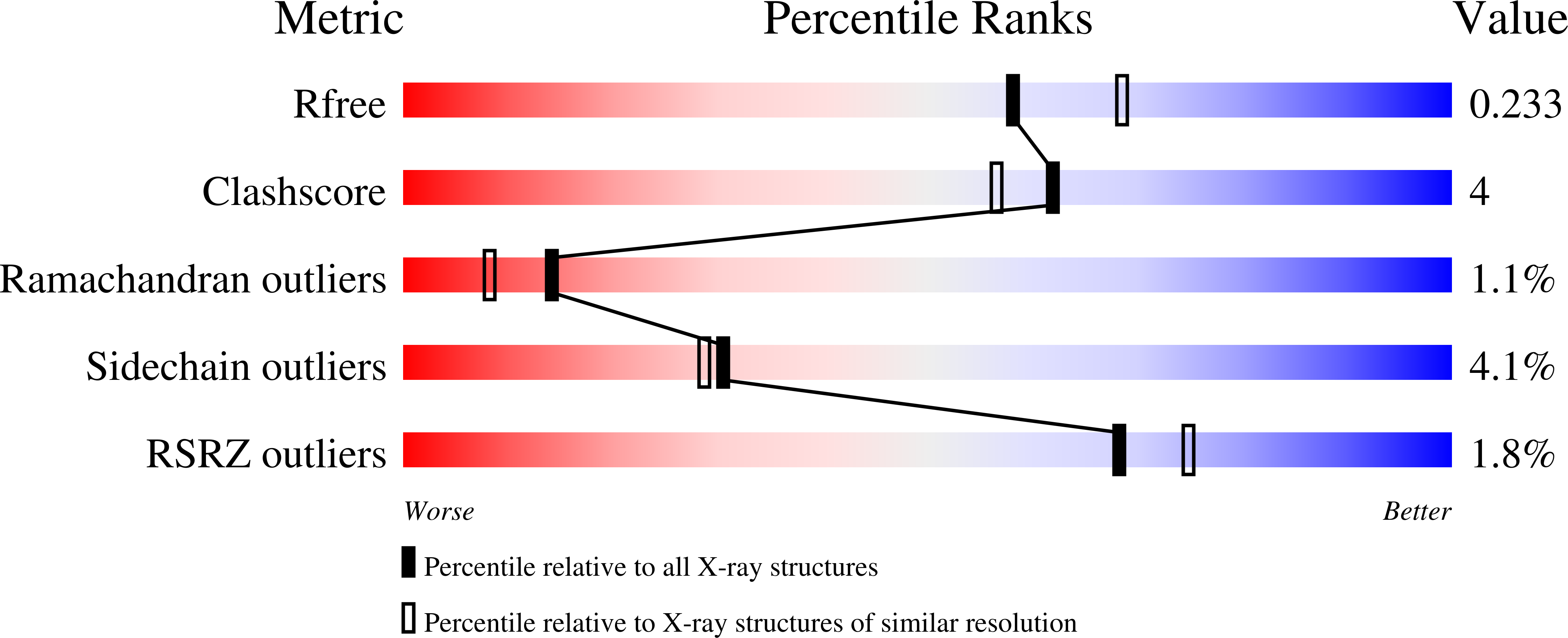
Resolution:
2.15 Å
R-Value Free:
0.23
R-Value Work:
0.16
R-Value Observed:
0.16
Space Group:
P 1 21 1
Macromolecular Entities
Structures with similar UniProt ID
Protein Blast
Polymer Type:polypeptide(L)
Molecule:Spike protein S2
Gene (Uniprot):S
Chain IDs:E, F (auth: D)
Chain Length:26
Number of Molecules:2
Biological Source:Severe acute respiratory syndrome coronavirus 2
Polymer Type:polypeptide(L)
Molecule:DH1058 Fab heavy chain
Chain IDs:A (auth: H), C (auth: A)
Chain Length:237
Number of Molecules:2
Biological Source:Homo sapiens
Polymer Type:polypeptide(L)
Molecule:DH1058 Fab Light chain
Chain IDs:B (auth: L), D (auth: B)
Chain Length:215
Number of Molecules:2
Biological Source:Homo sapiens
Primary Citation

Abstact

Aided by extensive spike protein mutation, the SARS-CoV-2 Omicron variant overtook the previously dominant Delta variant. Spike conformation plays an essential role in SARS-CoV-2 evolution via changes in receptor-binding domain (RBD) and neutralizing antibody epitope presentation, affecting virus transmissibility and immune evasion. Here, we determine cryo-EM structures of the Omicron and Delta spikes to understand the conformational impacts of mutations in each. The Omicron spike structure revealed an unusually tightly packed RBD organization with long range impacts that were not observed in the Delta spike. Binding and crystallography revealed increased flexibility at the functionally critical fusion peptide site in the Omicron spike. These results reveal a highly evolved Omicron spike architecture with possible impacts on its high levels of immune evasion and transmissibility.

Legend

Protein

Chemical

Disease

Primary Citation of related structures
Feedback Form
Name
Email
Institute
Feedback