7TLN image
Deposition Date 1983-01-27
Release Date 1983-03-09
Last Version Date 2024-10-23
Entry Detail
PDB ID:
7TLN
Title:
STRUCTURAL ANALYSIS OF THE INHIBITION OF THERMOLYSIN BY AN ACTIVE-SITE-DIRECTED IRREVERSIBLE INHIBITOR
Biological Source:
Source Organism:
Method Details:
Experimental Method:
Resolution:
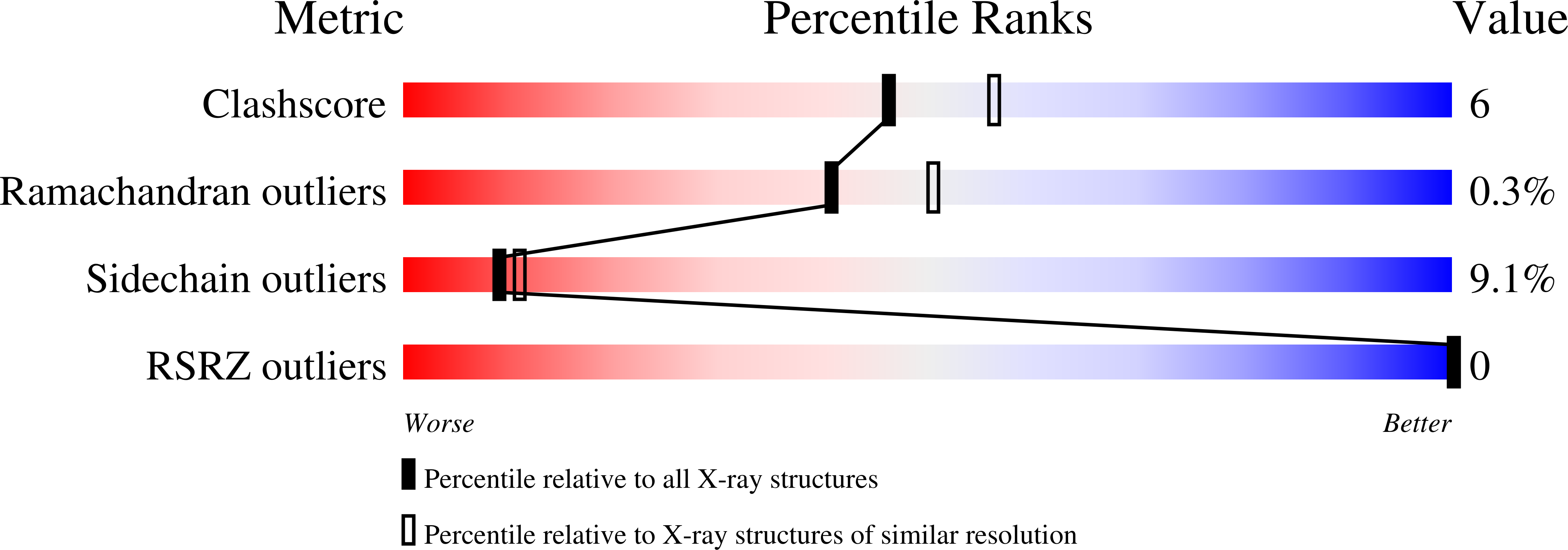
2.30 Å
R-Value Work:
0.17
Space Group:
P 61 2 2
Macromolecular Entities
Structures with similar UniProt ID
Protein Blast
Polymer Type:polypeptide(L)
Molecule:THERMOLYSIN
Gene (Uniprot):npr
Chain IDs:A
Chain Length:316
Number of Molecules:1
Biological Source:Bacillus thermoproteolyticus
Primary Citation

Abstact

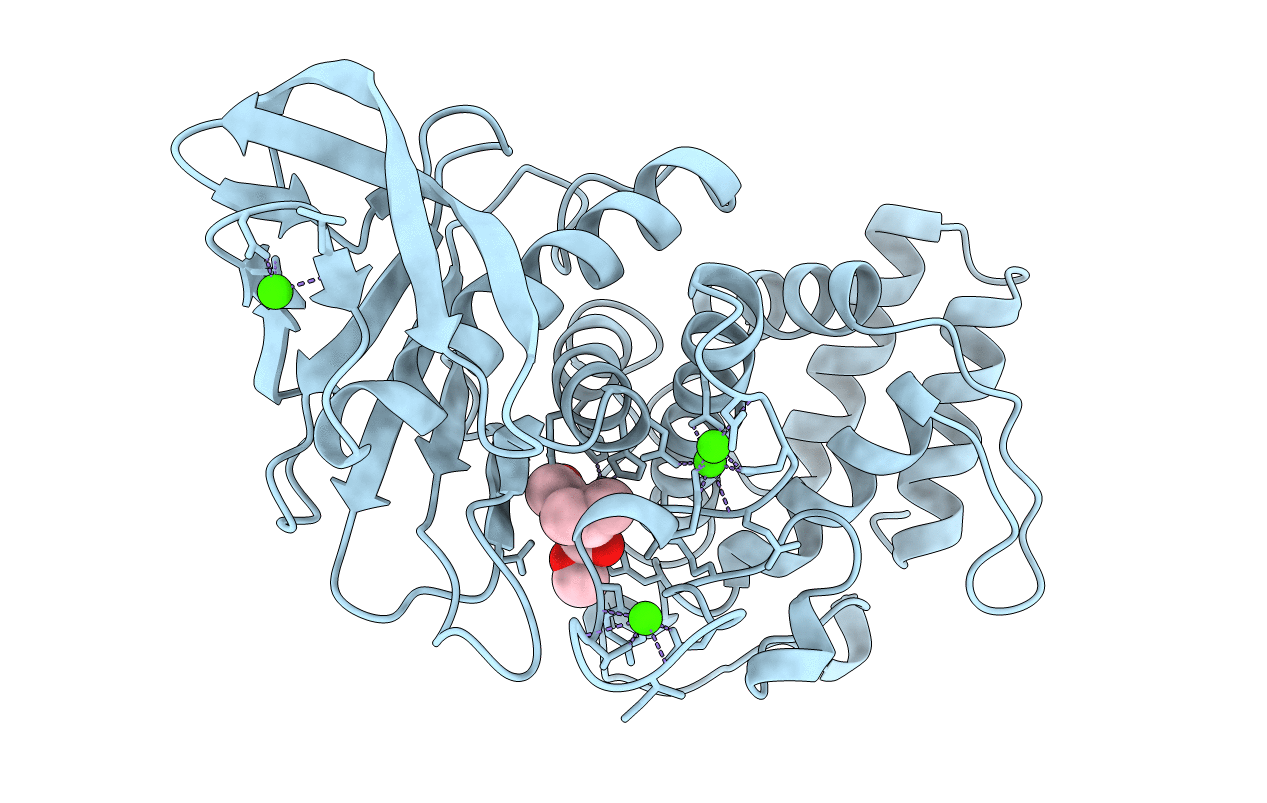
The mode of binding of the irreversible thermolysin inhibitor ClCH2CO-DL-(N-OH)Leu-OCH3 [Rasnick, D., & Powers, J.C. (1978) Biochemistry 17, 4363-4369] has been determined by X-ray crystallography at a resolution of 2.3 A and the structure of the covalent complex refined to give a crystallographic residual of 17.0%. This is the first such structural study of an active-site-directed covalent complex of a zinc protease. As anticipated by Rasnick and Powers, the inhibitor alkylates Glu-143 in the thermolysin active site, and the hydroxamic acid moiety coordinates the zinc ion. The formation of the covalent complex is associated with a significant shift in a segment of the polypeptide backbone in the vicinity of the active site. This conformational adjustment appears to be necessary to relieve steric hindrance which would otherwise prevent alkylation of Glu-143. It is suggested that this steric hindrance, which occurs for thermolysin but would not be expected for carboxypeptidase A, accounts for the previously inexplicable difference in reactivity of these two metalloproteases toward N-haloacetyl amino acids. The relevance of this steric hindrance to the mechanism of catalysis is discussed. In agreement with previous results [Kester, W. R., & Matthews, B. W. (1977) Biochemistry 16, 2506-2516], it appears that steric hindrance prevents the direct attack of Glu-143 on the carbonyl carbon of an extended substrate, therefore ruling out the anhydride pathway in thermolysin-catalyzed hydrolysis of polypeptide substrates and their ester analogues.

Legend

Protein

Chemical

Disease

Primary Citation of related structures
Feedback Form
Name
Email
Institute
Feedback