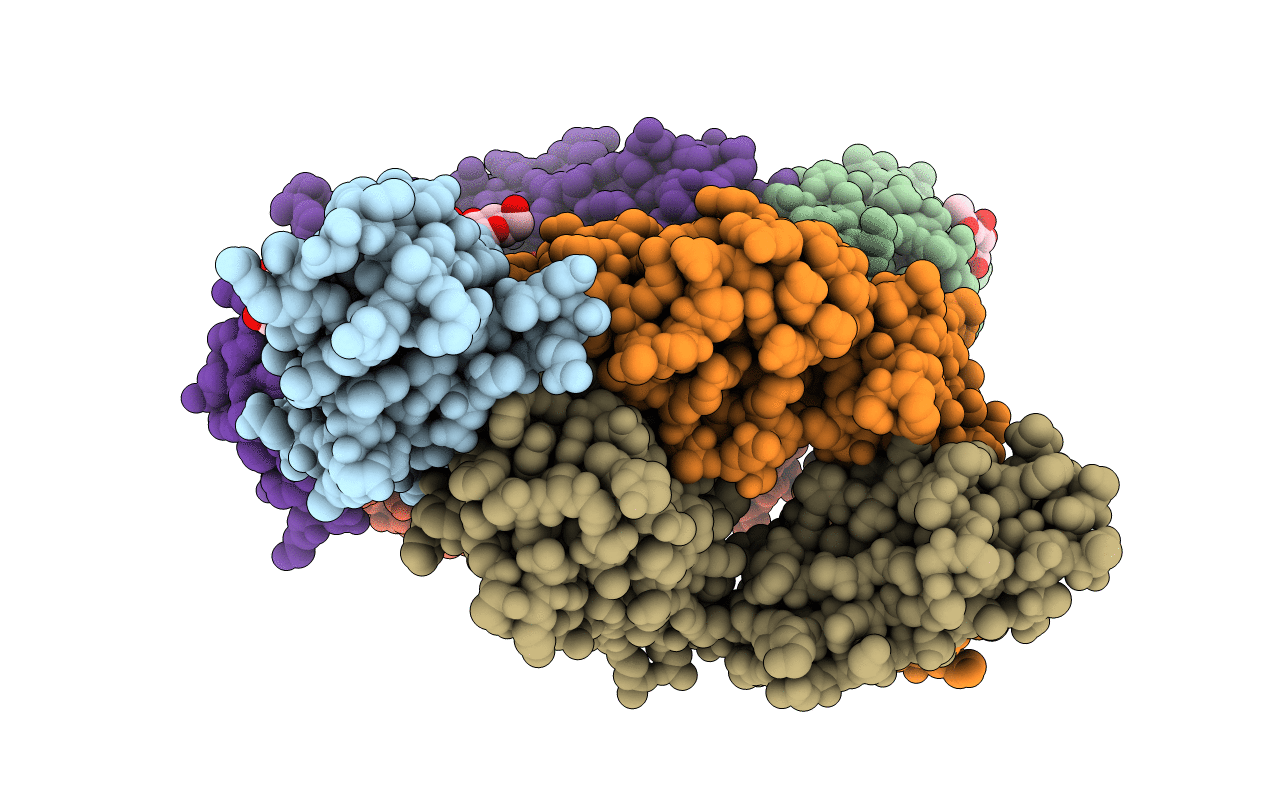
7SU0 image
Deposition Date 2021-11-15
Release Date 2022-03-02
Last Version Date 2024-10-16
Entry Detail
PDB ID:
7SU0
Keywords:
Title:
Crystal structure of an acidic pH-selective Ipilimumab variant Ipi.105 in complex with CTLA-4
Biological Source:
Source Organism:
Homo sapiens (Taxon ID: 9606)
Host Organism:
Method Details:
Experimental Method:
Resolution:
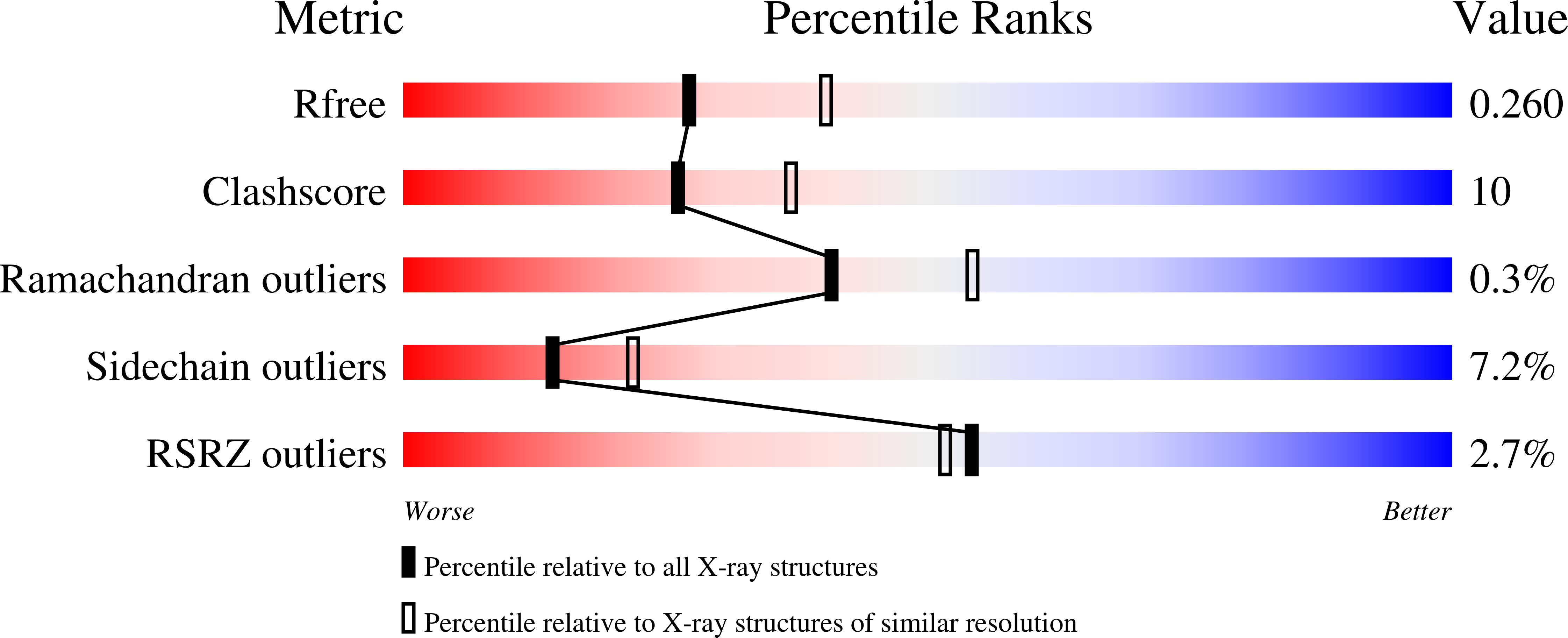
2.41 Å
R-Value Free:
0.26
R-Value Work:
0.20
R-Value Observed:
0.20
Space Group:
C 2 2 21
Macromolecular Entities
Structures with similar UniProt ID
Protein Blast
Polymer Type:polypeptide(L)
Molecule:Cytotoxic T-lymphocyte protein 4
Gene (Uniprot):CTLA4
Chain IDs:A (auth: C), D
Chain Length:125
Number of Molecules:2
Biological Source:Homo sapiens
Polymer Type:polypeptide(L)
Molecule:Fab heavy chain
Chain IDs:B (auth: H), E (auth: I)
Chain Length:229
Number of Molecules:2
Biological Source:Homo sapiens
Polymer Type:polypeptide(L)
Molecule:Fab light chain
Chain IDs:C (auth: L), F (auth: M)
Chain Length:215
Number of Molecules:2
Biological Source:Homo sapiens
Primary Citation
Improved therapeutic index of an acidic pH-selective antibody.
Mabs 14 2024642 2024642 (2022)
PMID: 35192429 DOI: 10.1080/19420862.2021.2024642

Abstact

Although therapeutically efficacious, ipilimumab can exhibit dose-limiting toxicity that prevents maximal efficacious clinical outcomes and can lead to discontinuation of treatment. We hypothesized that an acidic pH-selective ipilimumab (pH Ipi), which preferentially and reversibly targets the acidic tumor microenvironment over the neutral periphery, may have a more favorable therapeutic index. While ipilimumab has pH-independent CTLA-4 affinity, pH Ipi variants have been engineered to have up to 50-fold enhanced affinity to CTLA-4 at pH 6.0 compared to pH 7.4. In hCTLA-4 knock-in mice, these variants have maintained anti-tumor activity and reduced peripheral activation, a surrogate marker for toxicity. pH-sensitive therapeutic antibodies may be a differentiating paradigm and a novel modality for enhanced tumor targeting and improved safety profiles.

Legend

Protein

Chemical

Disease

Primary Citation of related structures
Feedback Form
Name
Email
Institute
Feedback