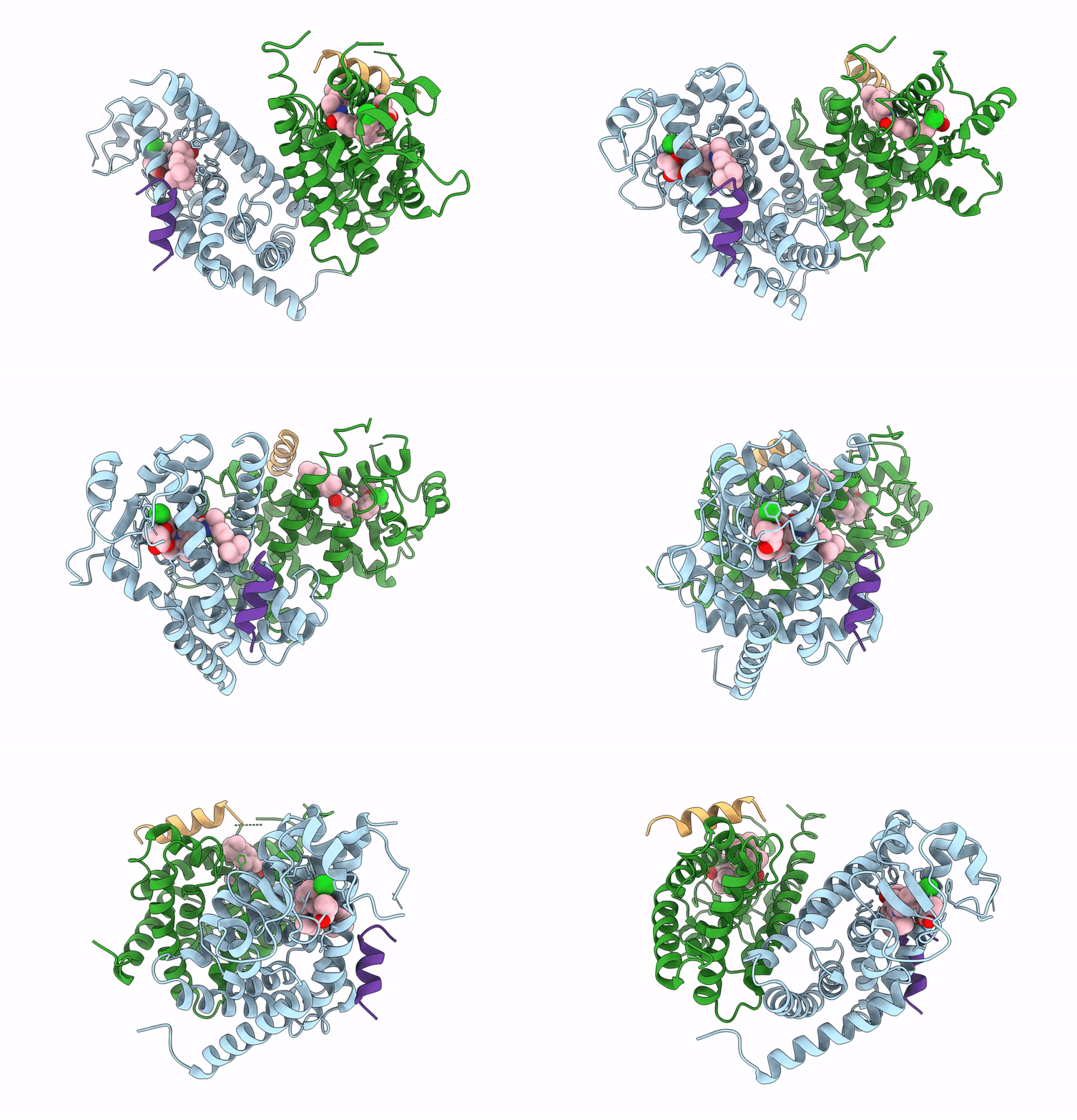
7SQA image
Deposition Date 2021-11-05
Release Date 2023-05-10
Last Version Date 2023-10-25
Entry Detail
PDB ID:
7SQA
Keywords:
Title:
PPAR gamma LBD bound to SR10221 and SMRT corepressor motif
Biological Source:
Source Organism:
Homo sapiens (Taxon ID: 9606)
Host Organism:
Method Details:
Experimental Method:
Resolution:
2.50 Å
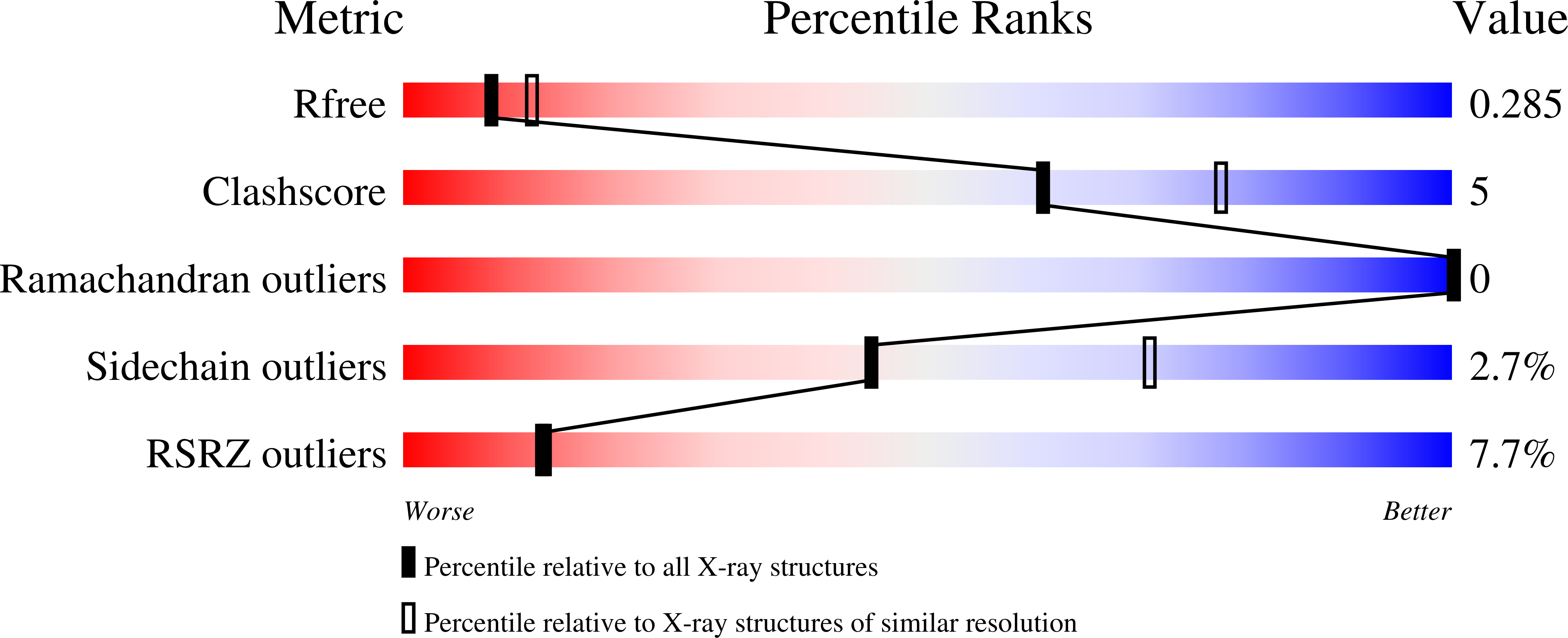
R-Value Free:
0.28
R-Value Work:
0.23
R-Value Observed:
0.23
Space Group:
P 1 21 1
Macromolecular Entities
Structures with similar UniProt ID
Protein Blast
Polymer Type:polypeptide(L)
Molecule:Peroxisome proliferator-activated receptor gamma
Gene (Uniprot):PPARG
Chain IDs:A, B
Chain Length:290
Number of Molecules:2
Biological Source:Homo sapiens
Structures with similar UniProt ID
Protein Blast
Polymer Type:polypeptide(L)
Molecule:Nuclear receptor corepressor 2
Gene (Uniprot):NCOR2
Chain IDs:C, D
Chain Length:22
Number of Molecules:2
Biological Source:Homo sapiens
Ligand Molecules
Primary Citation
PPAR gamma Corepression Involves Alternate Ligand Conformation and Inflation of H12 Ensembles.
Acs Chem.Biol. 18 1115 1123 (2023)
PMID: 37146157 DOI: 10.1021/acschembio.2c00917

Abstact

Inverse agonists of peroxisome proliferator activated receptor γ (PPARγ) have emerged as safer alternatives to full agonists for their reduced side effects while still maintaining impressive insulin-sensitizing properties. To shed light on their molecular mechanism, we characterized the interaction of the PPARγ ligand binding domain with SR10221. X-ray crystallography revealed a novel binding mode of SR10221 in the presence of a transcriptionally repressing corepressor peptide, resulting in much greater destabilization of the activation helix, H12, than without corepressor peptide. Electron paramagnetic resonance provided in-solution complementary protein dynamic data, which revealed that for SR10221-bound PPARγ, H12 adopts a plethora of conformations in the presence of corepressor peptide. Together, this provides the first direct evidence for corepressor-driven ligand conformation for PPARγ and will allow the development of safer and more effective insulin sensitizers suitable for clinical use.

Legend

Protein

Chemical

Disease

Primary Citation of related structures
Feedback Form
Name
Email
Institute
Feedback