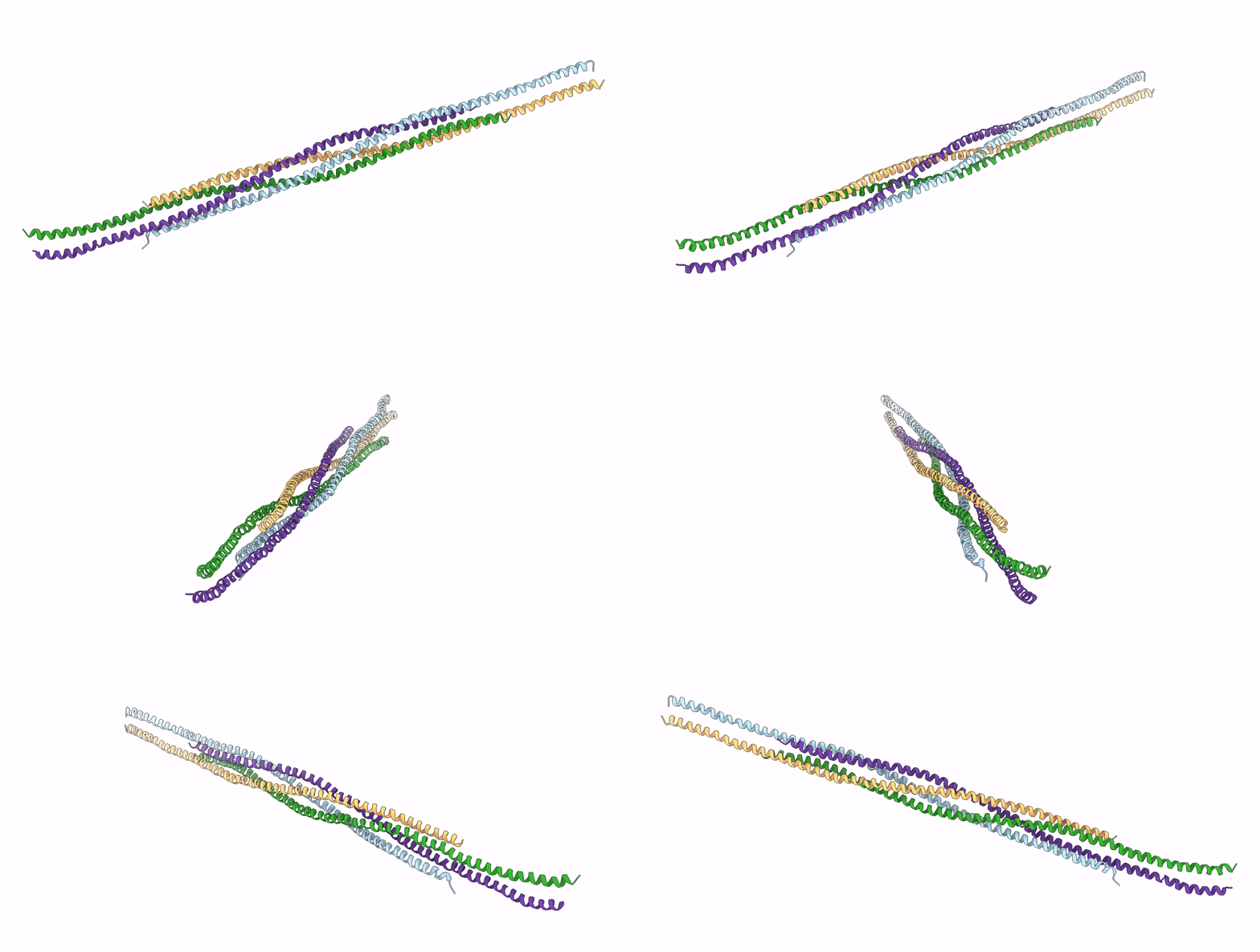
7S5U image
Deposition Date 2021-09-12
Release Date 2023-03-15
Last Version Date 2023-10-25
Entry Detail
PDB ID:
7S5U
Keywords:
Title:
Extended bipolar assembly domain of kinesin-5 minifilament
Biological Source:
Source Organism:
Method Details:
Experimental Method:
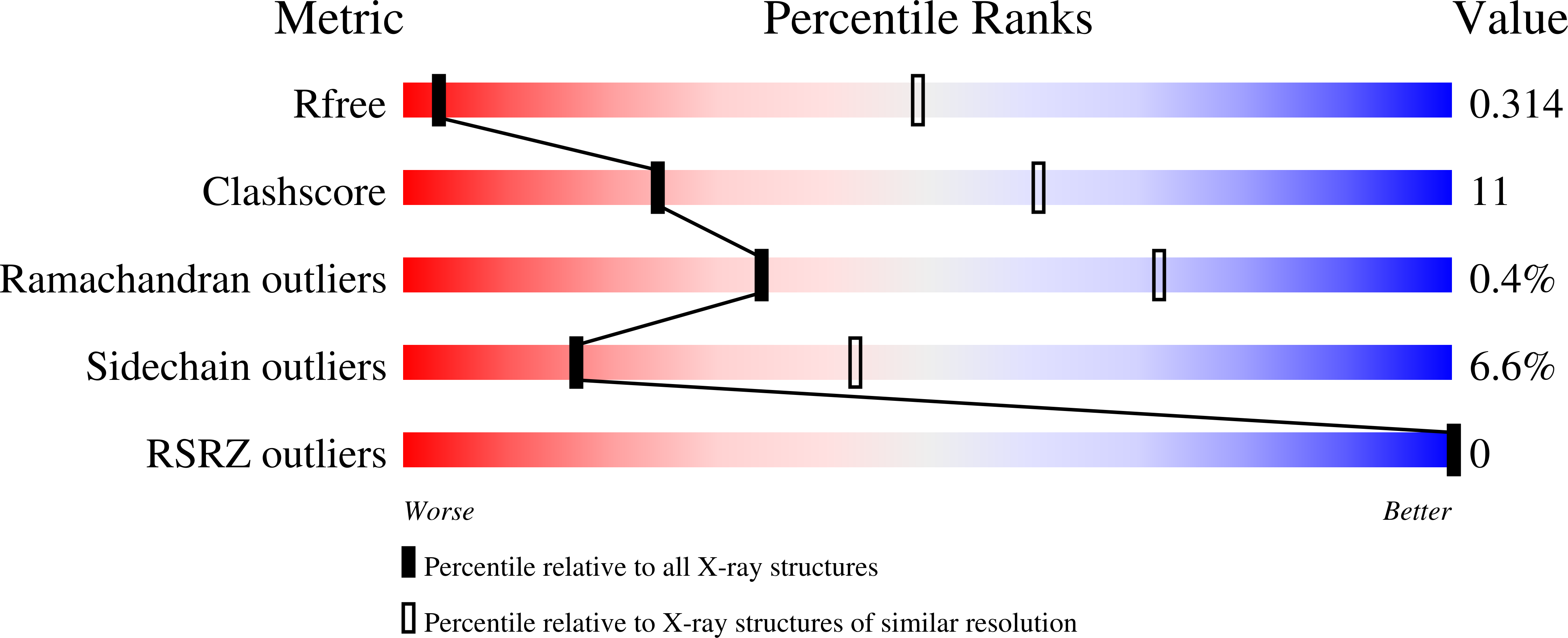
Resolution:
4.41 Å
R-Value Free:
0.30
R-Value Work:
0.27
R-Value Observed:
0.27
Space Group:
C 1 2 1
Macromolecular Entities
Structures with similar UniProt ID
Protein Blast
Polymer Type:polypeptide(L)
Molecule:Kinesin-like protein Klp61F
Gene (Uniprot):Klp61F
Chain IDs:A, B, C (auth: D), D (auth: C)
Chain Length:248
Number of Molecules:4
Biological Source:Drosophila melanogaster
Ligand Molecules
Primary Citation
The kinesin-5 tail and bipolar miniflament domains are the origin of its microtubule crosslinking and sliding activity.
Mol.Biol.Cell ? mbcE23070287 mbcE23070287 (2023)
PMID: 37610838 DOI: 10.1091/mbc.E23-07-0287

Abstact

Kinesin-5 crosslinks and slides apart microtubules to assemble, elongate, and maintain the mitotic spindle. Kinesin-5 is a tetramer, where two N-terminal motor domains are positioned at each end of the motor, and the coiled-coil stalk domains are organized into a tetrameric bundle through the bipolar assembly (BASS) domain. To dissect the function of the individual structural elements of the motor, we constructed a minimal kinesin-5 tetramer (mini-tetramer). We determined the x-ray structure of the extended, 34-nm BASS domain. Guided by these structural studies, we generated active bipolar kinesin-5 mini-tetramer motors from Drosophila melanogastor and human orthologues which are half the length of native kinesin-5. We then used these kinesin-5 mini-tetramers to examine the role of two unique structural adaptations of kinesin-5: 1) the length and flexibility of the tetramer, and 2) the C-terminal tails which interact with the motor domains to coordinate their ATPase activity. The C-terminal domain causes frequent pausing and clustering of kinesin-5. By comparing microtubule crosslinking and sliding by mini-tetramer and full-length kinesin-5, we find that both the length and flexibility of kinesin-5 and the C-terminal tails govern its ability to crosslink microtubules. Once crosslinked, stiffer mini-tetramers slide antiparallel microtubules more efficiently than full-length motors.

Legend

Protein

Chemical

Disease

Primary Citation of related structures
Feedback Form
Name
Email
Institute
Feedback