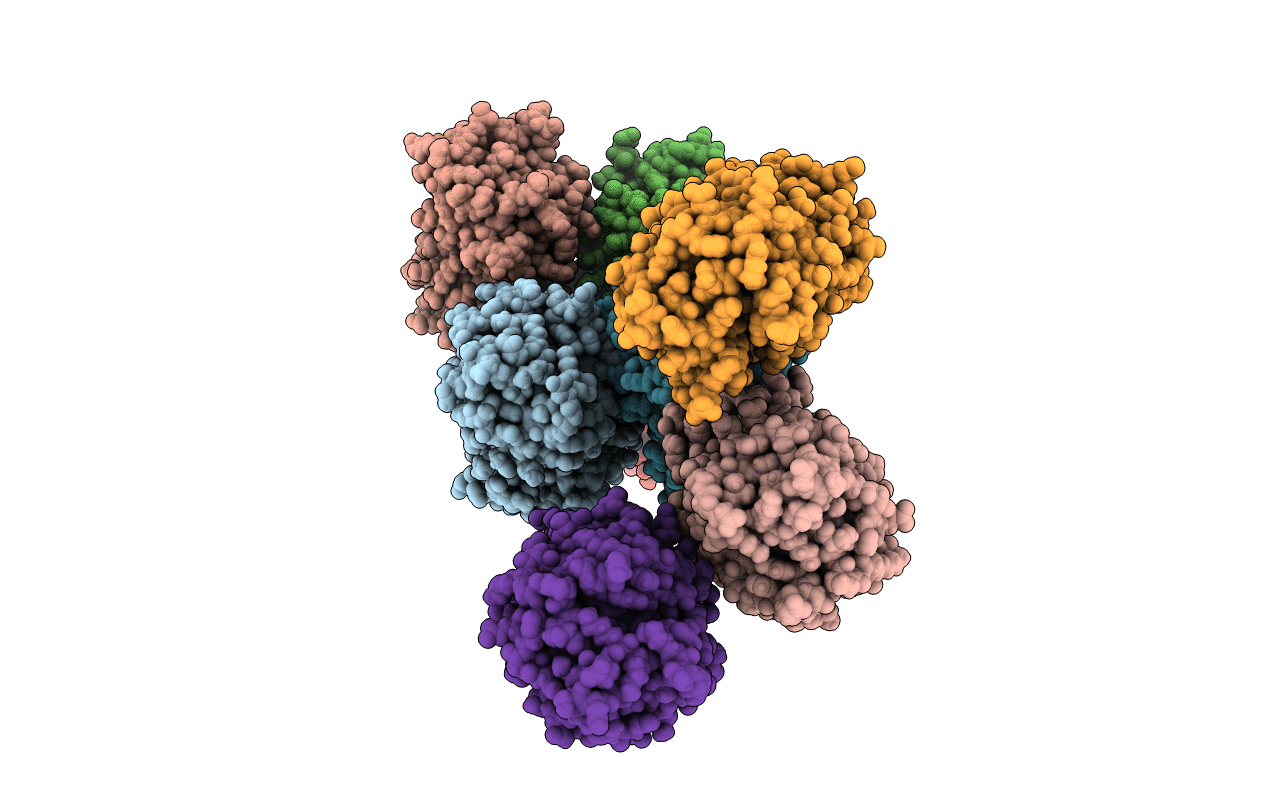
7RY2 image
Deposition Date 2021-08-24
Release Date 2022-01-26
Last Version Date 2023-11-15
Entry Detail
PDB ID:
7RY2
Title:
mSandy2
Biological Source:
Source Organism:
Discosoma sp. (Taxon ID: 86600)
Host Organism:
Method Details:
Experimental Method:
Resolution:
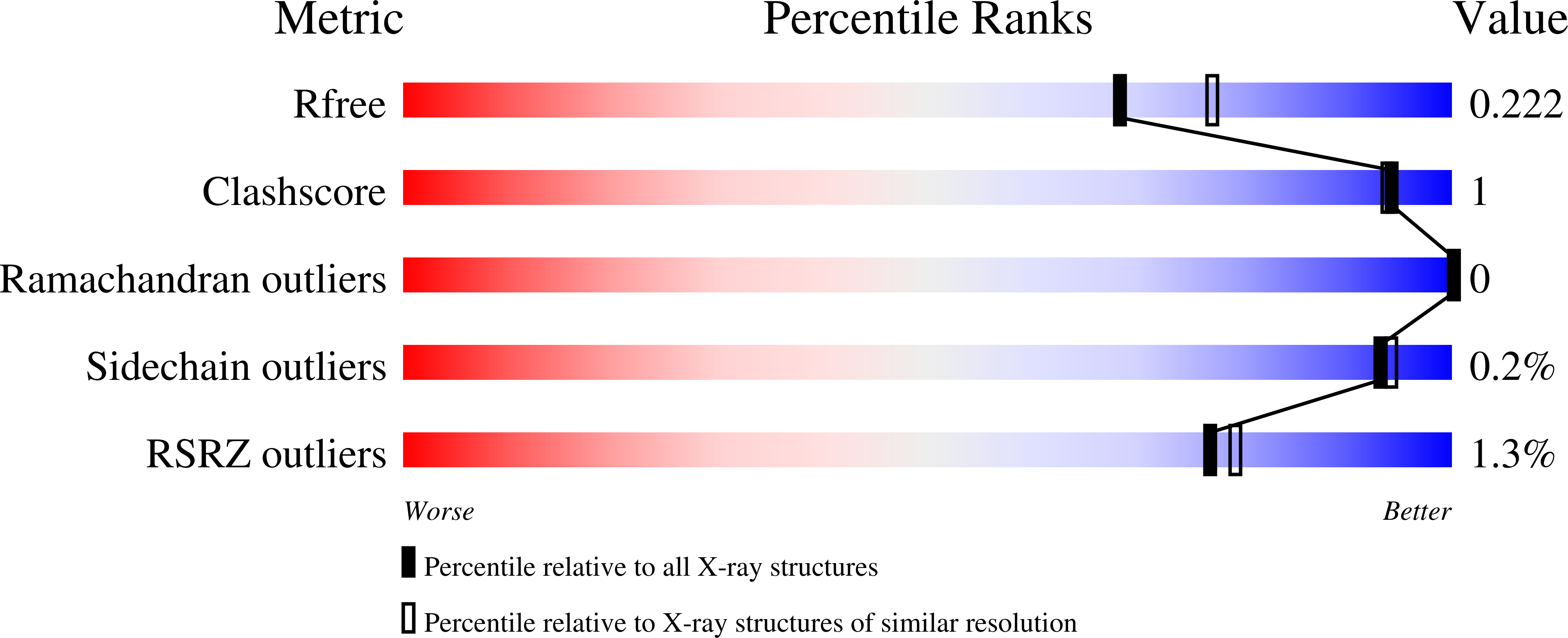
2.05 Å
R-Value Free:
0.22
R-Value Work:
0.18
R-Value Observed:
0.19
Space Group:
P 21 21 21
Macromolecular Entities
Structures with similar UniProt ID
Protein Blast
Polymer Type:polypeptide(L)
Molecule:mSandy2
Chain IDs:A, B, C, D, F, G
Chain Length:244
Number of Molecules:6
Biological Source:Discosoma sp.
Structures with similar UniProt ID
Protein Blast
Polymer Type:polypeptide(L)
Molecule:mSandy2
Chain IDs:E, H
Chain Length:244
Number of Molecules:2
Biological Source:Discosoma sp.
Primary Citation
Generation of bright monomeric red fluorescent proteins via computational design of enhanced chromophore packing.
Chem Sci 13 1408 1418 (2022)
PMID: 35222925 DOI: 10.1039/d1sc05088e

Abstact

Red fluorescent proteins (RFPs) have found widespread application in chemical and biological research due to their longer emission wavelengths. Here, we use computational protein design to increase the quantum yield and thereby brightness of a dim monomeric RFP (mRojoA, quantum yield = 0.02) by optimizing chromophore packing with aliphatic residues, which we hypothesized would reduce torsional motions causing non-radiative decay. Experimental characterization of the top 10 designed sequences yielded mSandy1 (λ em = 609 nm, quantum yield = 0.26), a variant with equivalent brightness to mCherry, a widely used RFP. We next used directed evolution to further increase brightness, resulting in mSandy2 (λ em = 606 nm, quantum yield = 0.35), the brightest Discosoma sp. derived monomeric RFP with an emission maximum above 600 nm reported to date. Crystallographic analysis of mSandy2 showed that the chromophore p-hydroxybenzylidene moiety is sandwiched between the side chains of Leu63 and Ile197, a structural motif that has not previously been observed in RFPs, and confirms that aliphatic packing leads to chromophore rigidification. Our results demonstrate that computational protein design can be used to generate bright monomeric RFPs, which can serve as templates for the evolution of novel far-red fluorescent proteins.

Legend

Protein

Chemical

Disease

Primary Citation of related structures
Feedback Form
Name
Email
Institute
Feedback