7RPP image
Deposition Date 2021-08-04
Release Date 2022-08-10
Last Version Date 2023-10-18
Entry Detail
PDB ID:
7RPP
Keywords:
Title:
Crystal structure of human CEACAM1 with GFCC' and ABED face
Biological Source:
Source Organism:
Homo sapiens (Taxon ID: 9606)
Host Organism:
Method Details:
Experimental Method:
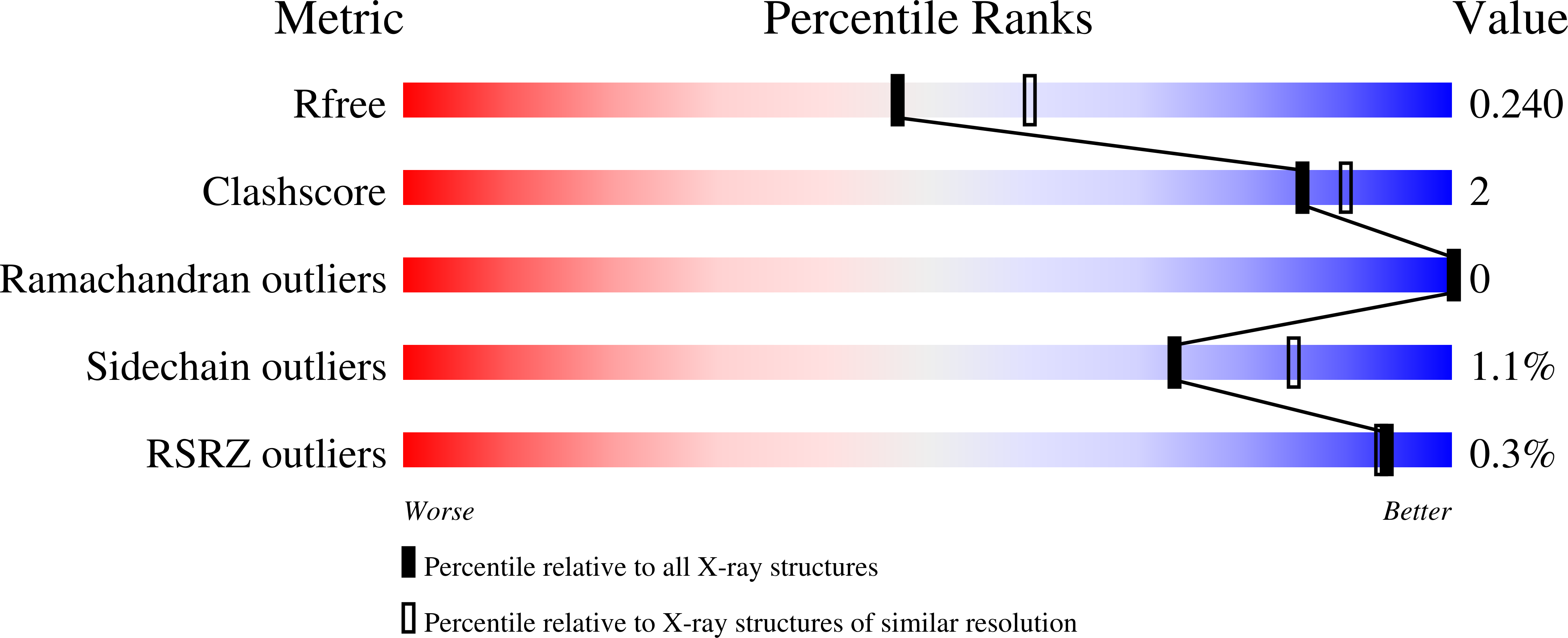
Resolution:
2.20 Å
R-Value Free:
0.23
R-Value Work:
0.18
R-Value Observed:
0.18
Space Group:
C 1 2 1
Macromolecular Entities
Structures with similar UniProt ID
Protein Blast
Polymer Type:polypeptide(L)
Molecule:Carcinoembryonic antigen-related cell adhesion molecule 1
Gene (Uniprot):CEACAM1
Chain IDs:A, B, C
Chain Length:107
Number of Molecules:3
Biological Source:Homo sapiens
Ligand Molecules
Primary Citation
Structural analysis of human CEACAM1 oligomerization.
Commun Biol 5 1042 1042 (2022)
PMID: 36180783 DOI: 10.1038/s42003-022-03996-4

Abstact

The human (h) CEACAM1 GFCC' face serves as a binding site for homophilic and heterophilic interactions with various microbial and host ligands. hCEACAM1 has also been observed to form oligomers and micro-clusters on the cell surface which are thought to regulate hCEACAM1-mediated signaling. However, the structural basis for hCEACAM1 higher-order oligomerization is currently unknown. To understand this, we report a hCEACAM1 IgV oligomer crystal structure which shows how GFCC' face-mediated homodimerization enables highly flexible ABED face interactions to arise. Structural modeling and nuclear magnetic resonance (NMR) studies predict that such oligomerization is not impeded by the presence of carbohydrate side-chain modifications. In addition, using UV spectroscopy and NMR studies, we show that oligomerization is further facilitated by the presence of a conserved metal ion (Zn++ or Ni++) binding site on the G strand of the FG loop. Together these studies provide biophysical insights on how GFCC' and ABED face interactions together with metal ion binding may facilitate hCEACAM1 oligomerization beyond dimerization.

Legend

Protein

Chemical

Disease

Primary Citation of related structures
Feedback Form
Name
Email
Institute
Feedback