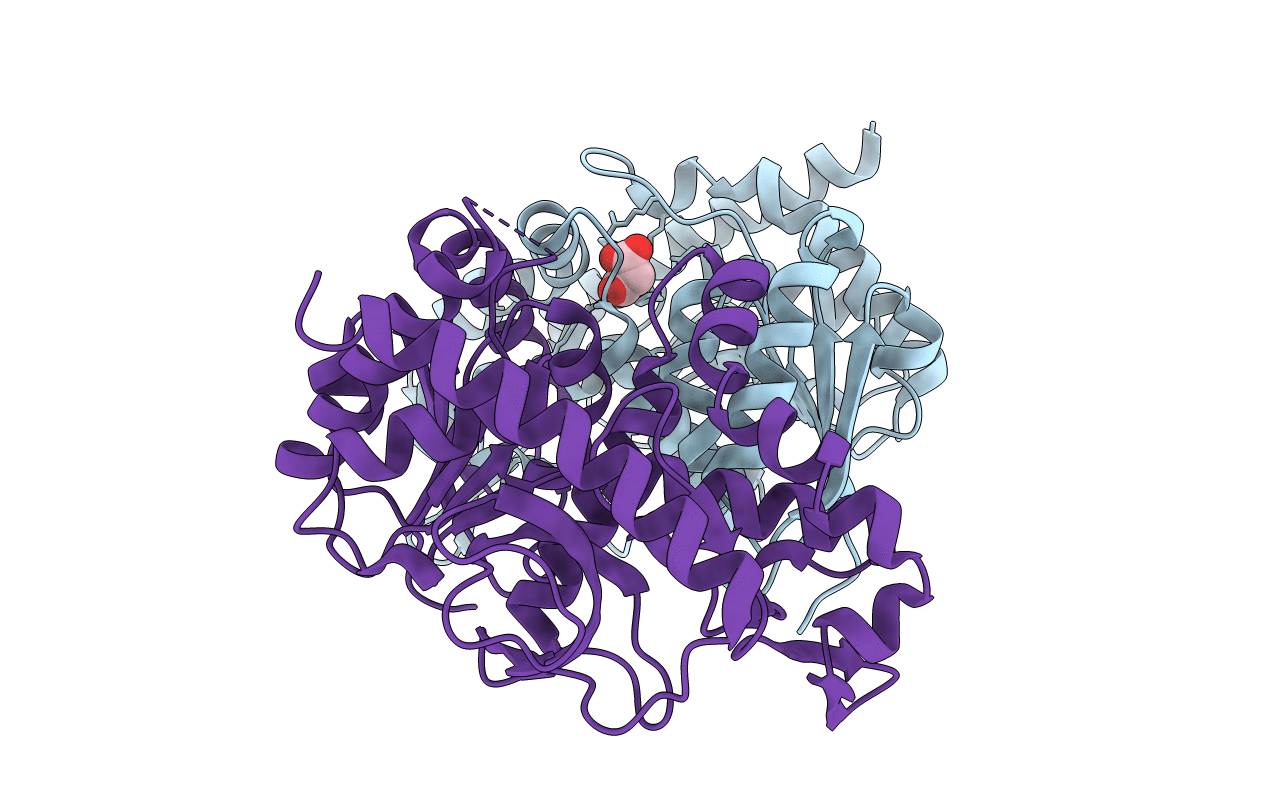
7RM9 image
Deposition Date 2021-07-27
Release Date 2022-01-05
Last Version Date 2023-10-18
Entry Detail
PDB ID:
7RM9
Keywords:
Title:
Human Malate Dehydrogenase I (MDHI)
Biological Source:
Source Organism:
Homo sapiens (Taxon ID: 9606)
Host Organism:
Method Details:
Experimental Method:
Resolution:
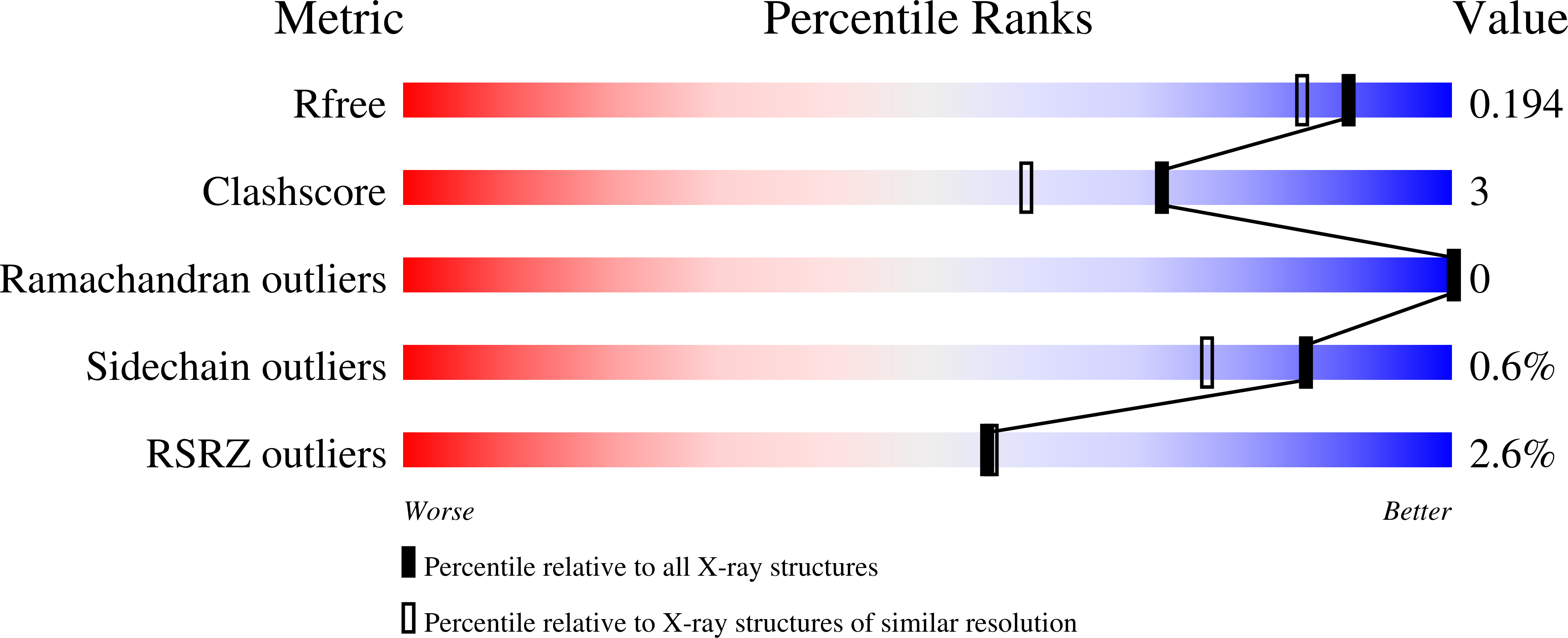
1.65 Å
R-Value Free:
0.19
R-Value Work:
0.16
R-Value Observed:
0.16
Space Group:
P 1 21 1
Macromolecular Entities
Structures with similar UniProt ID
Protein Blast
Polymer Type:polypeptide(L)
Molecule:Malate dehydrogenase, cytoplasmic
Gene (Uniprot):MDH1
Chain IDs:A, B
Chain Length:334
Number of Molecules:2
Biological Source:Homo sapiens
Ligand Molecules
Primary Citation
Structural Characterization of the Human Cytosolic Malate Dehydrogenase I.
Acs Omega 7 207 214 (2022)
PMID: 35036692 DOI: 10.1021/acsomega.1c04385

Abstact

The first crystal structure of the human cytosolic malate dehydrogenase I (MDH1) is described. Structure determination at a high resolution (1.65 Å) followed production, isolation, and purification of human MDH1 using a bacterial expression system. The structure is a binary complex of MDH1 with only a bound malonate molecule in the substrate binding site. Comparisons of this structure with malate dehydrogenase enzymes from other species confirm that the human enzyme adopts similar secondary, tertiary, and quaternary structures and that the enzyme retains a similar conformation even when nicotinamide adenine dinucleotide (NAD+) is not bound. A comparison to the highly homologous porcine (sus scrofa) MDH1 ternary structures leads to the conclusion that only small conformational differences are needed to accommodate binding by NAD+ or other NAD+ mimetics. Conformational differences observed in the second subunit show that the NAD+ binding elements are nevertheless quite flexible. Comparison of hMDH1 to the human mitochondrial malate dehydrogenase (hMDH2) reveals some key differences in the α7-α8 loop, which lies directly beneath the substrate binding pocket. These differences might be exploited in the structure-assisted design of selective small molecule inhibitors of hMDH1, an emerging target for the development of anticancer therapeutics.

Legend

Protein

Chemical

Disease

Primary Citation of related structures
Feedback Form
Name
Email
Institute
Feedback