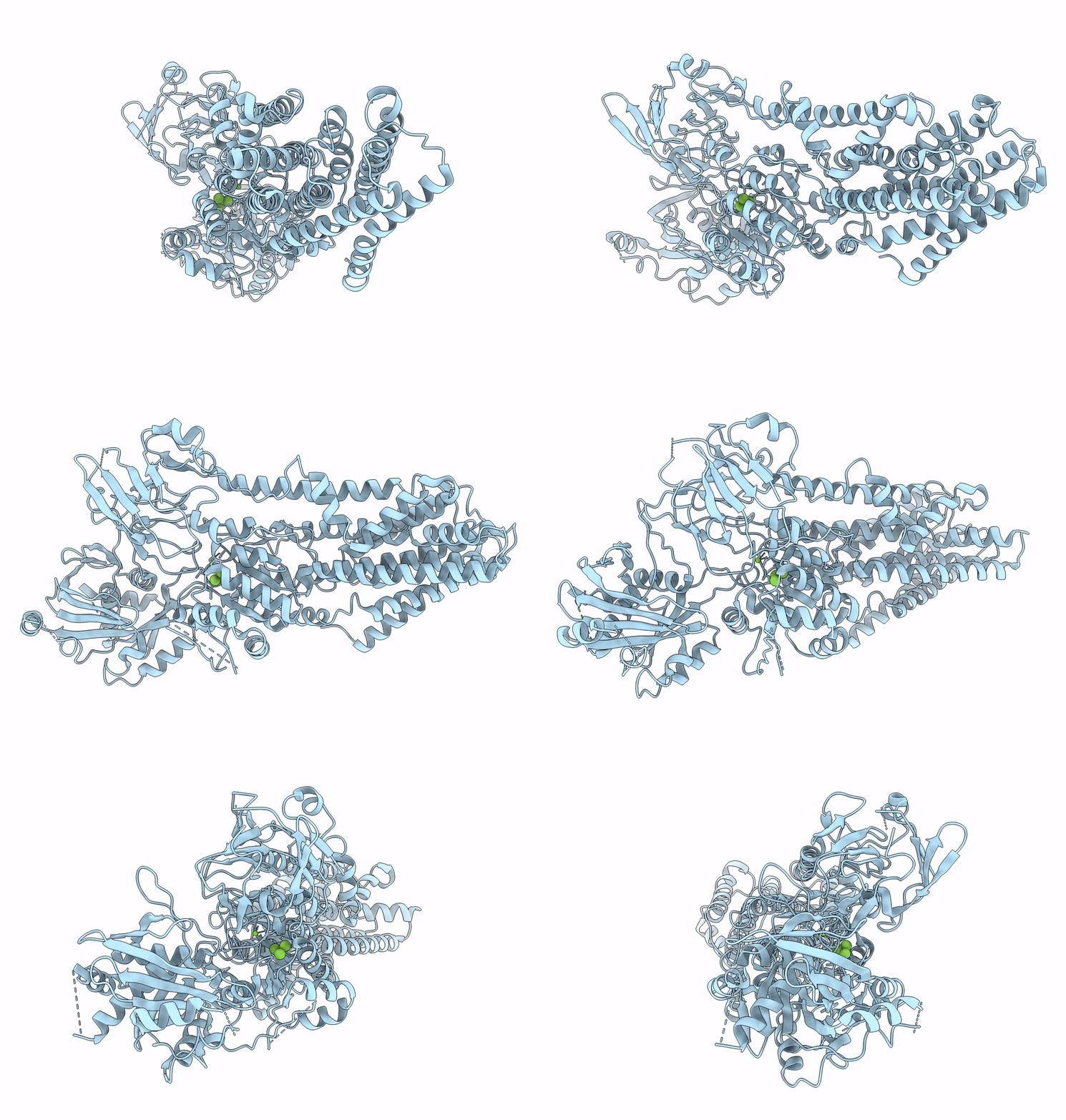
7RD6 image
Deposition Date 2021-07-09
Release Date 2021-09-29
Last Version Date 2025-05-21
Entry Detail
PDB ID:
7RD6
Keywords:
Title:
Structure of the S. cerevisiae P4B ATPase lipid flippase in the E2P state
Biological Source:
Source Organism:
Method Details:
Experimental Method:
Resolution:
3.25 Å
Aggregation State:
PARTICLE
Reconstruction Method:
SINGLE PARTICLE

Macromolecular Entities
Structures with similar UniProt ID
Protein Blast
Polymer Type:polypeptide(L)
Molecule:Probable phospholipid-transporting ATPase NEO1
Gene (Uniprot):NEO1
Chain IDs:A
Chain Length:1151
Number of Molecules:1
Biological Source:Saccharomyces cerevisiae
Primary Citation
Structural basis of the P4B ATPase lipid flippase activity.
Nat Commun 12 5963 5963 (2021)
PMID: 34645814 DOI: 10.1038/s41467-021-26273-0

Abstact

P4 ATPases are lipid flippases that are phylogenetically grouped into P4A, P4B and P4C clades. The P4A ATPases are heterodimers composed of a catalytic α-subunit and accessory β-subunit, and the structures of several heterodimeric flippases have been reported. The S. cerevisiae Neo1 and its orthologs represent the P4B ATPases, which function as monomeric flippases without a β-subunit. It has been unclear whether monomeric flippases retain the architecture and transport mechanism of the dimeric flippases. Here we report the structure of a P4B ATPase, Neo1, in its E1-ATP, E2P-transition, and E2P states. The structure reveals a conserved architecture as well as highly similar functional intermediate states relative to dimeric flippases. Consistently, structure-guided mutagenesis of residues in the proposed substrate translocation path disrupted Neo1's ability to establish membrane asymmetry. These observations indicate that evolutionarily distant P4 ATPases use a structurally conserved mechanism for substrate transport.

Legend

Protein

Chemical

Disease

Primary Citation of related structures
Feedback Form
Name
Email
Institute
Feedback