7R7K image
Deposition Date 2021-06-24
Release Date 2022-06-29
Last Version Date 2023-10-18
Entry Detail
PDB ID:
7R7K
Keywords:
Title:
Structure of Human Anaplastic Lymphoma Kinase Domain in complex with (4-[6-amino-5-[(1~{R})-1-[5-fluoro-2-(triazol-2-yl)phenyl]ethoxy]-3-pyridyl]isoindolin-1-one)
Biological Source:
Source Organism:
Homo sapiens (Taxon ID: 9606)
Host Organism:
Method Details:
Experimental Method:
Resolution:
1.83 Å
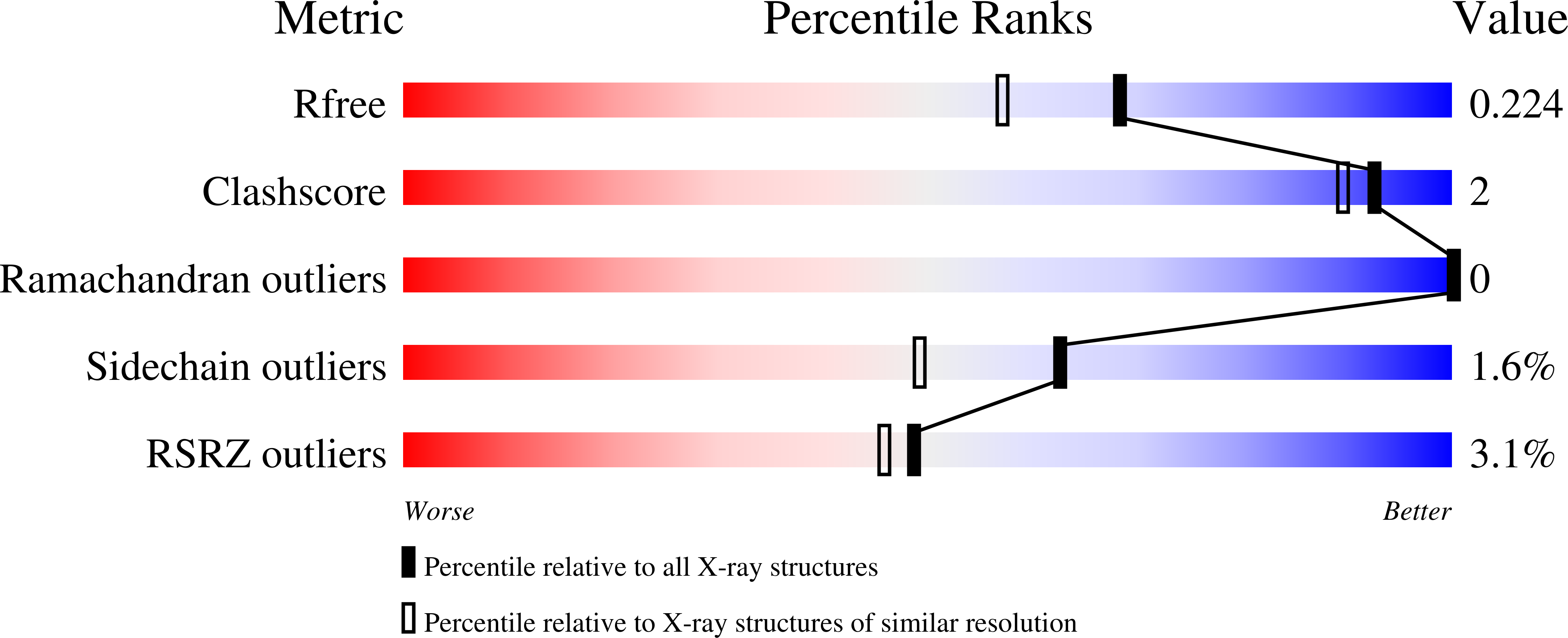
R-Value Free:
0.22
R-Value Work:
0.19
R-Value Observed:
0.19
Space Group:
P 21 21 21
Macromolecular Entities
Structures with similar UniProt ID
Protein Blast
Polymer Type:polypeptide(L)
Molecule:ALK tyrosine kinase receptor
Gene (Uniprot):ALK
Chain IDs:A
Chain Length:327
Number of Molecules:1
Biological Source:Homo sapiens
Ligand Molecules
Primary Citation
Analysis of lorlatinib analogs reveals a roadmap for targeting diverse compound resistance mutations in ALK-positive lung cancer.
Nat Cancer 3 710 722 (2022)
PMID: 35726063 DOI: 10.1038/s43018-022-00399-6

Abstact

Lorlatinib is currently the most advanced, potent and selective anaplastic lymphoma kinase (ALK) tyrosine kinase inhibitor for the treatment of ALK-positive non-small cell lung cancer in the clinic; however, diverse compound ALK mutations driving therapy resistance emerge. Here, we determine the spectrum of lorlatinib-resistant compound ALK mutations in patients, following treatment with lorlatinib, the majority of which involve ALK G1202R or I1171N/S/T. We further identify structurally diverse lorlatinib analogs that harbor differential selective profiles against G1202R versus I1171N/S/T compound ALK mutations. Structural analysis revealed increased potency against compound mutations through improved inhibition of either G1202R or I1171N/S/T mutant kinases. Overall, we propose a classification of heterogenous ALK compound mutations enabling the development of distinct therapeutic strategies for precision targeting following sequential tyrosine kinase inhibitors.

Legend

Protein

Chemical

Disease

Primary Citation of related structures
Feedback Form
Name
Email
Institute
Feedback