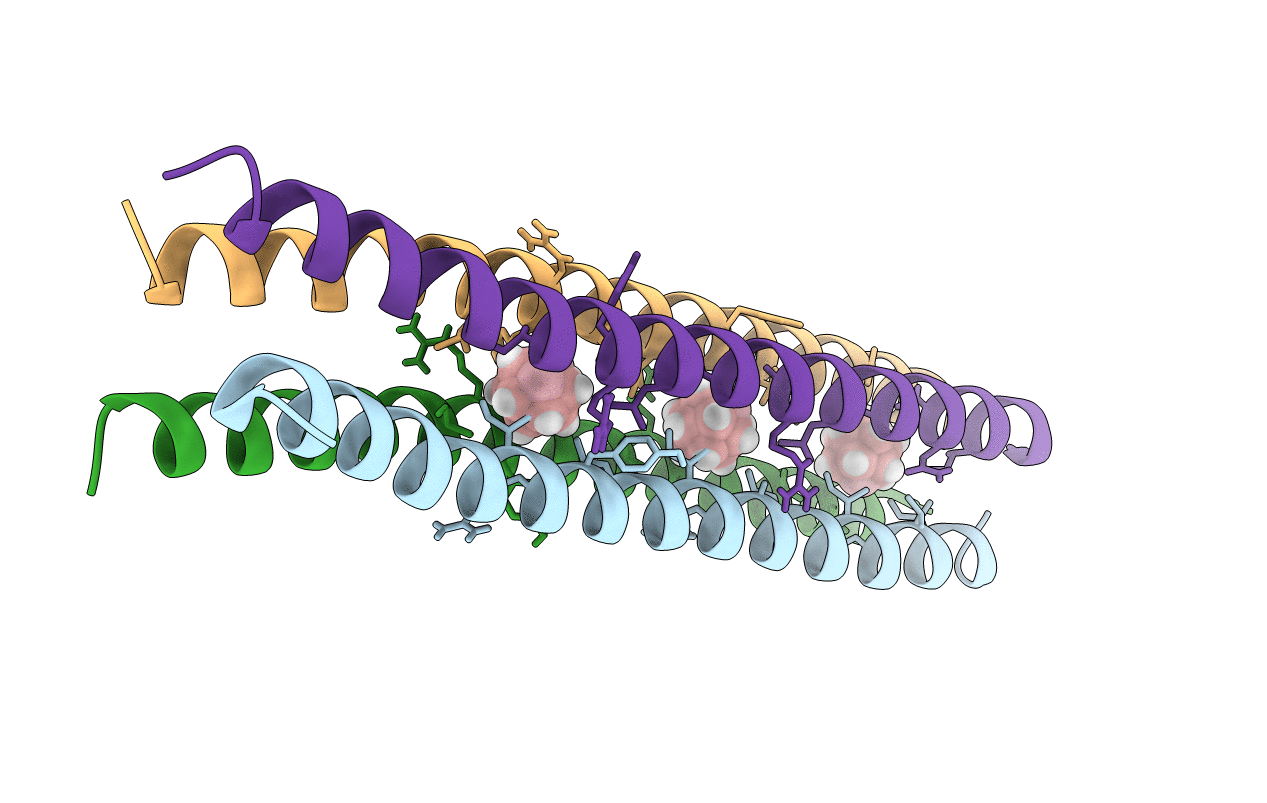
7R6H image
Deposition Date 2021-06-22
Release Date 2021-07-07
Last Version Date 2023-10-18
Entry Detail
PDB ID:
7R6H
Title:
RHCC in complex with o-carborane
Biological Source:
Source Organism:
Host Organism:
Method Details:
Experimental Method:
Resolution:
2.20 Å
R-Value Free:
0.26
R-Value Work:
0.22
R-Value Observed:
0.22
Space Group:
P 21 21 21

Macromolecular Entities
Structures with similar UniProt ID
Protein Blast
Polymer Type:polypeptide(L)
Molecule:Tetrabrachion
Chain IDs:A, B, C, D
Chain Length:52
Number of Molecules:4
Biological Source:Staphylothermus marinus
Ligand Molecules
Primary Citation
Boron rich nanotube drug carrier system is suited for boron neutron capture therapy.
Sci Rep 11 15520 15520 (2021)
PMID: 34330984 DOI: 10.1038/s41598-021-95044-0

Abstact

Boron neutron capture therapy (BNCT) is a two-step therapeutic process that utilizes Boron-10 in combination with low energy neutrons to effectively eliminate targeted cells. This therapy is primarily used for difficult to treat head and neck carcinomas; recent advances have expanded this method to cover a broader range of carcinomas. However, it still remains an unconventional therapy where one of the barriers for widespread adoption is the adequate delivery of Boron-10 to target cells. In an effort to address this issue, we examined a unique nanoparticle drug delivery system based on a highly stable and modular proteinaceous nanotube. Initially, we confirmed and structurally analyzed ortho-carborane binding into the cavities of the nanotube. The high ratio of Boron to proteinaceous mass and excellent thermal stability suggest the nanotube system as a suitable candidate for drug delivery into cancer cells. The full physicochemical characterization of the nanotube then allowed for further mechanistic molecular dynamic studies of the ortho-carborane uptake and calculations of corresponding energy profiles. Visualization of the binding event highlighted the protein dynamics and the importance of the interhelical channel formation to allow movement of the boron cluster into the nanotube. Additionally, cell assays showed that the nanotube can penetrate outer membranes of cancer cells followed by localization around the cells' nuclei. This work uses an integrative approach combining experimental data from structural, molecular dynamics simulations and biological experiments to thoroughly present an alternative drug delivery device for BNCT which offers additional benefits over current delivery methods.

Legend

Protein

Chemical

Disease

Primary Citation of related structures
Feedback Form
Name
Email
Institute
Feedback