7R3M image
Deposition Date 2022-02-07
Release Date 2023-02-22
Last Version Date 2024-10-23
Entry Detail
PDB ID:
7R3M
Title:
Structure in solution of the TANGO1 cargo-binding domain (21-131)
Biological Source:
Source Organism:
Homo sapiens (Taxon ID: 9606)
Host Organism:
Method Details:
Experimental Method:
Conformers Calculated:
6000
Conformers Submitted:
20
Selection Criteria:
structures with the lowest energy
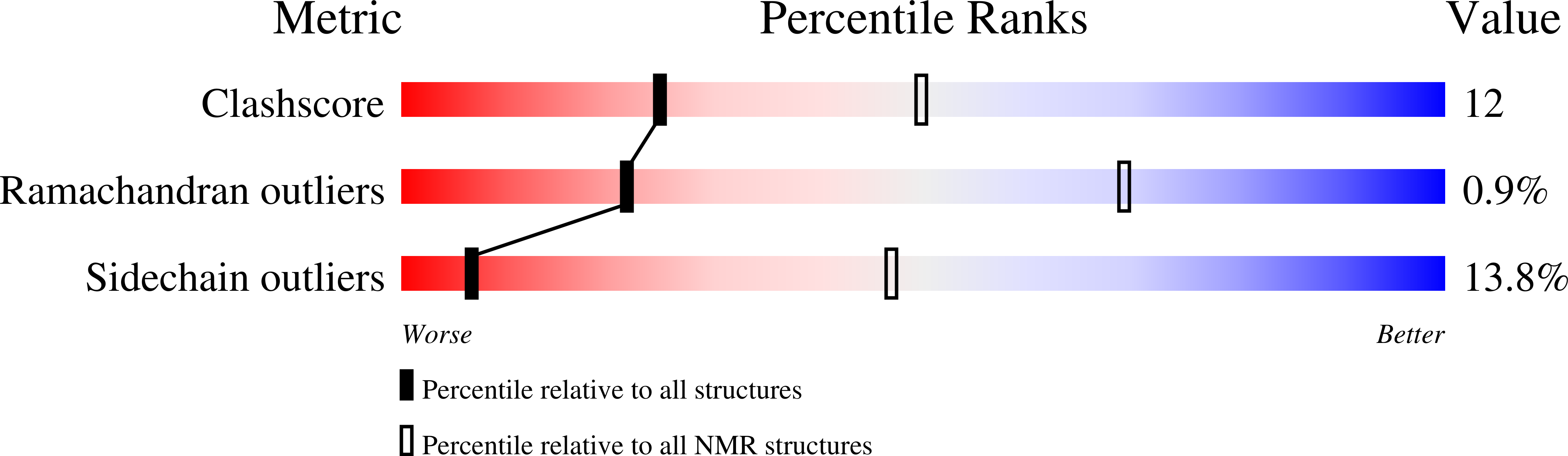
Macromolecular Entities
Structures with similar UniProt ID
Protein Blast
Polymer Type:polypeptide(L)
Molecule:Transport and Golgi organization protein 1 homolog
Gene (Uniprot):MIA3
Chain IDs:A
Chain Length:112
Number of Molecules:1
Biological Source:Homo sapiens
Ligand Molecules
Primary Citation
Characterization of a fold in TANGO1 evolved from SH3 domains for the export of bulky cargos.
Nat Commun 14 2273 2273 (2023)
PMID: 37080980 DOI: 10.1038/s41467-023-37705-4

Abstact

Bulky cargos like procollagens, apolipoproteins, and mucins exceed the size of conventional COPII vesicles. During evolution a process emerged in metazoans, predominantly governed by the TANGO1 protein family, that organizes cargo at the exit sites of the endoplasmic reticulum and facilitates export by the formation of tunnel-like connections between the ER and Golgi. Hitherto, cargo-recognition appeared to be mediated by an SH3-like domain. Based on structural and dynamic data as well as interaction studies from NMR spectroscopy and microscale thermophoresis presented here, we show that the luminal cargo-recognition domain of TANGO1 adopts a new functional fold for which we suggest the term MOTH (MIA, Otoraplin, TALI/TANGO1 homology) domain. These MOTH domains, as well as an evolutionary intermediate found in invertebrates, constitute a distinct domain family that emerged from SH3 domains and acquired the ability to bind collagen.

Legend

Protein

Chemical

Disease

Primary Citation of related structures
Feedback Form
Name
Email
Institute
Feedback