7QRE image
Deposition Date 2022-01-11
Release Date 2022-05-25
Last Version Date 2024-11-20
Entry Detail
PDB ID:
7QRE
Keywords:
Title:
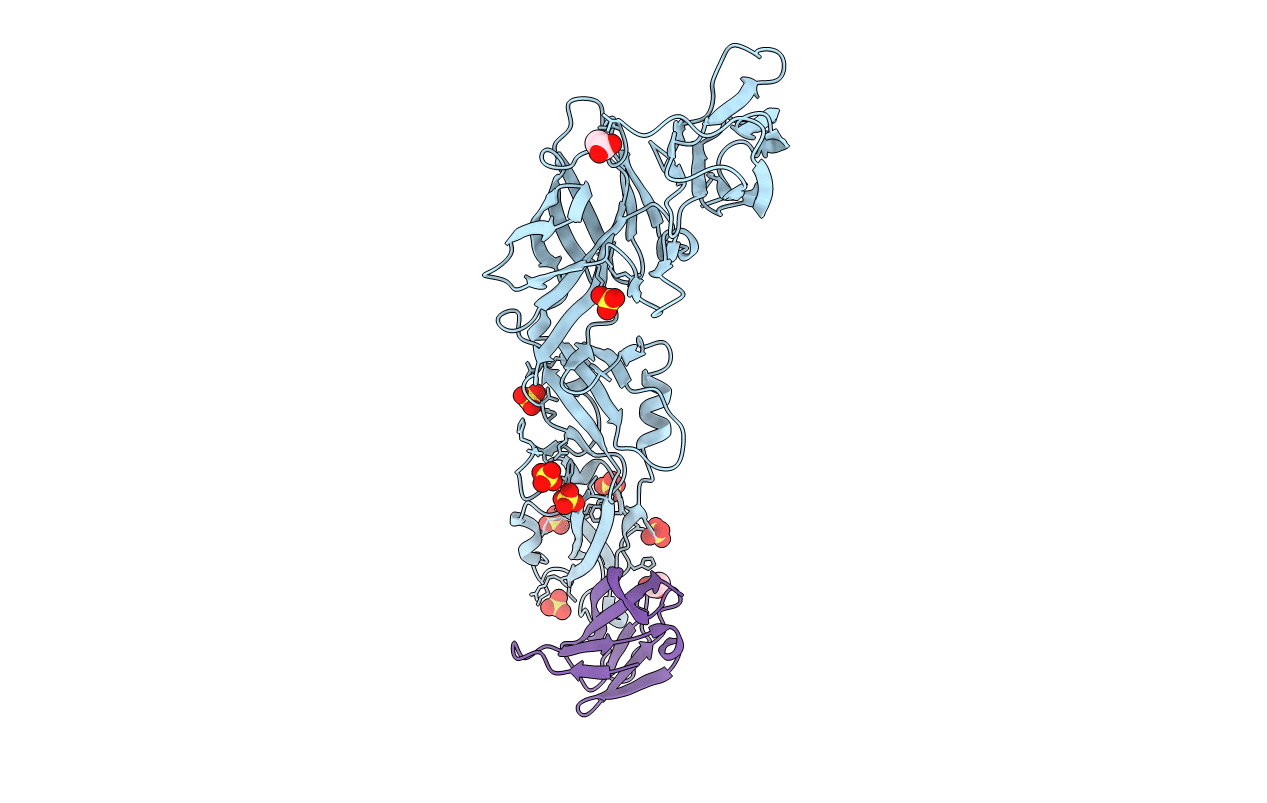
Structure of the hetero-tetramer complex between precursor membrane protein fragment (pr) and envelope protein (E) from tick-borne encephalitis virus
Biological Source:
Method Details:
Experimental Method:
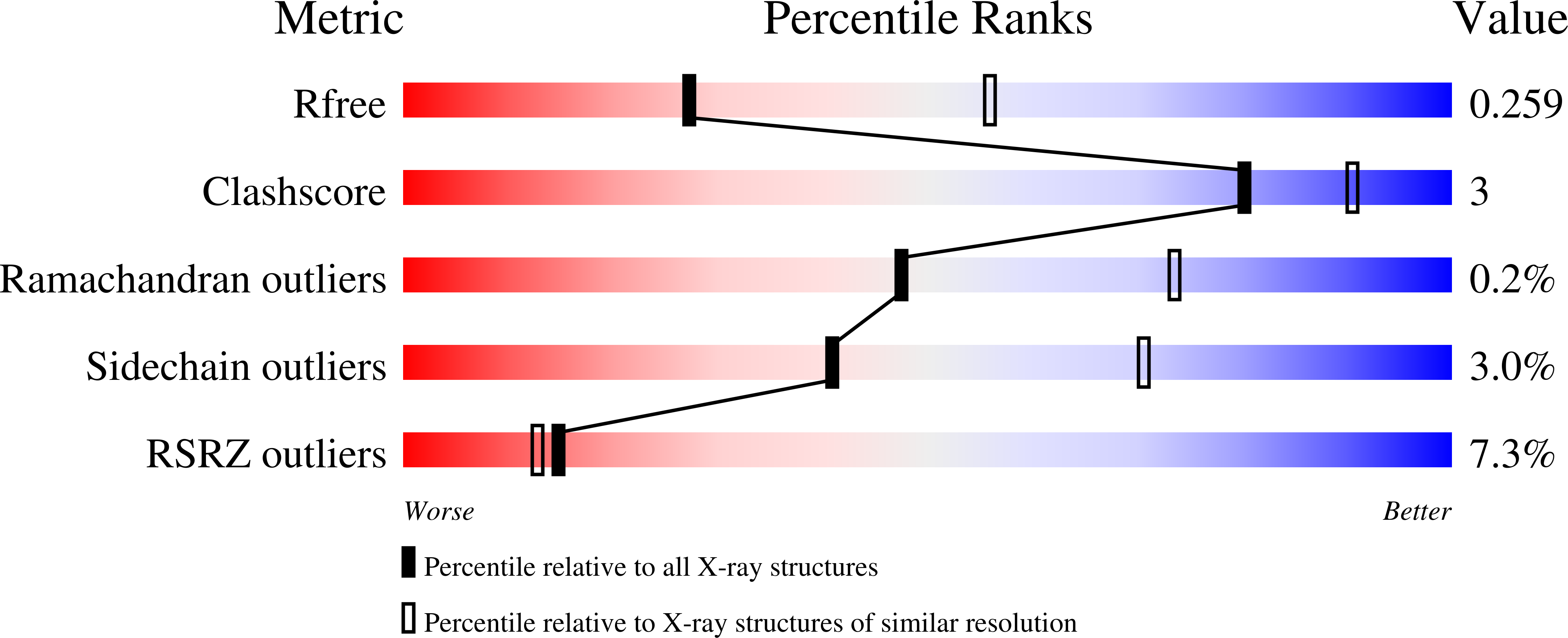
Resolution:
2.70 Å
R-Value Free:
0.24
R-Value Work:
0.18
R-Value Observed:
0.19
Space Group:
P 41 3 2
Macromolecular Entities
Structures with similar UniProt ID
Protein Blast
Polymer Type:polypeptide(L)
Molecule:Envelope protein E
Chain IDs:B (auth: A)
Chain Length:439
Number of Molecules:1
Biological Source:Tick-borne encephalitis virus (WESTERN SUBTYPE)
Structures with similar UniProt ID
Protein Blast
Polymer Type:polypeptide(L)
Molecule:Genome polyprotein
Chain IDs:A (auth: D)
Chain Length:127
Number of Molecules:1
Biological Source:Tick-borne encephalitis virus (WESTERN SUBTYPE)
Primary Citation
Evolution and activation mechanism of the flavivirus class II membrane-fusion machinery.
Nat Commun 13 3718 3718 (2022)
PMID: 35764616 DOI: 10.1038/s41467-022-31111-y

Abstact

The flavivirus envelope glycoproteins prM and E drive the assembly of icosahedral, spiky immature particles that bud across the membrane of the endoplasmic reticulum. Maturation into infectious virions in the trans-Golgi network involves an acid-pH-driven rearrangement into smooth particles made of (prM/E)2 dimers exposing a furin site for prM cleavage into "pr" and "M". Here we show that the prM "pr" moiety derives from an HSP40 cellular chaperonin. Furthermore, the X-ray structure of the tick-borne encephalitis virus (pr/E)2 dimer at acidic pH reveals the E 150-loop as a hinged-lid that opens at low pH to expose a positively-charged pr-binding pocket at the E dimer interface, inducing (prM/E)2 dimer formation to generate smooth particles in the Golgi. Furin cleavage is followed by lid-closure upon deprotonation in the neutral-pH extracellular environment, expelling pr while the 150-loop takes the relay in fusion loop protection, thus revealing the elusive flavivirus mechanism of fusion activation.

Legend

Protein

Chemical

Disease

Primary Citation of related structures
Feedback Form
Name
Email
Institute
Feedback