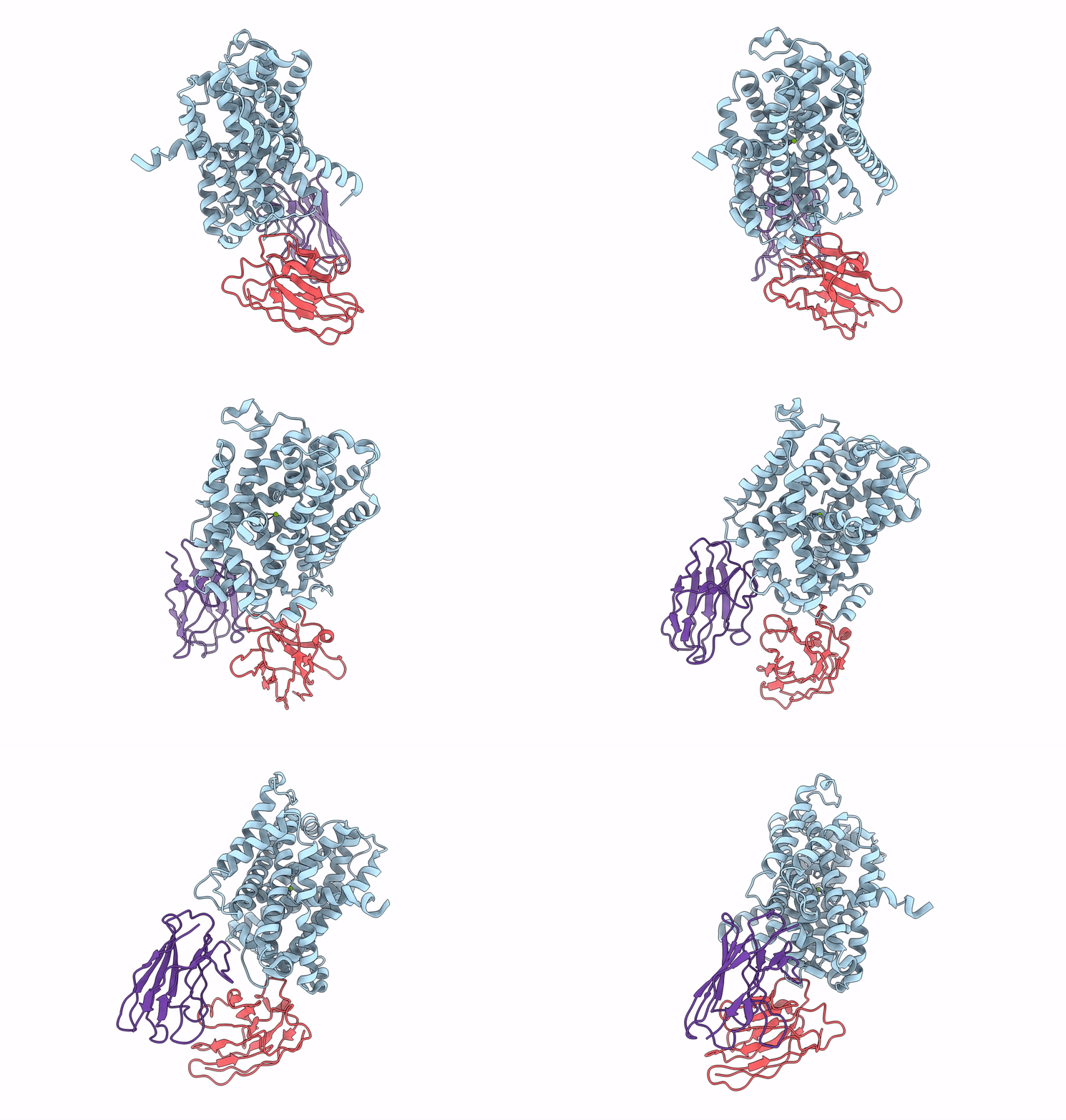
7QIC image
Deposition Date 2021-12-14
Release Date 2021-12-29
Last Version Date 2024-10-23
Entry Detail
PDB ID:
7QIC
Title:
Structure of magnesium-bound EleNRMT in complex with two nanobodies at 4.1A
Biological Source:
Source Organism:
Method Details:
Experimental Method:
Resolution:
4.10 Å
Aggregation State:
PARTICLE
Reconstruction Method:
SINGLE PARTICLE
Macromolecular Entities
Structures with similar UniProt ID
Protein Blast
Polymer Type:polypeptide(L)
Molecule:Divalent metal cation transporter
Mutagens:E88Q, A151S, E193Q, R207H, S244T, I256V, S275A, V366I, V385I, V418L, V429A
Chain IDs:A
Chain Length:438
Number of Molecules:1
Biological Source:Eggerthella lenta
Polymer Type:polypeptide(L)
Molecule:Nanobody 2
Chain IDs:C (auth: B)
Chain Length:125
Number of Molecules:1
Biological Source:synthetic construct
Polymer Type:polypeptide(L)
Molecule:Nanobody 1
Chain IDs:B (auth: C)
Chain Length:119
Number of Molecules:1
Biological Source:synthetic construct
Ligand Molecules
Primary Citation
Structural and functional properties of a magnesium transporter of the SLC11/NRAMP family.
Elife 11 ? ? (2022)
PMID: 35001872 DOI: 10.7554/eLife.74589

Abstact

Members of the ubiquitous SLC11/NRAMP family catalyze the uptake of divalent transition metal ions into cells. They have evolved to efficiently select these trace elements from a large pool of Ca2+ and Mg2+, which are both orders of magnitude more abundant, and to concentrate them in the cytoplasm aided by the cotransport of H+ serving as energy source. In the present study, we have characterized a member of a distant clade of the family found in prokaryotes, termed NRMTs, that were proposed to function as transporters of Mg2+. The protein transports Mg2+ and Mn2+ but not Ca2+ by a mechanism that is not coupled to H+. Structures determined by cryo-EM and X-ray crystallography revealed a generally similar protein architecture compared to classical NRAMPs, with a restructured ion binding site whose increased volume provides suitable interactions with ions that likely have retained much of their hydration shell.

Legend

Protein

Chemical

Disease

Primary Citation of related structures
Feedback Form
Name
Email
Institute
Feedback