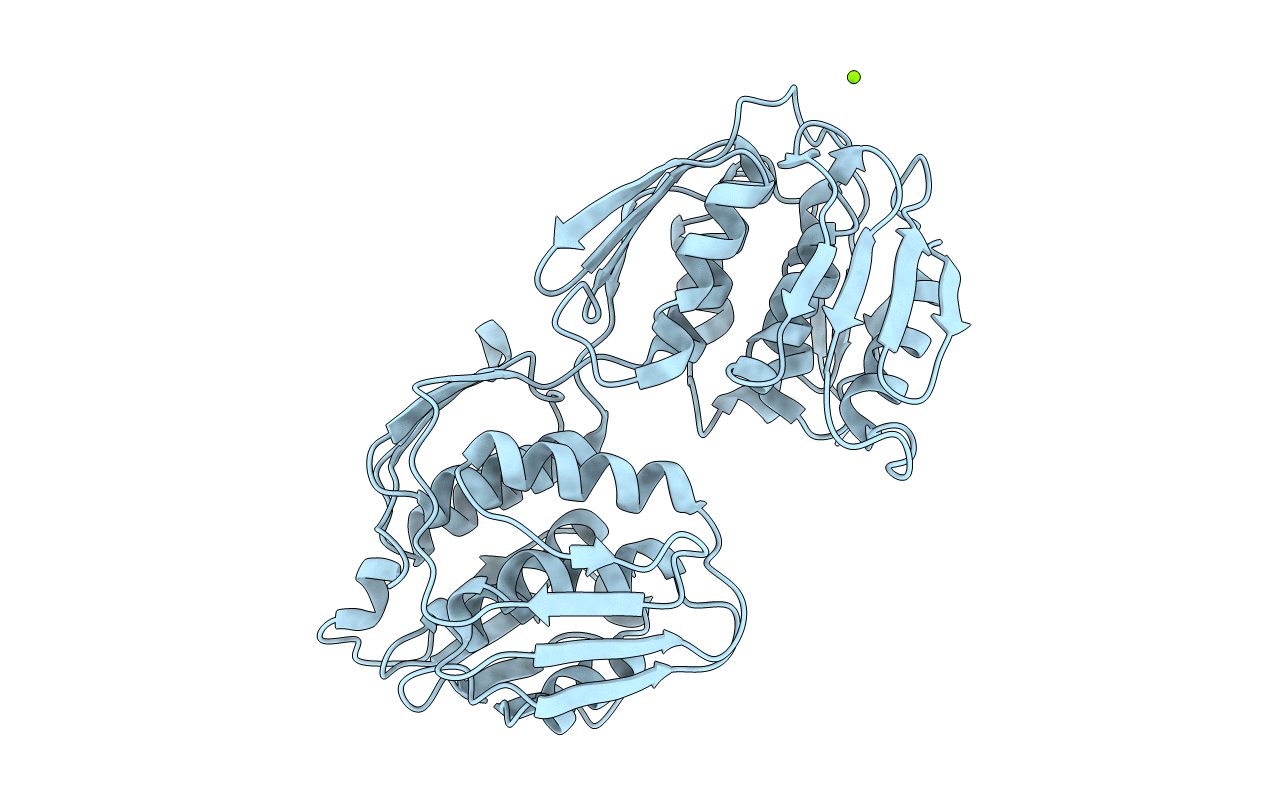
7PXY image
Deposition Date 2021-10-08
Release Date 2022-04-27
Last Version Date 2024-01-31
Entry Detail
PDB ID:
7PXY
Keywords:
Title:
Crystal structure of Arabidopsis thaliana 5-enol-pyruvyl-shikimate-3-phosphate synthase (EPSPS) in open conformation
Biological Source:
Source Organism:
Method Details:
Experimental Method:
Resolution:
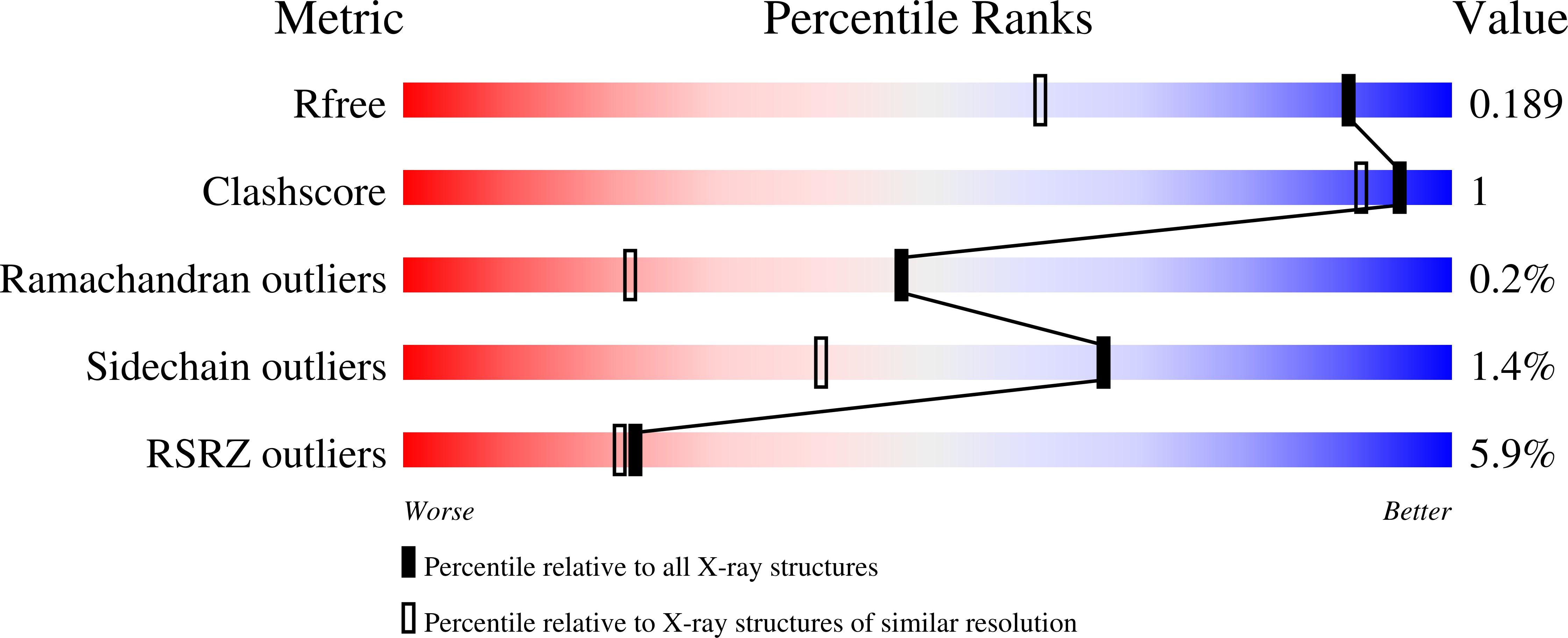
1.40 Å
R-Value Free:
0.18
R-Value Work:
0.15
R-Value Observed:
0.15
Space Group:
I 4 2 2
Macromolecular Entities
Structures with similar UniProt ID
Protein Blast
Polymer Type:polypeptide(L)
Molecule:3-phosphoshikimate 1-carboxyvinyltransferase, chloroplastic
Gene (Uniprot):F4L23.19
Chain IDs:A
Chain Length:447
Number of Molecules:1
Biological Source:Arabidopsis thaliana
Primary Citation
Deciphering the structure of Arabidopsis thaliana 5- enol -pyruvyl-shikimate-3-phosphate synthase: An essential step toward the discovery of novel inhibitors to supersede glyphosate.
Comput Struct Biotechnol J 20 1494 1505 (2022)
PMID: 35422967 DOI: 10.1016/j.csbj.2022.03.020

Abstact

Glyphosate interferes with plant aromatic metabolism through the inhibition of 5-enol-pyruvyl-shikimate-3-phosphate (EPSP) synthase [EPSPS, EC 2.5.1.19]. For this reason, EPSPS has been extensively studied in a vast array of organisms. This notwithstanding, up to date, the crystal structure of the protein has been solved exclusively in a few prokaryotes, while that of the plant enzyme has been only deduced in silico by similarity. This study aimed at determining the structure of EPSPS from the plant model species Arabidopsis thaliana, which has been cloned, heterologously expressed and affinity-purified. The kinetic properties of the enzyme have been determined, as well as its susceptibility to the inhibition brought about by glyphosate. The crystal structure of the protein has been resolved at high resolution (1.4 Å), showing open conformation of the enzyme, which is the state ready for substrate/inhibitor binding. This provides a framework for the structure-based design of novel EPSPS inhibitors. Surface regions near the active-site cleft entrance or at the interdomain hinge appear promising for inhibitor selectivity, while bound chloride near the active site is a potential placeholder for anionic moieties of future herbicides.

Legend

Protein

Chemical

Disease

Primary Citation of related structures
Feedback Form
Name
Email
Institute
Feedback