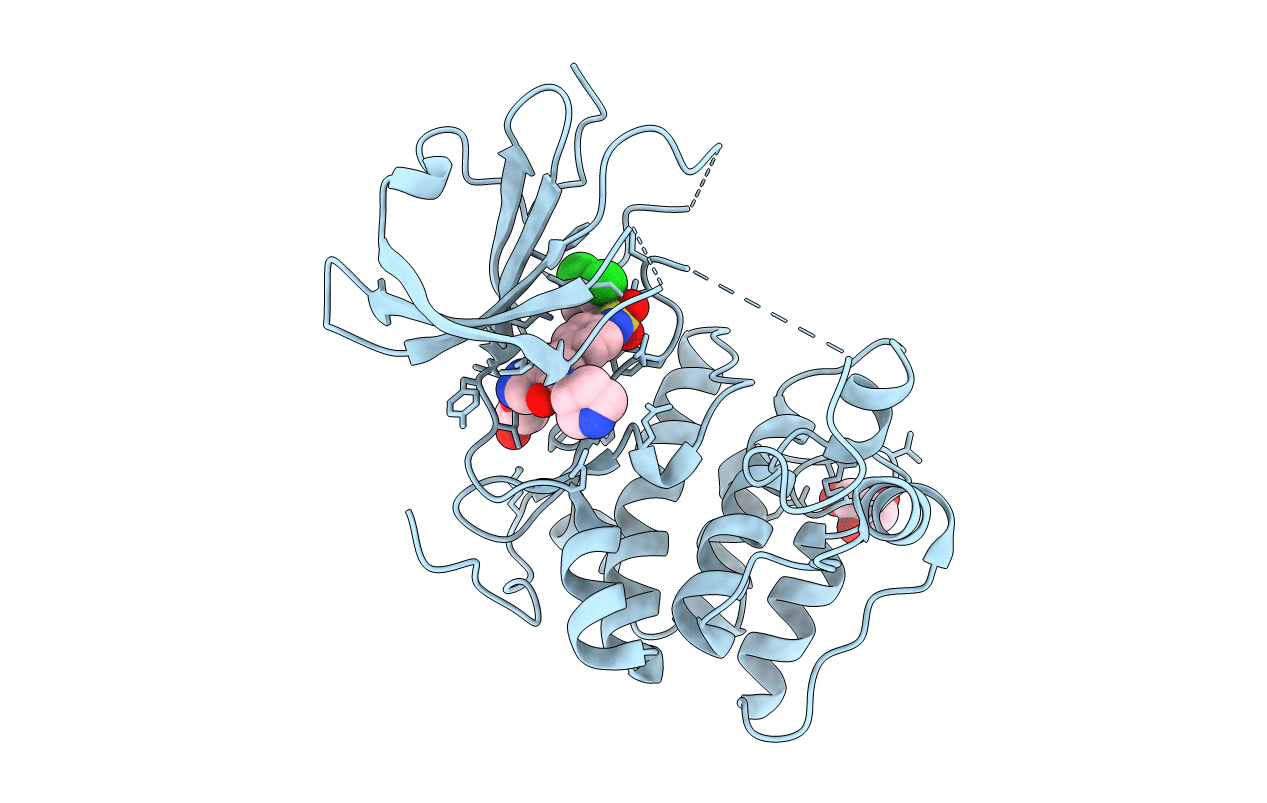
7PUE image
Deposition Date 2021-09-29
Release Date 2021-12-01
Last Version Date 2024-05-01
Entry Detail
PDB ID:
7PUE
Keywords:
Title:
Human serum and glucocorticoid-regulated kinase 1 in complex with pyrazolopyridine inhibitor 3a
Biological Source:
Source Organism:
Homo sapiens (Taxon ID: 9606)
Host Organism:
Method Details:
Experimental Method:
Resolution:
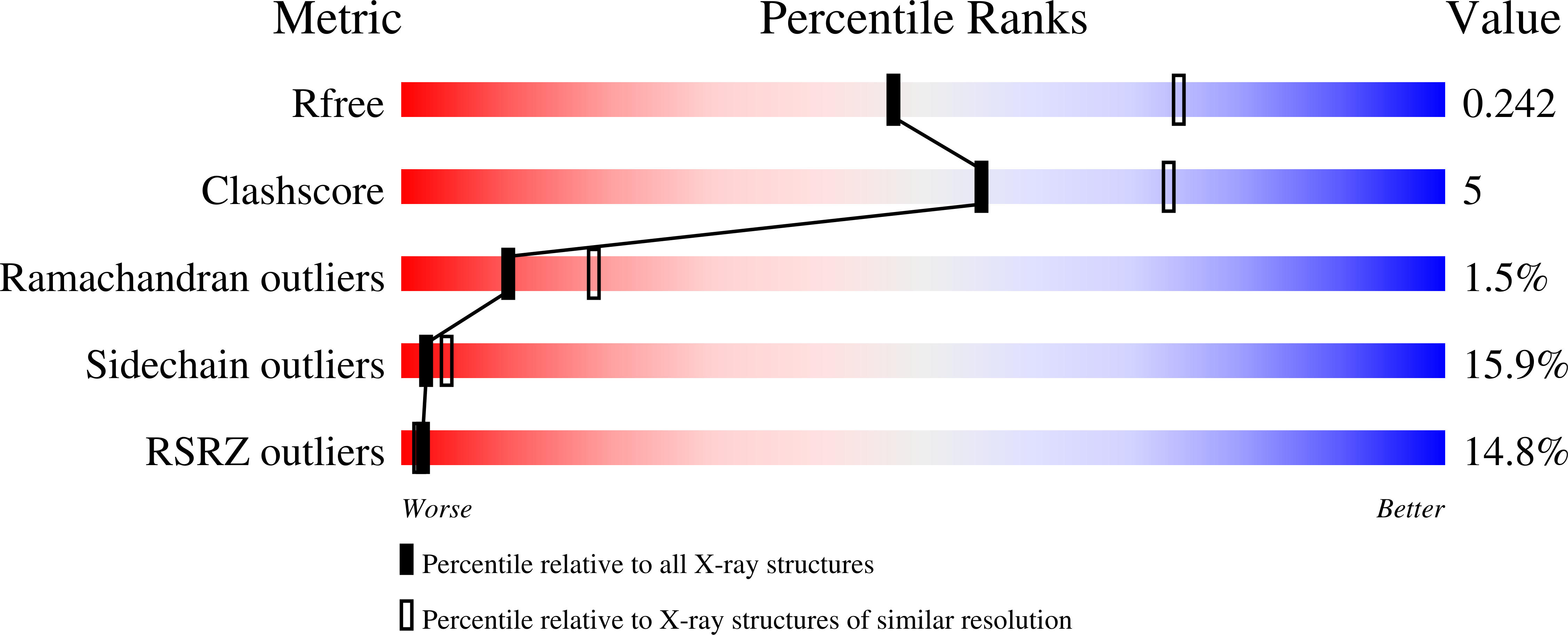
2.51 Å
R-Value Free:
0.24
R-Value Work:
0.21
R-Value Observed:
0.21
Space Group:
P 65 2 2
Macromolecular Entities
Structures with similar UniProt ID
Protein Blast
Polymer Type:polypeptide(L)
Molecule:Serine/threonine-protein kinase Sgk1
Gene (Uniprot):SGK1
Mutagens:R192A, S422D
Chain IDs:A
Chain Length:375
Number of Molecules:1
Biological Source:Homo sapiens
Primary Citation
Rational Design of Highly Potent, Selective, and Bioavailable SGK1 Protein Kinase Inhibitors for the Treatment of Osteoarthritis.
J.Med.Chem. 65 1567 1584 (2022)
PMID: 34931844 DOI: 10.1021/acs.jmedchem.1c01601

Abstact

The serine/threonine kinase SGK1 is an activator of the β-catenin pathway and a powerful stimulator of cartilage degradation that is found to be upregulated under genomic control in diseased osteoarthritic cartilage. Today, no oral disease-modifying treatments are available and chronic treatment in this indication sets high requirements for the drug selectivity, pharmacokinetic, and safety profile. We describe the identification of a highly selective druglike 1H-pyrazolo[3,4-d]pyrimidine SGK1 inhibitor 17a that matches both safety and pharmacokinetic requirements for oral dosing. Rational compound design was facilitated by a novel hSGK1 co-crystal structure, and multiple ligand-based computer models were applied to guide the chemical optimization of the compound ADMET and selectivity profiles. Compounds were selected for subchronic proof of mechanism studies in the mouse femoral head cartilage explant model, and compound 17a emerged as a druglike SGK1 inhibitor, with a highly optimized profile suitable for oral dosing as a novel, potentially disease-modifying agent for osteoarthritis.

Legend

Protein

Chemical

Disease

Primary Citation of related structures
Feedback Form
Name
Email
Institute
Feedback