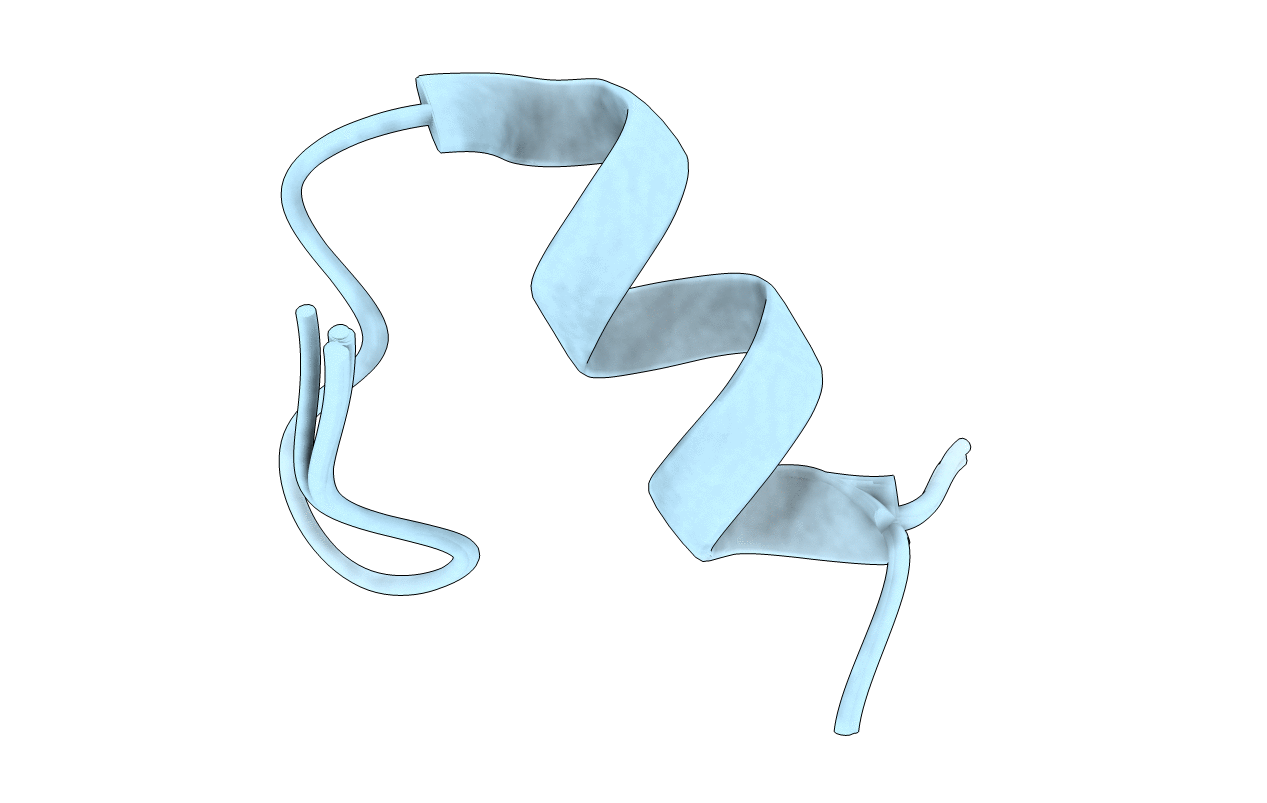
7OXF image
Deposition Date 2021-06-22
Release Date 2022-07-13
Last Version Date 2024-11-13
Entry Detail
PDB ID:
7OXF
Keywords:
Title:
Solution structure of bee apamin
Biological Source:
Source Organism:
Apis mellifera (Taxon ID: 7460)
Method Details:
Experimental Method:
Conformers Calculated:
100
Conformers Submitted:
10
Selection Criteria:
structures with the least restraint violations
Macromolecular Entities
Structures with similar UniProt ID
Protein Blast
Polymer Type:polypeptide(L)
Molecule:Apamin
Chain IDs:A
Chain Length:19
Number of Molecules:1
Biological Source:Apis mellifera
Ligand Molecules
Primary Citation
Apamin structure and pharmacology revisited.
Front Pharmacol 13 977440 977440 (2022)
PMID: 36188602 DOI: 10.3389/fphar.2022.977440

Abstact

Apamin is often cited as one of the few substances selectively acting on small-conductance Ca2+-activated potassium channels (KCa2). However, published pharmacological and structural data remain controversial. Here, we investigated the molecular pharmacology of apamin by two-electrode voltage-clamp in Xenopus laevis oocytes and patch-clamp in HEK293, COS7, and CHO cells expressing the studied ion channels, as well as in isolated rat brain neurons. The microtitre broth dilution method was used for antimicrobial activity screening. The spatial structure of apamin in aqueous solution was determined by NMR spectroscopy. We tested apamin against 42 ion channels (KCa, KV, NaV, nAChR, ASIC, and others) and confirmed its unique selectivity to KCa2 channels. No antimicrobial activity was detected for apamin against Gram-positive or Gram-negative bacteria. The NMR solution structure of apamin was deposited in the Protein Data Bank. The results presented here demonstrate that apamin is a selective nanomolar or even subnanomolar-affinity KCa2 inhibitor with no significant effects on other molecular targets. The spatial structure as well as ample functional data provided here support the use of apamin as a KCa2-selective pharmacological tool and as a template for drug design.

Legend

Protein

Chemical

Disease

Primary Citation of related structures
Feedback Form
Name
Email
Institute
Feedback