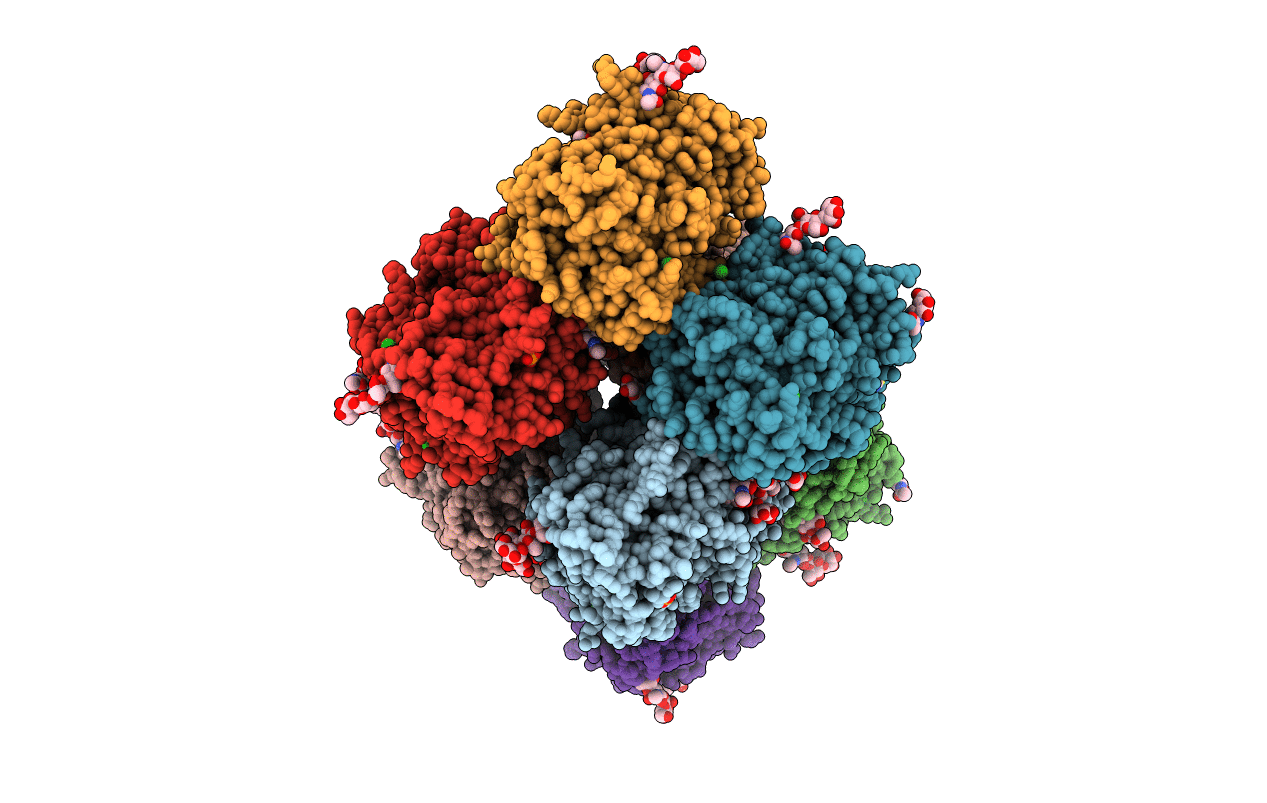
7OIH image
Deposition Date 2021-05-11
Release Date 2022-08-24
Last Version Date 2024-11-06
Entry Detail
PDB ID:
7OIH
Title:
Glycosylation in the crystal structure of neutrophil myeloperoxidase
Biological Source:
Source Organism:
Homo sapiens (Taxon ID: 9606)
Method Details:
Experimental Method:
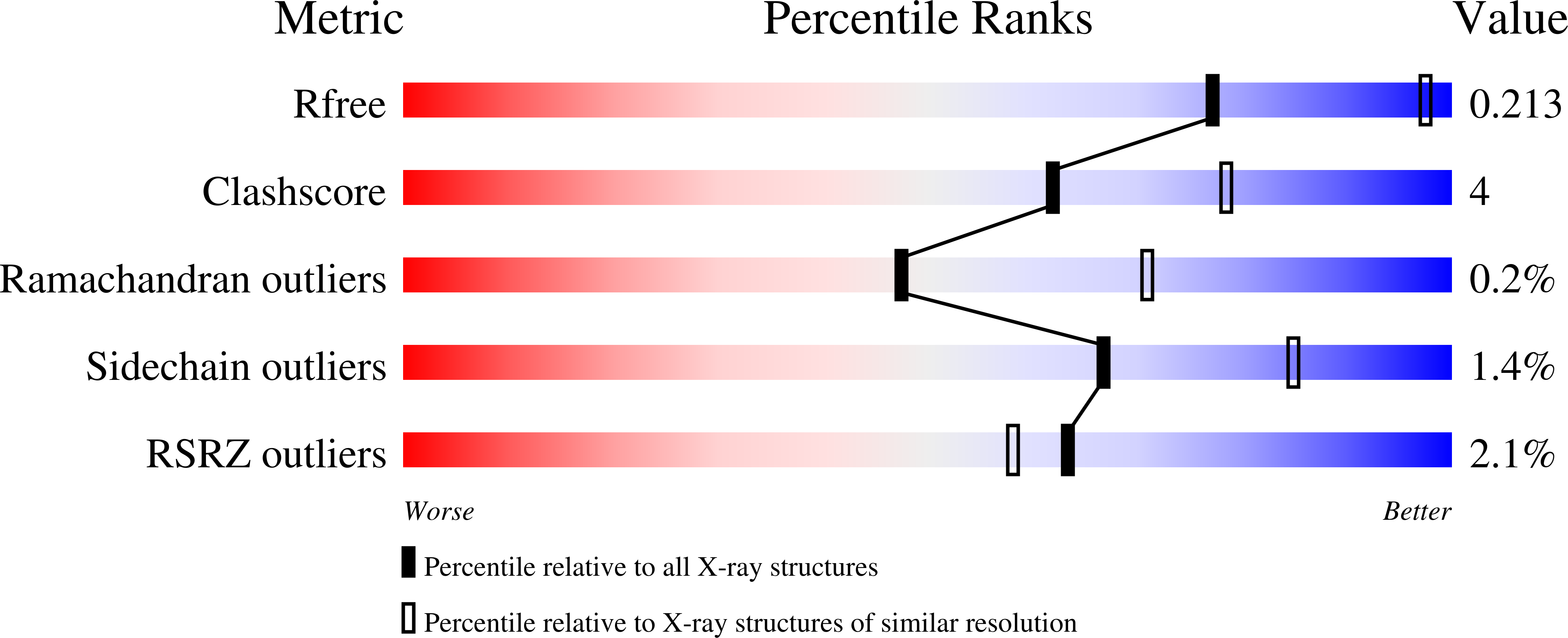
Resolution:
2.60 Å
R-Value Free:
0.21
R-Value Work:
0.17
Space Group:
C 1 2 1
Macromolecular Entities
Structures with similar UniProt ID
Protein Blast
Polymer Type:polypeptide(L)
Molecule:Myeloperoxidase
Gene (Uniprot):MPO
Chain IDs:A, B, C, D, E, F, G, H
Chain Length:579
Number of Molecules:8
Biological Source:Homo sapiens
Modified Residue
Compound ID Chain ID Parent Comp ID Details 2D Image
CSO A CYS modified residue
Primary Citation
Native glycosylation and binding of the antidepressant paroxetine in a low-resolution crystal structure of human myeloperoxidase.
Acta Crystallogr D Struct Biol 78 1099 1109 (2022)
PMID: 36048150 DOI: 10.1107/S2059798322007082

Abstact

Human myeloperoxidase (MPO) utilizes hydrogen peroxide to oxidize organic compounds and as such plays an essential role in cell-component synthesis, in metabolic and elimination pathways, and in the front-line defence against pathogens. Moreover, MPO is increasingly being reported to play a role in inflammation. The enzymatic activity of MPO has also been shown to depend on its glycosylation. Mammalian MPO crystal structures deposited in the Protein Data Bank (PDB) present only a partial identification of their glycosylation. Here, a newly obtained crystal structure of MPO containing four disulfide-linked dimers and showing an elaborate collection of glycans is reported. These are compared with the glycans identified in proteomics studies and from 18 human MPO structures available in the PDB. The crystal structure also contains bound paroxetine, a blocker of serotonin reuptake that has previously been identified as an irreversible inhibitor of MPO, in the presence of thiocyanate, a physiological substrate of MPO.

Legend

Protein

Chemical

Disease

Primary Citation of related structures
Feedback Form
Name
Email
Institute
Feedback