7O4X image
Deposition Date 2021-04-07
Release Date 2022-04-20
Last Version Date 2024-01-31
Entry Detail
PDB ID:
7O4X
Title:
Crystal structure of the PII-like protein PotN from Lentilactobacillus hilgardii
Biological Source:
Method Details:
Experimental Method:
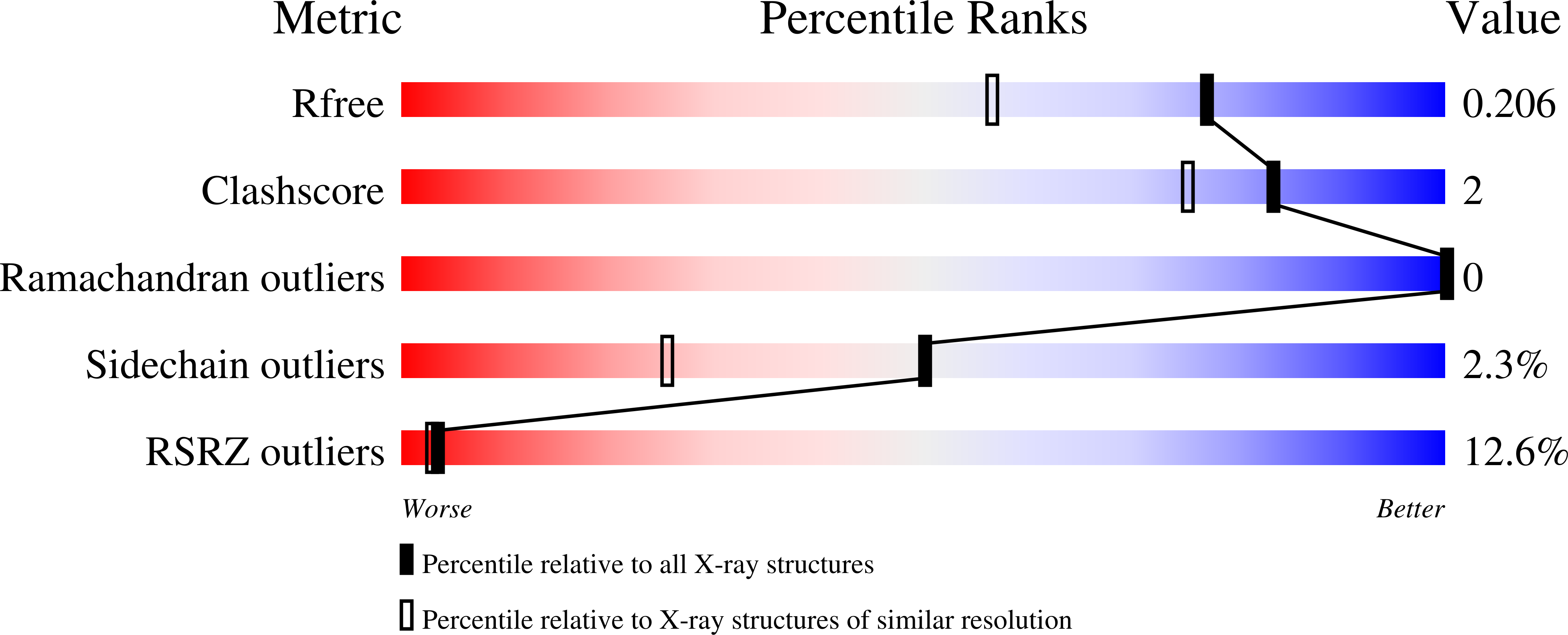
Resolution:
1.65 Å
R-Value Free:
0.19
R-Value Work:
0.17
R-Value Observed:
0.18
Space Group:
P 63 2 2
Macromolecular Entities
Structures with similar UniProt ID
Protein Blast
Polymer Type:polypeptide(L)
Molecule:Nitrogen regulatory protein P-II
Chain IDs:A
Chain Length:124
Number of Molecules:1
Biological Source:Lactobacillus brevis subsp. gravesensis ATCC 27305
Ligand Molecules
Primary Citation
PotN represents a novel energy-state sensing PII subfamily, occurring in firmicutes.
Febs J. 289 5305 5321 (2022)
PMID: 35285159 DOI: 10.1111/febs.16431

Abstact

PII proteins are signal processor proteins that regulate the cellular metabolism of Bacteria, Archea and plant chloroplasts typically in response to the cellular nitrogen status. Here, we report the first biochemical characterization of a novel PII-like protein PotN from Lentilactobacillus hilgardii. PotN is encoded in an operon together with the potABCD genes, encoding the ABC transporter for spermidine/putrescine. Like canonical PII proteins, the native PotN has a trimeric structure and competitively binds ATP and ADP, but it does not bind 2-oxoglutarate. Immunoprecipitation and pull-down experiments revealed that PotN is associated in vivo with the transcriptional regulator GlnR and the beta-subunit of pyruvate/2-oxoglutarate/acetoin dehydrogenase AcoB. Moreover, in vitro assays revealed that the ATPase domain of PotA also is able to interact with PotN. Interaction analyses demonstrated that PotN preferentially associates with PotA in the ADP state, whereas it binds to GlnR at elevated ATP levels. This suggests that PotN regulates the transport of polyamines and GlnR-dependent gene expression in response to the energy availability for the cell.

Legend

Protein

Chemical

Disease

Primary Citation of related structures
Feedback Form
Name
Email
Institute
Feedback