7NUF image
Deposition Date 2021-03-12
Release Date 2021-07-28
Last Version Date 2024-02-07
Entry Detail
PDB ID:
7NUF
Keywords:
Title:
Vaccinia virus protein 018 in complex with STAT1
Biological Source:
Source Organism:
Host Organism:
Method Details:
Experimental Method:
Resolution:
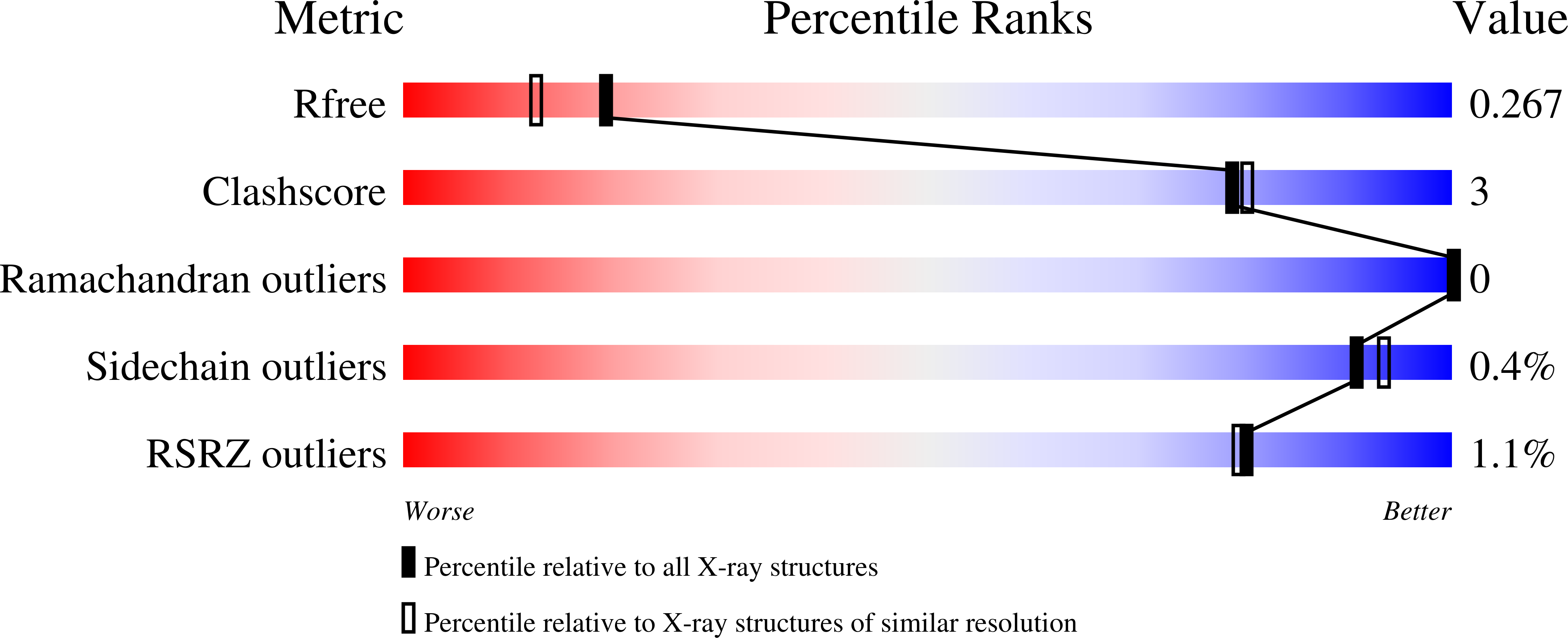
2.00 Å
R-Value Free:
0.25
R-Value Work:
0.22
R-Value Observed:
0.22
Space Group:
C 1 2 1
Macromolecular Entities
Structures with similar UniProt ID
Protein Blast
Polymer Type:polypeptide(L)
Molecule:Signal transducer and activator of transcription 1-alpha/beta
Gene (Uniprot):STAT1
Mutagens:Delta183-190, H182A, E393A, E394A
Chain IDs:A
Chain Length:546
Number of Molecules:1
Biological Source:Homo sapiens
Structures with similar UniProt ID
Protein Blast
Polymer Type:polypeptide(L)
Molecule:Uncharacterized protein 18
Gene (Uniprot):OPG024
Chain IDs:B (auth: C)
Chain Length:21
Number of Molecules:1
Biological Source:Vaccinia virus (strain Western Reserve)
Primary Citation
Poxviruses and paramyxoviruses use a conserved mechanism of STAT1 antagonism to inhibit interferon signaling.
Cell Host Microbe 30 357 372.e11 (2022)
PMID: 35182467 DOI: 10.1016/j.chom.2022.01.014

Abstact

The induction of interferon (IFN)-stimulated genes by STATs is a critical host defense mechanism against virus infection. Here, we report that a highly expressed poxvirus protein, 018, inhibits IFN-induced signaling by binding to the SH2 domain of STAT1, thereby preventing the association of STAT1 with an activated IFN receptor. Despite encoding other inhibitors of IFN-induced signaling, a poxvirus mutant lacking 018 was attenuated in mice. The 2.0 Å crystal structure of the 018:STAT1 complex reveals a phosphotyrosine-independent mode of 018 binding to the SH2 domain of STAT1. Moreover, the STAT1-binding motif of 018 shows similarity to the STAT1-binding proteins from Nipah virus, which, similar to 018, block the association of STAT1 with an IFN receptor. Overall, these results uncover a conserved mechanism of STAT1 antagonism that is employed independently by distinct virus families.

Legend

Protein

Chemical

Disease

Primary Citation of related structures
Feedback Form
Name
Email
Institute
Feedback