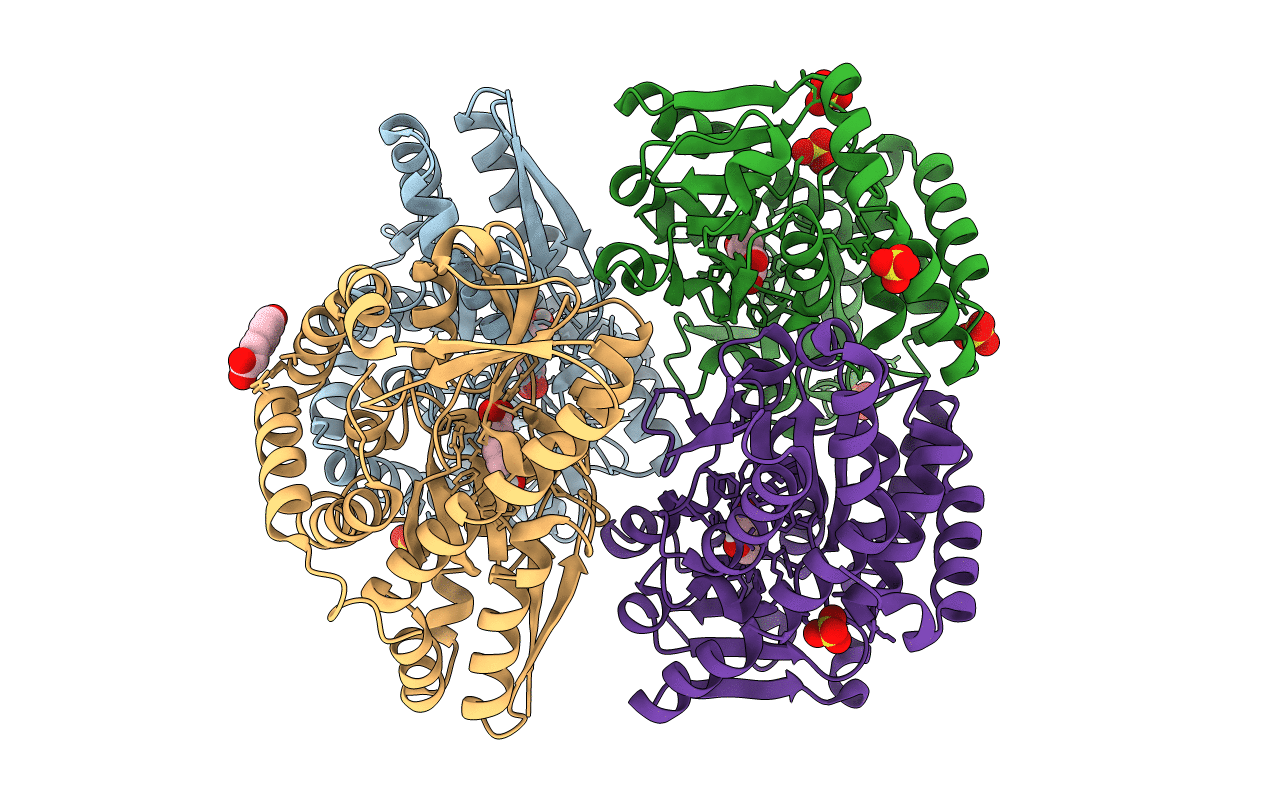
7NR2 image
Deposition Date 2021-03-02
Release Date 2021-10-06
Last Version Date 2022-01-26
Entry Detail
PDB ID:
7NR2
Title:
The structure of the SBP TarP_Sse in complex with coumarate
Biological Source:
Source Organism:
Host Organism:
Method Details:
Experimental Method:
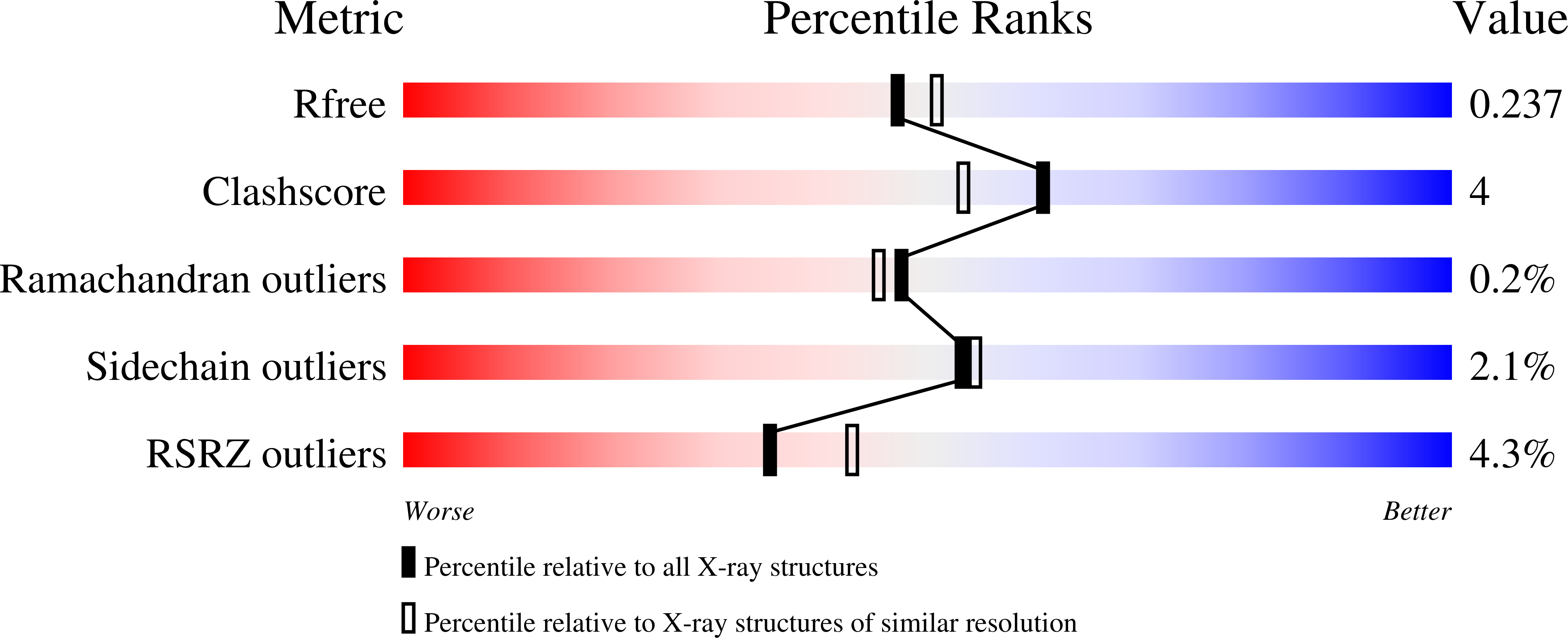
Resolution:
2.13 Å
R-Value Free:
0.23
R-Value Work:
0.17
Space Group:
P 1 21 1
Macromolecular Entities
Structures with similar UniProt ID
Protein Blast
Polymer Type:polypeptide(L)
Molecule:TRAP dicarboxylate transporter, DctP subunit
Gene (Uniprot):SSE37_24379
Chain IDs:A (auth: AAA), B (auth: BBB), C (auth: CCC), D (auth: EEE)
Chain Length:337
Number of Molecules:4
Biological Source:Sagittula stellata E-37
Modified Residue
Compound ID Chain ID Parent Comp ID Details 2D Image
MSE A MET modified residue
Primary Citation
The structural basis for high-affinity uptake of lignin-derived aromatic compounds by proteobacterial TRAP transporters.
Febs J. 289 436 456 (2022)
PMID: 34375507 DOI: 10.1111/febs.16156

Abstact

The organic polymer lignin is a component of plant cell walls, which like (hemi)-cellulose is highly abundant in nature and relatively resistant to degradation. However, extracellular enzymes released by natural microbial consortia can cleave the β-aryl ether linkages in lignin, releasing monoaromatic phenylpropanoids that can be further catabolised by diverse species of bacteria. Biodegradation of lignin is therefore important in global carbon cycling, and its natural abundance also makes it an attractive biotechnological feedstock for the industrial production of commodity chemicals. Whilst the pathways for degradation of lignin-derived aromatics have been extensively characterised, much less is understood about how they are recognised and taken up from the environment. The purple phototrophic bacterium Rhodopseudomonas palustris can grow on a range of phenylpropanoid monomers and is a model organism for studying their uptake and breakdown. R. palustris encodes a tripartite ATP-independent periplasmic (TRAP) transporter (TarPQM) linked to genes encoding phenylpropanoid-degrading enzymes. The periplasmic solute-binding protein component of this transporter, TarP, has previously been shown to bind aromatic substrates. Here, we determine the high-resolution crystal structure of TarP from R. palustris as well as the structures of homologous proteins from the salt marsh bacterium Sagittula stellata and the halophile Chromohalobacter salexigens, which also grow on lignin-derived aromatics. In combination with tryptophan fluorescence ligand-binding assays, our ligand-bound co-crystal structures reveal the molecular basis for high-affinity recognition of phenylpropanoids by these TRAP transporters, which have potential for improving uptake of these compounds for biotechnological transformations of lignin.

Legend

Protein

Chemical

Disease

Primary Citation of related structures
Feedback Form
Name
Email
Institute
Feedback