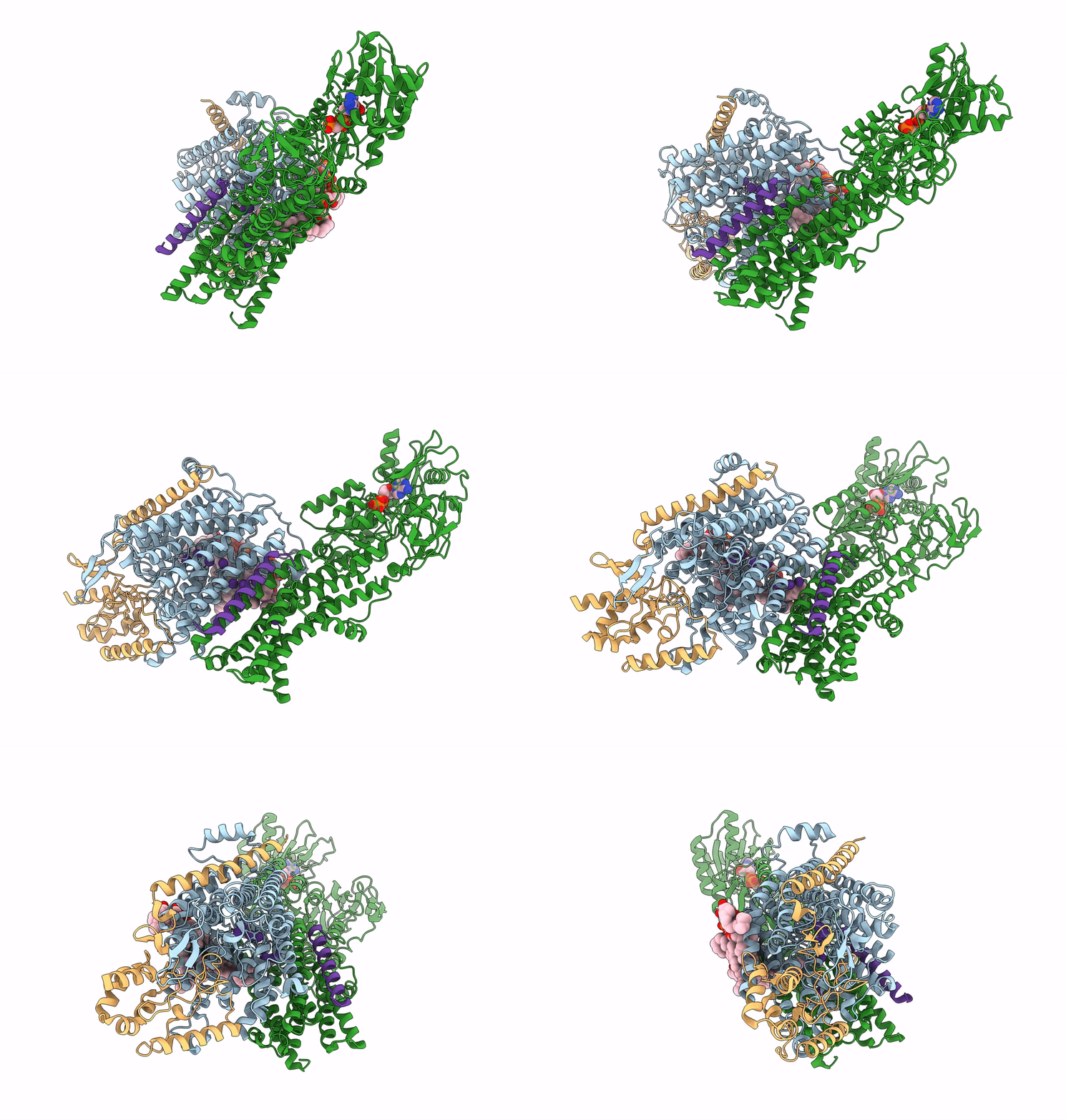
7NNP image
Deposition Date 2021-02-25
Release Date 2021-07-28
Last Version Date 2024-07-10
Entry Detail
PDB ID:
7NNP
Title:
Rb-loaded cryo-EM structure of the E1-ATP KdpFABC complex.
Biological Source:
Source Organism:
Escherichia coli (Taxon ID: 562)
Host Organism:
Method Details:
Experimental Method:
Resolution:
3.20 Å
Aggregation State:
PARTICLE
Reconstruction Method:
SINGLE PARTICLE
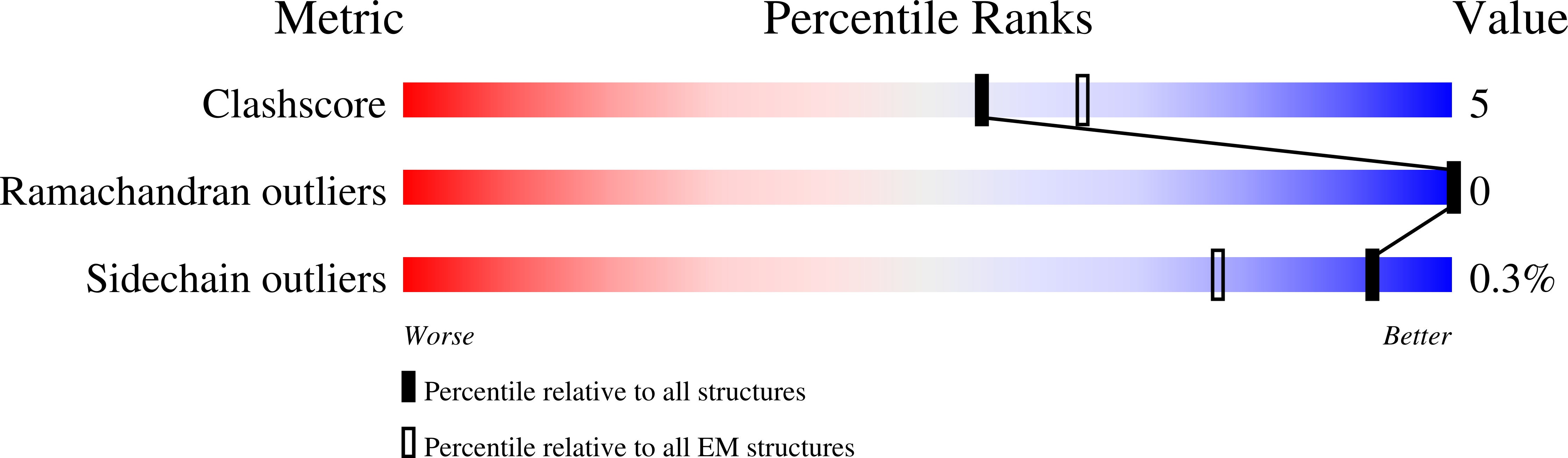
Macromolecular Entities
Structures with similar UniProt ID
Protein Blast
Polymer Type:polypeptide(L)
Molecule:Potassium-transporting ATPase potassium-binding subunit
Mutagens:G232D
Chain IDs:A
Chain Length:557
Number of Molecules:1
Biological Source:Escherichia coli
Structures with similar UniProt ID
Protein Blast
Polymer Type:polypeptide(L)
Molecule:Potassium-transporting ATPase ATP-binding subunit
Mutagens:S162A
Chain IDs:D (auth: B)
Chain Length:682
Number of Molecules:1
Biological Source:Escherichia coli
Structures with similar UniProt ID
Protein Blast
Polymer Type:polypeptide(L)
Molecule:Potassium-transporting ATPase KdpC subunit
Chain IDs:B (auth: C)
Chain Length:190
Number of Molecules:1
Biological Source:Escherichia coli
Structures with similar UniProt ID
Protein Blast
Polymer Type:polypeptide(L)
Molecule:Potassium-transporting ATPase KdpF subunit
Gene (Uniprot):kdpF
Chain IDs:C (auth: D)
Chain Length:27
Number of Molecules:1
Biological Source:Escherichia coli
Primary Citation
Deciphering ion transport and ATPase coupling in the intersubunit tunnel of KdpFABC.
Nat Commun 12 5098 5098 (2021)
PMID: 34429416 DOI: 10.1038/s41467-021-25242-x

Abstact

KdpFABC, a high-affinity K+ pump, combines the ion channel KdpA and the P-type ATPase KdpB to secure survival at K+ limitation. Here, we apply a combination of cryo-EM, biochemical assays, and MD simulations to illuminate the mechanisms underlying transport and the coupling to ATP hydrolysis. We show that ions are transported via an intersubunit tunnel through KdpA and KdpB. At the subunit interface, the tunnel is constricted by a phenylalanine, which, by polarized cation-π stacking, controls K+ entry into the canonical substrate binding site (CBS) of KdpB. Within the CBS, ATPase coupling is mediated by the charge distribution between an aspartate and a lysine. Interestingly, individual elements of the ion translocation mechanism of KdpFABC identified here are conserved among a wide variety of P-type ATPases from different families. This leads us to the hypothesis that KdpB might represent an early descendant of a common ancestor of cation pumps.

Legend

Protein

Chemical

Disease

Primary Citation of related structures
Feedback Form
Name
Email
Institute
Feedback