7NJI image
Deposition Date 2021-02-16
Release Date 2021-06-16
Last Version Date 2024-01-31
Entry Detail
PDB ID:
7NJI
Title:
HEX1 (in cellulo) loaded on HARE serial crystallography chip
Biological Source:
Method Details:
Experimental Method:
Resolution:
2.30 Å
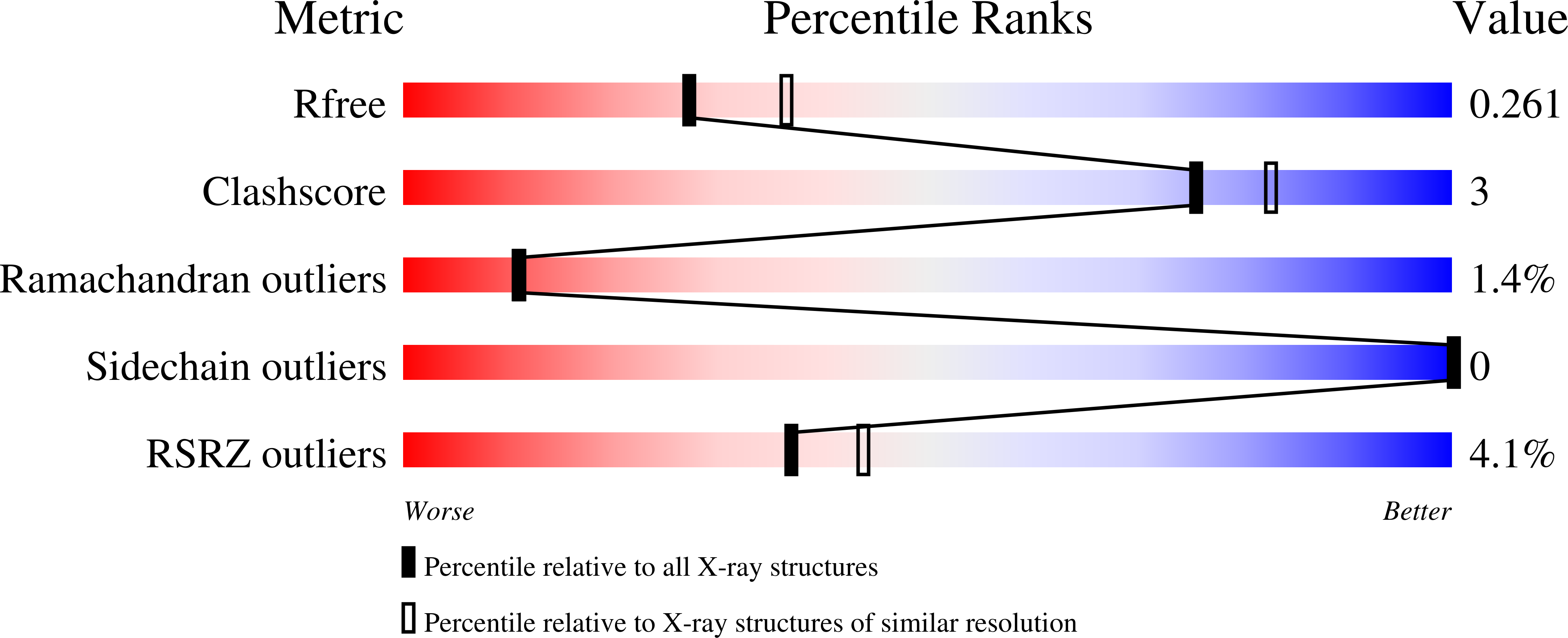
R-Value Free:
0.26
R-Value Work:
0.21
R-Value Observed:
0.22
Space Group:
P 65 2 2
Macromolecular Entities
Structures with similar UniProt ID
Protein Blast
Polymer Type:polypeptide(L)
Molecule:Woronin body major protein
Gene (Uniprot):hex-1
Chain IDs:A
Chain Length:176
Number of Molecules:1
Biological Source:Neurospora crassa (strain ATCC 24698 / 74-OR23-1A / CBS 708.71 / DSM 1257 / FGSC 987)
Primary Citation
A simple vapor-diffusion method enables protein crystallization inside the HARE serial crystallography chip.
Acta Crystallogr D Struct Biol 77 820 834 (2021)
PMID: 34076595 DOI: 10.1107/S2059798321003855

Abstact

Fixed-target serial crystallography has become an important method for the study of protein structure and dynamics at synchrotrons and X-ray free-electron lasers. However, sample homogeneity, consumption and the physical stress on samples remain major challenges for these high-throughput experiments, which depend on high-quality protein microcrystals. The batch crystallization procedures that are typically applied require time- and sample-intensive screening and optimization. Here, a simple protein crystallization method inside the features of the HARE serial crystallography chips is reported that circumvents batch crystallization and allows the direct transfer of canonical vapor-diffusion conditions to in-chip crystallization. Based on conventional hanging-drop vapor-diffusion experiments, the crystallization solution is distributed into the wells of the HARE chip and equilibrated against a reservoir with mother liquor. Using this simple method, high-quality microcrystals were generated with sufficient density for the structure determination of four different proteins. A new protein variant was crystallized using the protein concentrations encountered during canonical crystallization experiments, enabling structure determination from ∼55 µg of protein. Additionally, structure determination from intracellular crystals grown in insect cells cultured directly in the features of the HARE chips is demonstrated. In cellulo crystallization represents a comparatively unexplored space in crystallization, especially for proteins that are resistant to crystallization using conventional techniques, and eliminates any need for laborious protein purification. This in-chip technique avoids harvesting the sensitive crystals or any further physical handling of the crystal-containing cells. These proof-of-principle experiments indicate the potential of this method to become a simple alternative to batch crystallization approaches and also as a convenient extension to canonical crystallization screens.

Legend

Protein

Chemical

Disease

Primary Citation of related structures
Feedback Form
Name
Email
Institute
Feedback