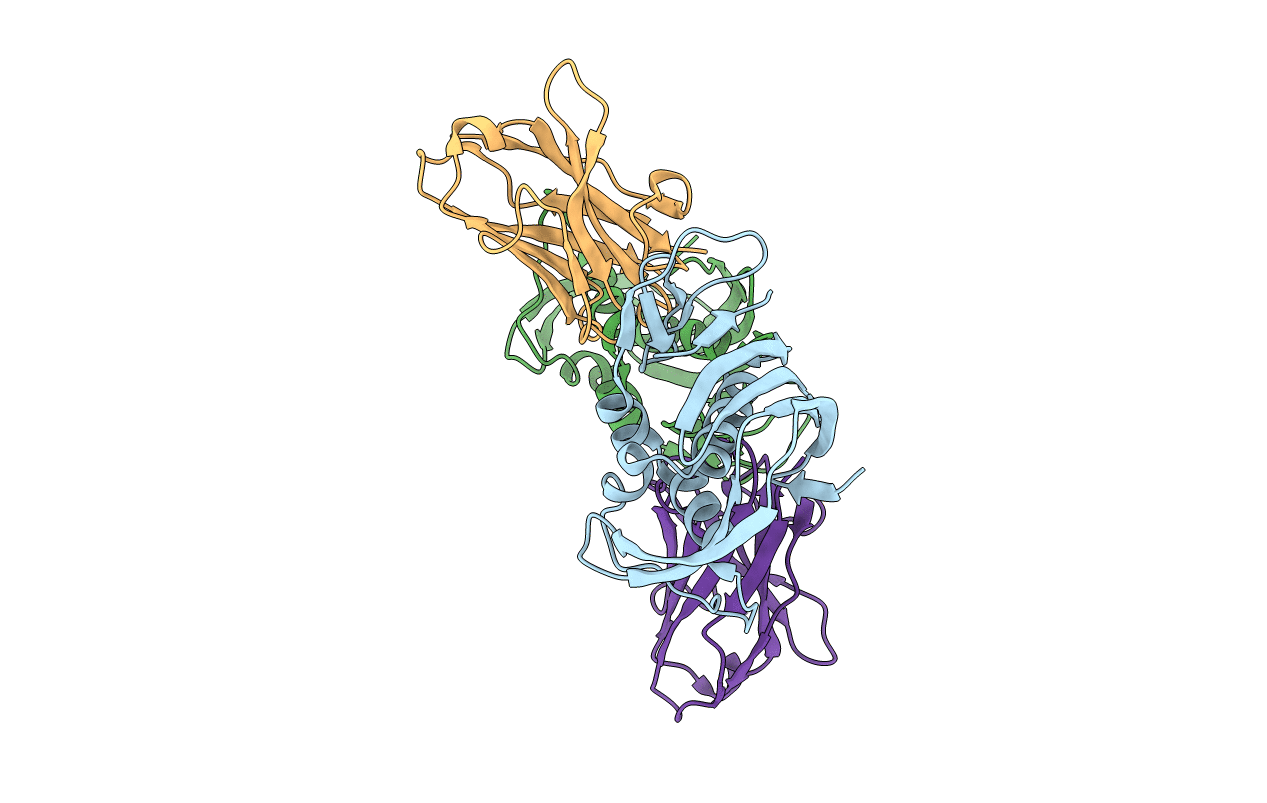
7NFT image
Deposition Date 2021-02-07
Release Date 2021-12-01
Last Version Date 2024-10-16
Entry Detail
PDB ID:
7NFT
Keywords:
Title:
Fujian capbinding domain in complex with Nb8208
Biological Source:
Host Organism:
Method Details:
Experimental Method:
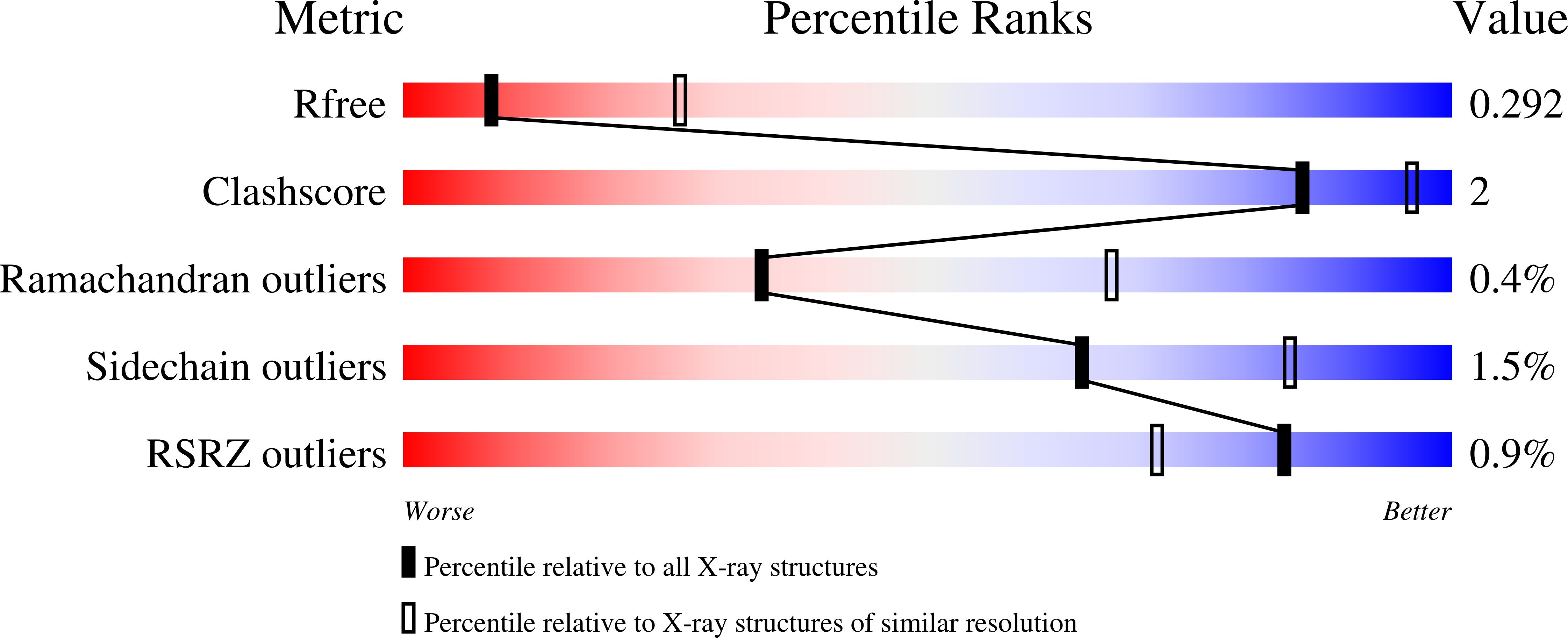
Resolution:
3.14 Å
R-Value Free:
0.29
R-Value Work:
0.24
R-Value Observed:
0.24
Space Group:
P 6
Macromolecular Entities
Structures with similar UniProt ID
Protein Blast
Polymer Type:polypeptide(L)
Molecule:Polymerase basic protein 2
Gene (Uniprot):PB2
Chain IDs:A, C (auth: B)
Chain Length:304
Number of Molecules:2
Biological Source:Influenza A virus (A/duck/Fujian/13/2002(H5N1))
Polymer Type:polypeptide(L)
Molecule:Nb8208
Chain IDs:B (auth: C), D
Chain Length:132
Number of Molecules:2
Biological Source:Homo sapiens
Ligand Molecules
Primary Citation
Mapping inhibitory sites on the RNA polymerase of the 1918 pandemic influenza virus using nanobodies.
Nat Commun 13 251 251 (2022)
PMID: 35017564 DOI: 10.1038/s41467-021-27950-w

Abstact

Influenza A viruses cause seasonal epidemics and global pandemics, representing a considerable burden to healthcare systems. Central to the replication cycle of influenza viruses is the viral RNA-dependent RNA polymerase which transcribes and replicates the viral RNA genome. The polymerase undergoes conformational rearrangements and interacts with viral and host proteins to perform these functions. Here we determine the structure of the 1918 influenza virus polymerase in transcriptase and replicase conformations using cryo-electron microscopy (cryo-EM). We then structurally and functionally characterise the binding of single-domain nanobodies to the polymerase of the 1918 pandemic influenza virus. Combining these functional and structural data we identify five sites on the polymerase which are sensitive to inhibition by nanobodies. We propose that the binding of nanobodies at these sites either prevents the polymerase from assuming particular functional conformations or interactions with viral or host factors. The polymerase is highly conserved across the influenza A subtypes, suggesting these sites as effective targets for potential influenza antiviral development.

Legend

Protein

Chemical

Disease

Primary Citation of related structures
Feedback Form
Name
Email
Institute
Feedback