7MQX image
Deposition Date 2021-05-06
Release Date 2021-08-11
Last Version Date 2024-10-23
Entry Detail
PDB ID:
7MQX
Title:
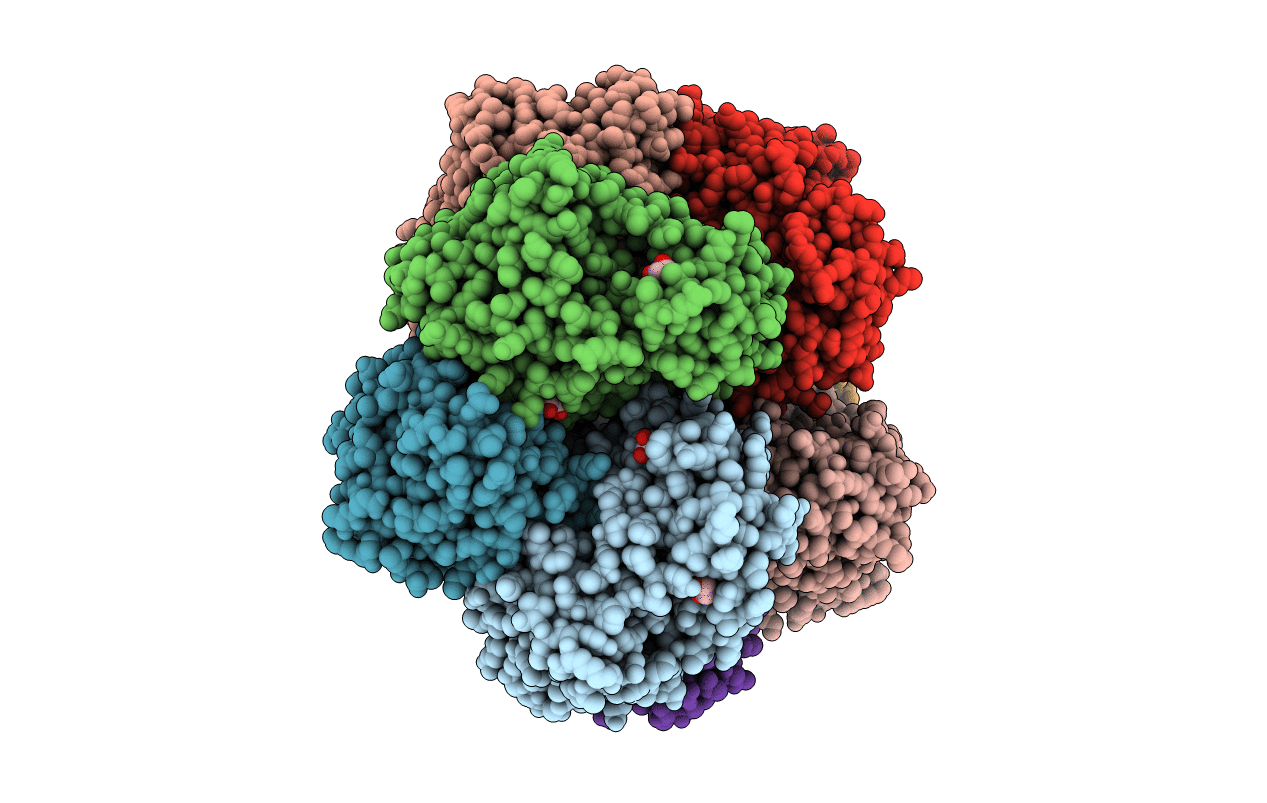
P. putida mandelate racemase forms an oxobenzoxaborole adduct with 2-formylphenylboronic acid
Biological Source:
Source Organism:
Host Organism:
Method Details:
Experimental Method:
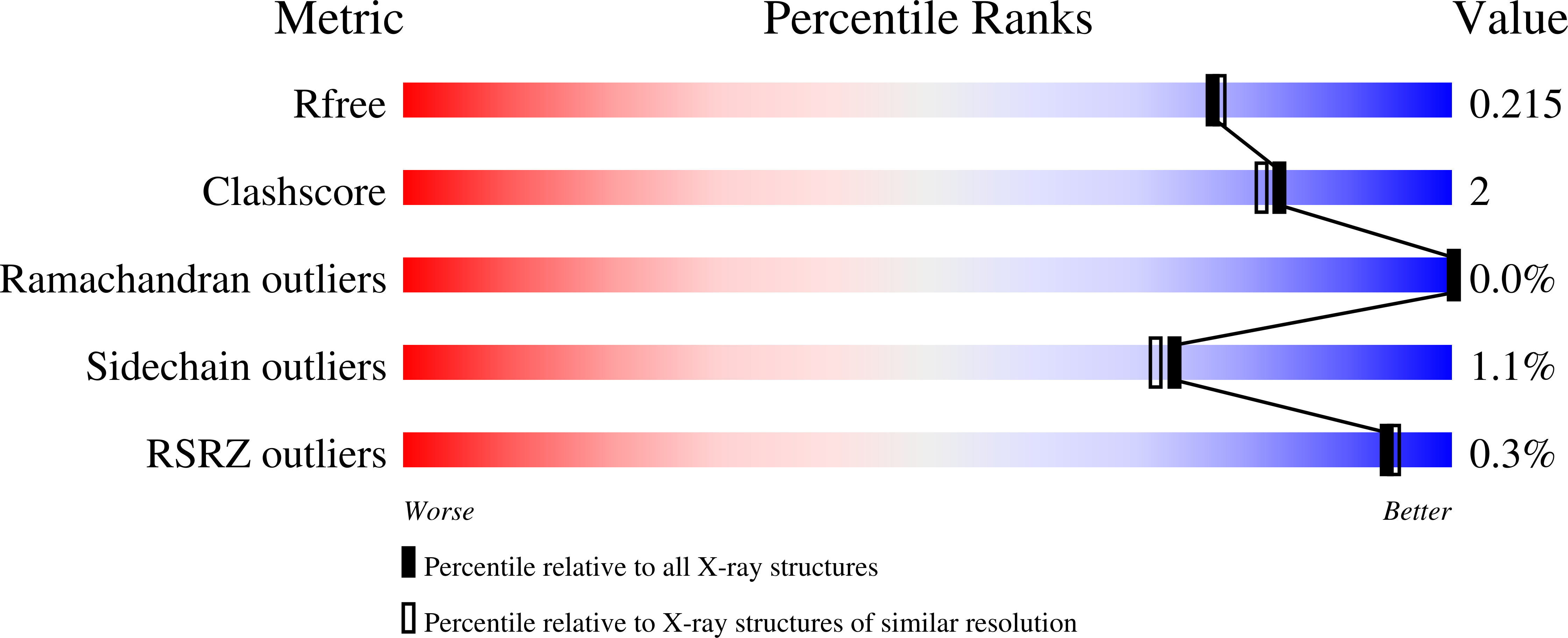
Resolution:
1.91 Å
R-Value Free:
0.21
R-Value Work:
0.18
R-Value Observed:
0.18
Space Group:
C 1 2 1
Macromolecular Entities
Structures with similar UniProt ID
Protein Blast
Polymer Type:polypeptide(L)
Molecule:Mandelate racemase
Gene (Uniprot):mdlA
Chain IDs:A, B, C, D, E, F, G, H
Chain Length:383
Number of Molecules:8
Biological Source:Pseudomonas putida
Primary Citation
Slow-Onset, Potent Inhibition of Mandelate Racemase by 2-Formylphenylboronic Acid. An Unexpected Adduct Clasps the Catalytic Machinery.
Biochemistry ? ? ? (2021)
PMID: 34339165 DOI: 10.1021/acs.biochem.1c00374

Abstact

o-Carbonyl arylboronic acids such as 2-formylphenylboronic acid (2-FPBA) are employed in biocompatible conjugation reactions with the resulting iminoboronate adduct stabilized by an intramolecular N-B interaction. However, few studies have utilized these reagents as active site-directed enzyme inhibitors. We show that 2-FPBA is a potent reversible, slow-onset inhibitor of mandelate racemase (MR), an enzyme that has served as a valuable paradigm for understanding enzyme-catalyzed abstraction of an α-proton from a carbon acid substrate with a high pKa. Kinetic analysis of the progress curves for the slow onset of inhibition of wild-type MR using a two-step kinetic mechanism gave Ki and Ki* values of 5.1 ± 1.8 and 0.26 ± 0.08 μM, respectively. Hence, wild-type MR binds 2-FPBA with an affinity that exceeds that for the substrate by ∼3000-fold. K164R MR was inhibited by 2-FPBA, while K166R MR was not inhibited, indicating that Lys 166 was essential for inhibition. Unexpectedly, mass spectrometric analysis of the NaCNBH3-treated enzyme-inhibitor complex did not yield evidence of an iminoboronate adduct. 11B nuclear magnetic resonance spectroscopy of the MR·2-FPBA complex indicated that the boron atom was sp3-hybridized (δ 6.0), consistent with dative bond formation. Surprisingly, X-ray crystallography revealed the formation of an Nζ-B dative bond between Lys 166 and 2-FPBA with intramolecular cyclization to form a benzoxaborole, rather than the expected iminoboronate. Thus, when o-carbonyl arylboronic acid reagents are employed to modify proteins, the structure of the resulting product depends on the protein architecture at the site of modification.

Legend

Protein

Chemical

Disease

Primary Citation of related structures
Feedback Form
Name
Email
Institute
Feedback