7M5I image
Deposition Date 2021-03-24
Release Date 2021-08-04
Last Version Date 2024-04-03
Entry Detail
PDB ID:
7M5I
Keywords:
Title:
Endolysin from Escherichia coli O157:H7 phage FAHEc1
Biological Source:
Source Organism:
Method Details:
Experimental Method:
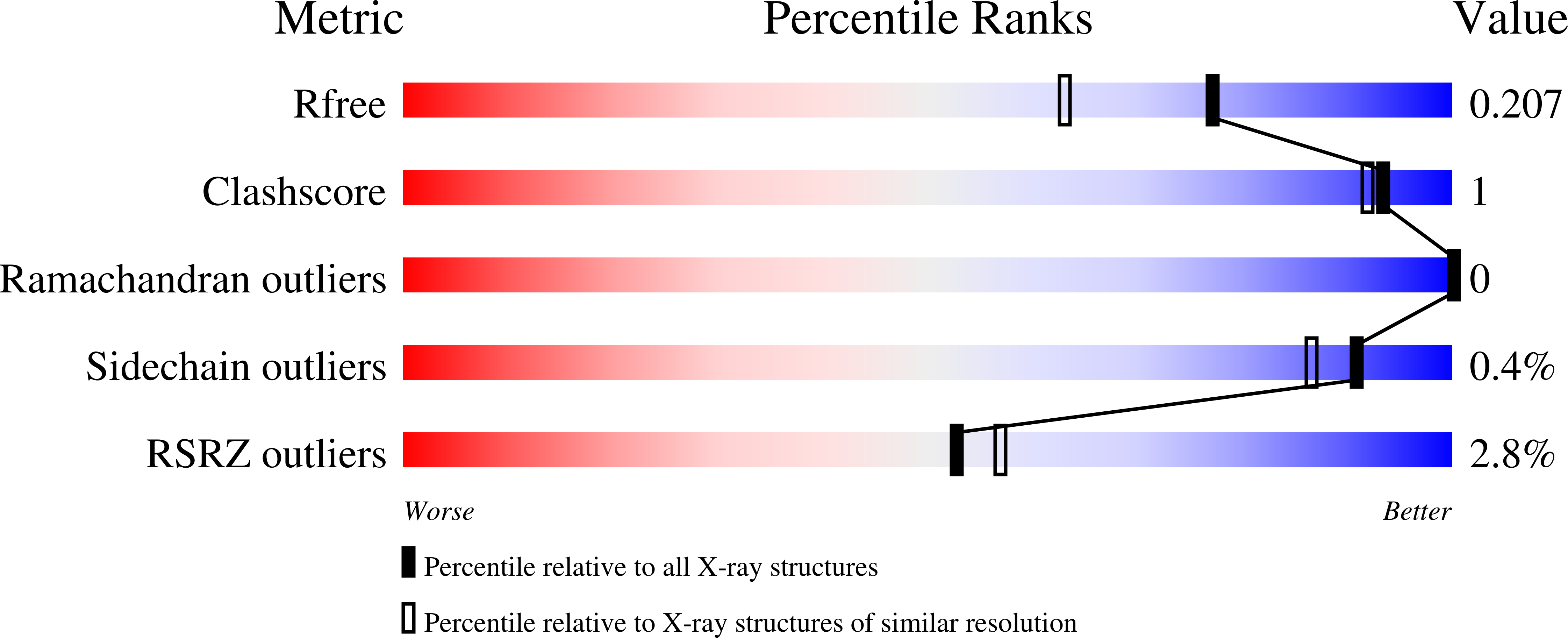
Resolution:
1.71 Å
R-Value Free:
0.20
R-Value Work:
0.17
R-Value Observed:
0.17
Space Group:
P 32 2 1
Macromolecular Entities
Structures with similar UniProt ID
Protein Blast
Polymer Type:polypeptide(L)
Molecule:Endolysin
Gene (Uniprot):rrrD
Chain IDs:A (auth: B), B (auth: A)
Chain Length:160
Number of Molecules:2
Biological Source:Escherichia coli O157 typing phage 15
Ligand Molecules
Primary Citation
The Molecular Basis for Escherichia coli O157:H7 Phage FAHEc1 Endolysin Function and Protein Engineering to Increase Thermal Stability.
Viruses 13 ? ? (2021)
PMID: 34207694 DOI: 10.3390/v13061101

Abstact

Bacteriophage-encoded endolysins have been identified as antibacterial candidates. However, the development of endolysins as mainstream antibacterial agents first requires a comprehensive biochemical understanding. This study defines the atomic structure and enzymatic function of Escherichia coli O157:H7 phage FAHEc1 endolysin, LysF1. Bioinformatic analysis suggests this endolysin belongs to the T4 Lysozyme (T4L)-like family of proteins and contains a highly conserved catalytic triad. We then solved the structure of LysF1 with x-ray crystallography to 1.71 Å. LysF1 was confirmed to exist as a monomer in solution by sedimentation velocity experiments. The protein architecture of LysF1 is conserved between T4L and related endolysins. Comparative analysis with related endolysins shows that the spatial orientation of the catalytic triad is conserved, suggesting the catalytic mechanism of peptidoglycan degradation is the same as that of T4L. Differences in the sequence illustrate the role coevolution may have in the evolution of this fold. We also demonstrate that by mutating a single residue within the hydrophobic core, the thermal stability of LysF1 can be increased by 9.4 °C without compromising enzymatic activity. Overall, the characterization of LysF1 provides further insight into the T4L-like class of endolysins. Our study will help advance the development of related endolysins as antibacterial agents, as rational engineering will rely on understanding mutable positions within this protein fold.

Legend

Protein

Chemical

Disease

Primary Citation of related structures
Feedback Form
Name
Email
Institute
Feedback