7M0S image
Deposition Date 2021-03-11
Release Date 2021-11-03
Last Version Date 2023-10-18
Entry Detail
PDB ID:
7M0S
Keywords:
Title:
N-terminal domain of PmrA from Acinetobacter baumannii
Biological Source:
Source Organism(s):
Expression System(s):
Method Details:
Experimental Method:
Resolution:
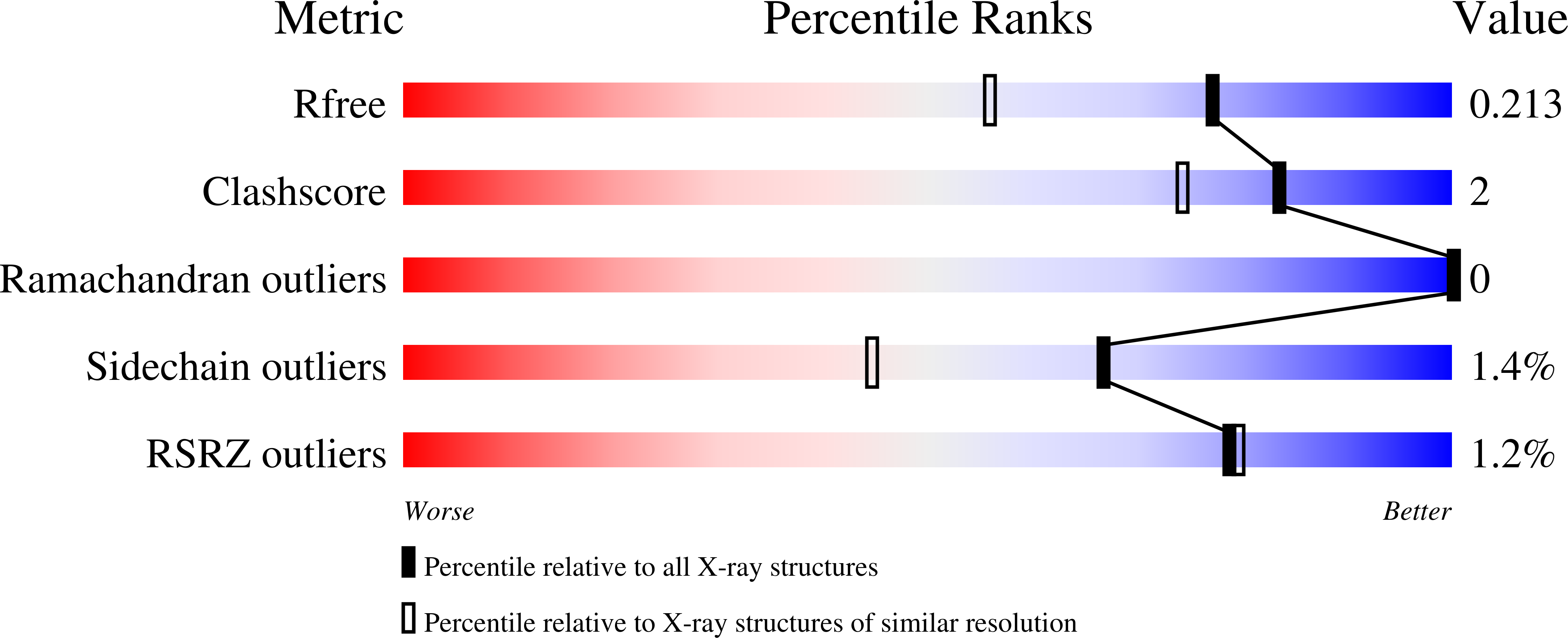
1.64 Å
R-Value Free:
0.21
R-Value Work:
0.17
R-Value Observed:
0.17
Space Group:
P 1 21 1
Macromolecular Entities
Structures with similar UniProt ID
Protein Blast
Polymer Type:polypeptide(L)
Molecule:Two-component system response regulator PmrA
Chain IDs:A, B
Chain Length:127
Number of Molecules:2
Biological Source:Acinetobacter baumannii
Primary Citation
Structure of the Acinetobacter baumannii PmrA receiver domain and insights into clinical mutants affecting DNA binding and promoting colistin resistance.
J.Biochem. 170 787 800 (2022)
PMID: 34585233 DOI: 10.1093/jb/mvab102

Abstact

Acinetobacter baumannii is an insidious emerging nosocomial pathogen that has developed resistance to all available antimicrobials, including the last resort antibiotic, colistin. Colistin resistance often occurs due to mutations in the PmrAB two-component regulatory system. To better understand the regulatory mechanisms contributing to colistin resistance, we have biochemically characterized the A. baumannii PmrA response regulator. Initial DNA-binding analysis shows that A. baumannii PmrA bound to the Klebsiella pneumoniae PmrA box motif. This prompted analysis of the putative A. baumannii PmrAB regulon that indicated that the A. baumannii PmrA consensus box is 5'-HTTAAD N5 HTTAAD. Additionally, we provide the first structural information for the A. baumannii PmrA N-terminal domain through X-ray crystallography and we present a full-length model using molecular modelling. From these studies, we were able to infer the effects of two critical PmrA mutations, PmrA::I13M and PmrA::P102R, both of which confer increased colistin resistance. Based on these data, we suggest structural and dynamic reasons for how these mutations can affect PmrA function and hence encourage resistive traits. Understanding these mechanisms will aid in the development of new targeted antimicrobial therapies. Graphical Abstract.

Legend

Protein

Chemical

Disease

Primary Citation of related structures
Feedback Form
Name
Email
Institute
Feedback