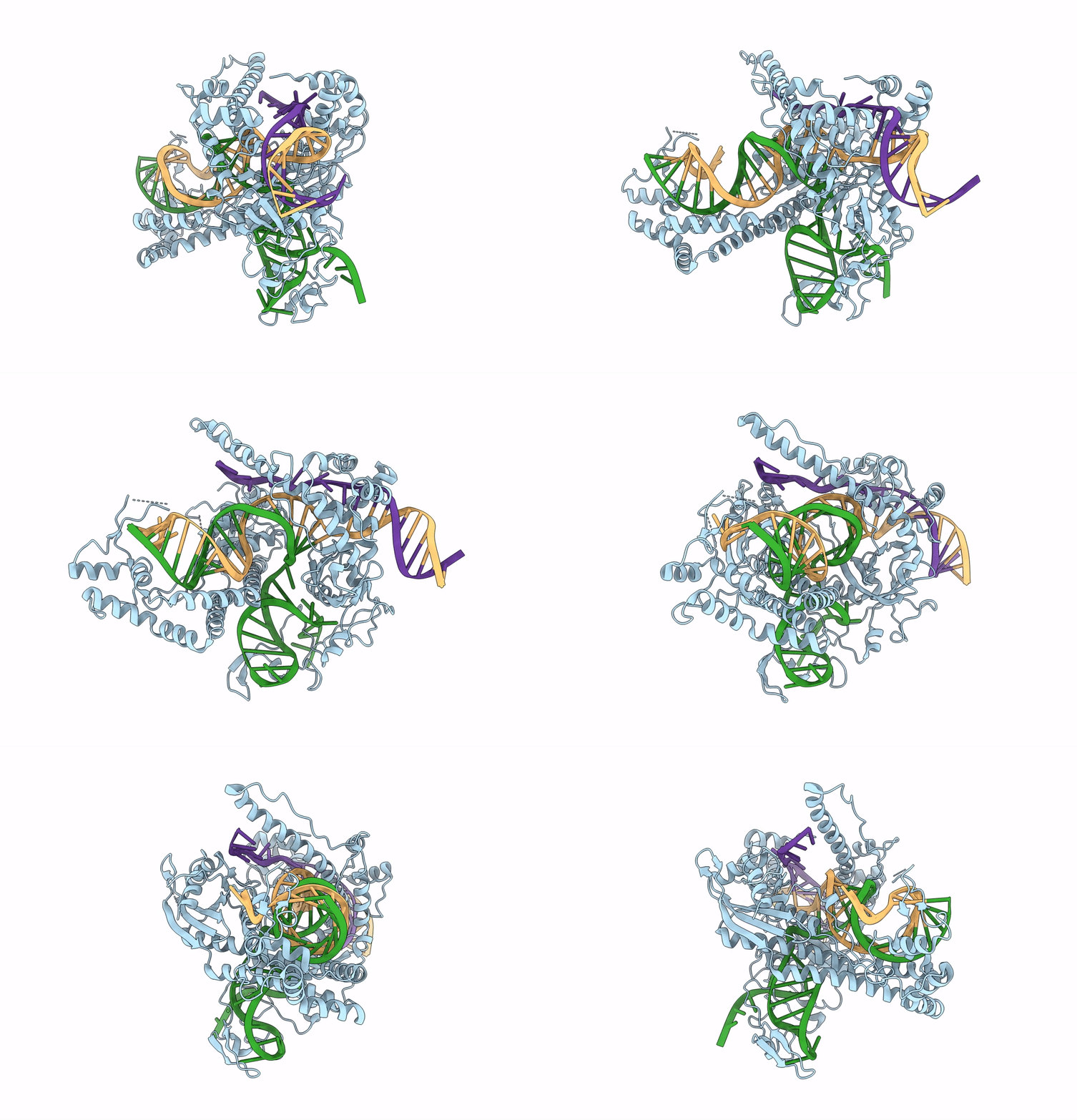
7LYS image
Deposition Date 2021-03-08
Release Date 2021-08-04
Last Version Date 2024-05-29
Entry Detail
PDB ID:
7LYS
Title:
Cryo-EM structure of CasPhi-2 (Cas12j) bound to crRNA and DNA
Biological Source:
Source Organism:
Biggievirus Mos11 (Taxon ID: 1925777)
Phage #D (Taxon ID: 77920)
Method Details:
Experimental Method:
Resolution:
3.05 Å
Aggregation State:
PARTICLE
Reconstruction Method:
SINGLE PARTICLE
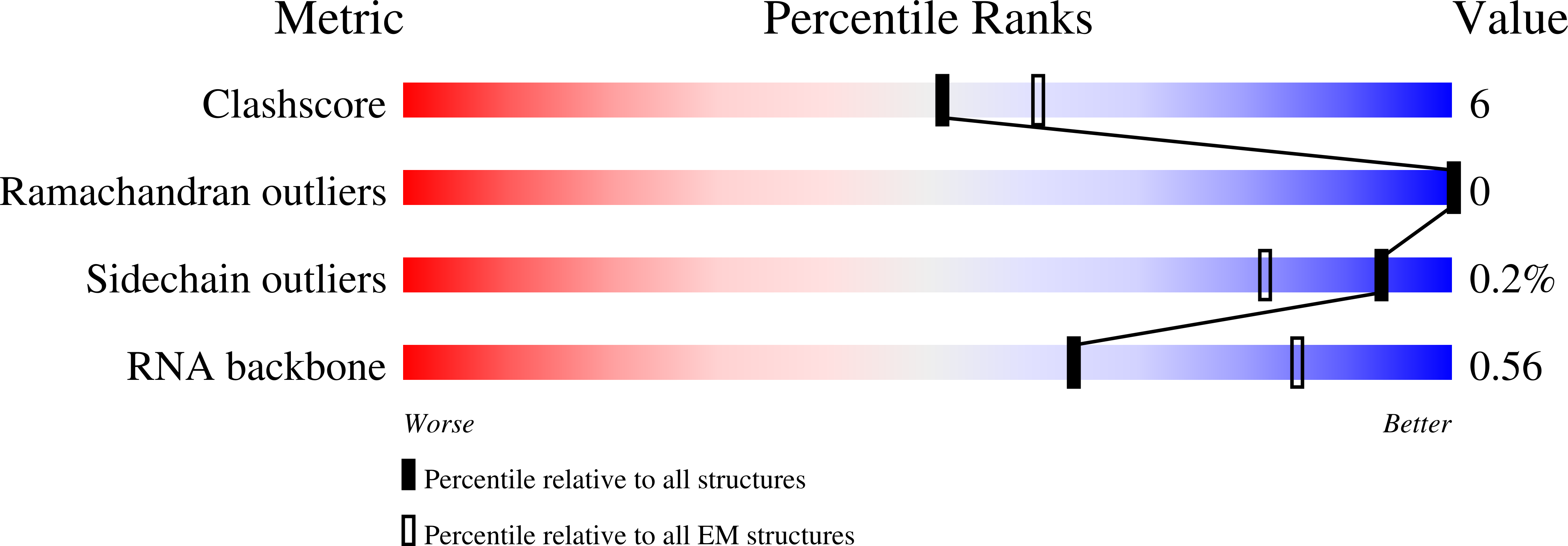
Macromolecular Entities
Polymer Type:polypeptide(L)
Molecule:CasPhi-2
Chain IDs:A
Chain Length:763
Number of Molecules:1
Biological Source:Biggievirus Mos11
Polymer Type:polyribonucleotide
Molecule:crRNA
Chain IDs:B
Chain Length:45
Number of Molecules:1
Biological Source:Phage #D
Polymer Type:polydeoxyribonucleotide
Molecule:TS-DNA
Chain IDs:C
Chain Length:39
Number of Molecules:1
Biological Source:Phage #D
Polymer Type:polydeoxyribonucleotide
Molecule:NTS-DNA
Chain IDs:D
Chain Length:39
Number of Molecules:1
Biological Source:Phage #D
Ligand Molecules
Primary Citation
DNA interference states of the hypercompact CRISPR-Cas Phi effector.
Nat.Struct.Mol.Biol. 28 652 661 (2021)
PMID: 34381246 DOI: 10.1038/s41594-021-00632-3

Abstact

CRISPR-CasΦ, a small RNA-guided enzyme found uniquely in bacteriophages, achieves programmable DNA cutting as well as genome editing. To investigate how the hypercompact enzyme recognizes and cleaves double-stranded DNA, we determined cryo-EM structures of CasΦ (Cas12j) in pre- and post-DNA-binding states. The structures reveal a streamlined protein architecture that tightly encircles the CRISPR RNA and DNA target to capture, unwind and cleave DNA. Comparison of the pre- and post-DNA-binding states reveals how the protein rearranges for DNA cleavage upon target recognition. On the basis of these structures, we created and tested mutant forms of CasΦ that cut DNA up to 20-fold faster relative to wild type, showing how this system may be naturally attenuated to improve the fidelity of DNA interference. The structural and mechanistic insights into how CasΦ binds and cleaves DNA should allow for protein engineering for both in vitro diagnostics and genome editing.

Legend

Protein

Chemical

Disease

Primary Citation of related structures
Feedback Form
Name
Email
Institute
Feedback