7LXK image
Deposition Date 2021-03-03
Release Date 2022-03-09
Last Version Date 2024-10-23
Entry Detail
PDB ID:
7LXK
Keywords:
Title:
Ara h 1 leader sequence, Ara h 1.0101 (25-83) A25G
Biological Source:
Source Organism:
Host Organism:
Method Details:
Experimental Method:
Conformers Calculated:
20
Conformers Submitted:
20
Selection Criteria:
structures with the lowest energy
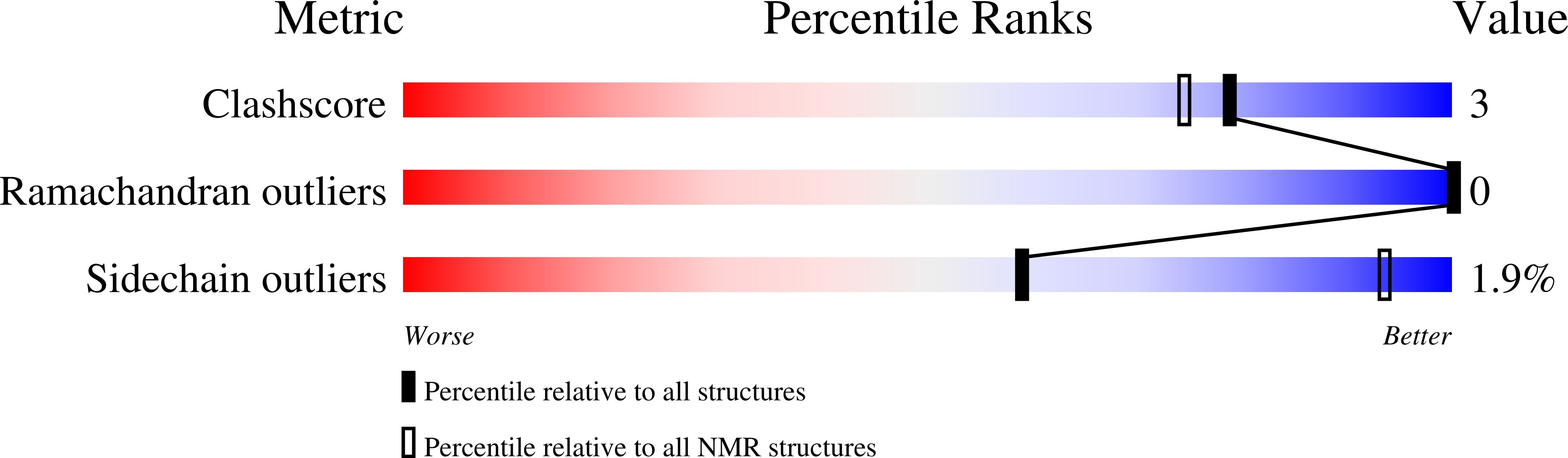
Macromolecular Entities
Structures with similar UniProt ID
Protein Blast
Polymer Type:polypeptide(L)
Molecule:Allergen Ara h 1, clone P41B
Mutagens:A25G
Chain IDs:A
Chain Length:59
Number of Molecules:1
Biological Source:Arachis hypogaea
Ligand Molecules
Primary Citation
Structure, Immunogenicity, and IgE Cross-Reactivity among Walnut and Peanut Vicilin-Buried Peptides.
J.Agric.Food Chem. 70 2389 2400 (2022)
PMID: 35139305 DOI: 10.1021/acs.jafc.1c07225

Abstact

Vicilin-buried peptides (VBPs) from edible plants are derived from the N-terminal leader sequences (LSs) of seed storage proteins. VBPs are defined by a common α-hairpin fold mediated by conserved CxxxCx(10-14)CxxxC motifs. Here, peanut and walnut VBPs were characterized as potential mediators of both peanut/walnut allergenicity and cross-reactivity despite their low (∼17%) sequence identity. The structures of one peanut (AH1.1) and 3 walnut (JR2.1, JR2.2, JR2.3) VBPs were solved using solution NMR, revealing similar α-hairpin structures stabilized by disulfide bonds with high levels of surface similarity. Peptide microarrays identified several peptide sequences primarily on AH1.1 and JR2.1, which were recognized by peanut-, walnut-, and dual-allergic patient IgE, establishing these peanut and walnut VBPs as potential mediators of allergenicity and cross-reactivity. JR2.2 and JR2.3 displayed extreme resilience against endosomal digestion, potentially hindering epitope generation and likely contributing to their reduced allergic potential.

Legend

Protein

Chemical

Disease

Primary Citation of related structures
Feedback Form
Name
Email
Institute
Feedback