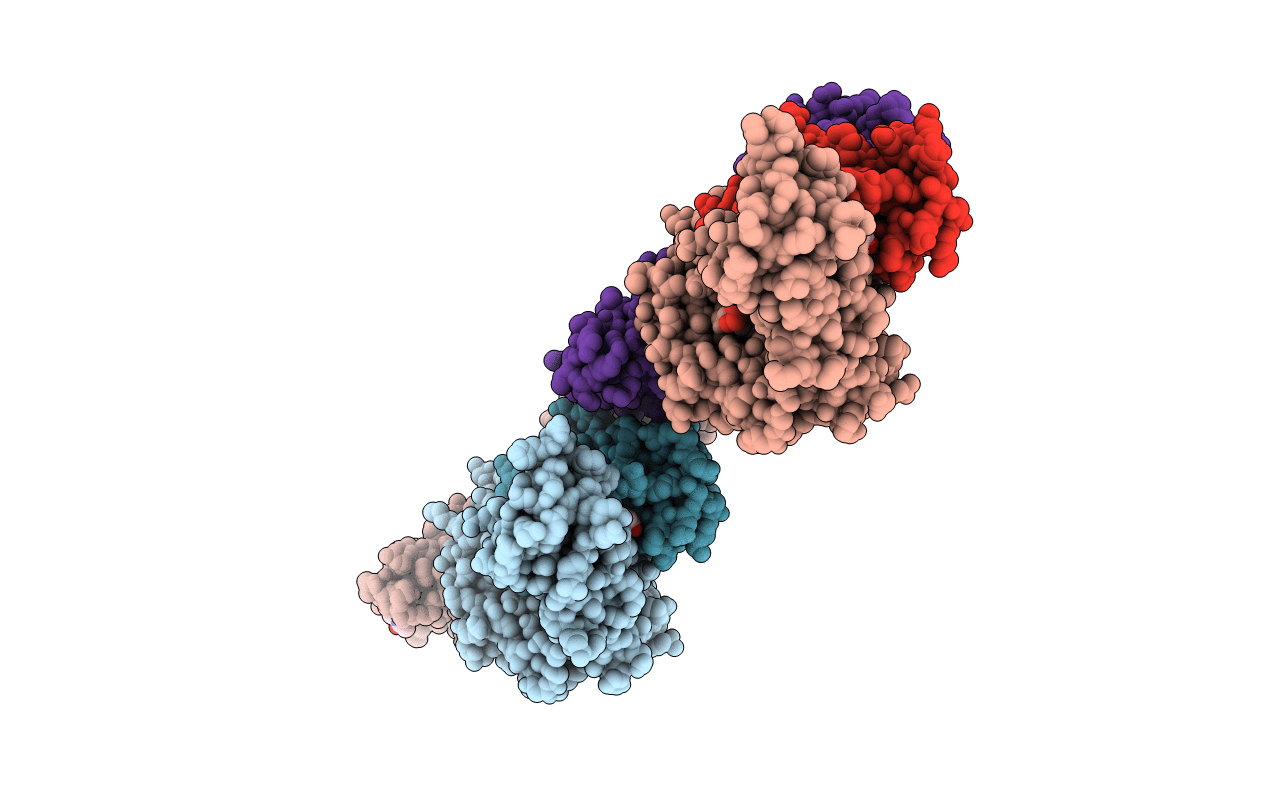
7K80 image
Deposition Date 2020-09-24
Release Date 2020-12-09
Last Version Date 2024-10-09
Entry Detail
PDB ID:
7K80
Keywords:
Title:
KIR3DL1*001 in complex with HLA-A*24:02 presenting the RYPLTFGW peptide
Biological Source:
Source Organism:
Host Organism:
Method Details:
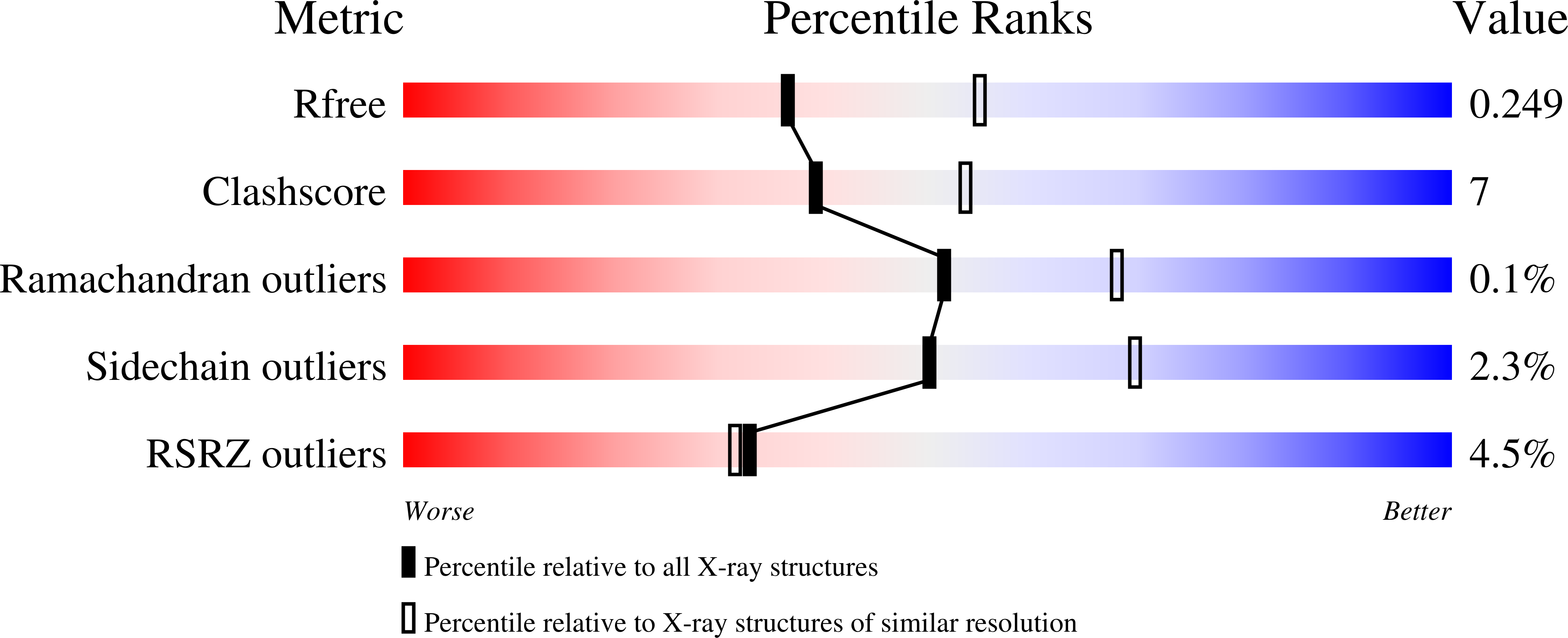
Experimental Method:
Resolution:
2.40 Å
R-Value Free:
0.24
R-Value Work:
0.19
R-Value Observed:
0.20
Space Group:
P 1
Macromolecular Entities
Structures with similar UniProt ID
Protein Blast
Polymer Type:polypeptide(L)
Molecule:MHC class I antigen
Chain IDs:A, D
Chain Length:276
Number of Molecules:2
Biological Source:Homo sapiens
Structures with similar UniProt ID
Protein Blast
Polymer Type:polypeptide(L)
Molecule:Beta-2-microglobulin
Gene (Uniprot):B2M
Chain IDs:B, E
Chain Length:100
Number of Molecules:2
Biological Source:Homo sapiens
Structures with similar UniProt ID
Protein Blast
Polymer Type:polypeptide(L)
Molecule:ARG-TYR-PRO-LEU-THR-PHE-GLY-TRP
Chain IDs:C, F
Chain Length:8
Number of Molecules:2
Biological Source:synthetic construct
Structures with similar UniProt ID
Protein Blast
Polymer Type:polypeptide(L)
Molecule:Killer cell immunoglobulin-like receptor 3DL1
Gene (Uniprot):KIR3DL1
Chain IDs:G, H
Chain Length:299
Number of Molecules:2
Biological Source:Homo sapiens
Primary Citation
The Role of the HLA Class I alpha 2 Helix in Determining Ligand Hierarchy for the Killer Cell Ig-like Receptor 3DL1.
J Immunol. 206 849 860 (2021)
PMID: 33441440 DOI: 10.4049/jimmunol.2001109

Abstact

HLA class I molecules that represent ligands for the inhibitory killer cell Ig-like receptor (KIR) 3DL1 found on NK cells are categorically defined as those HLA-A and HLA-B allotypes containing the Bw4 motif, yet KIR3DL1 demonstrates hierarchical recognition of these HLA-Bw4 ligands. To better understand the molecular basis underpinning differential KIR3DL1 recognition, the HLA-ABw4 family of allotypes were investigated. Transfected human 721.221 cells expressing HLA-A*32:01 strongly inhibited primary human KIR3DL1+ NK cells, whereas HLA-A*24:02 and HLA-A*23:01 displayed intermediate potency and HLA-A*25:01 failed to inhibit activation of KIR3DL1+ NK cells. Structural studies demonstrated that recognition of HLA-A*24:02 by KIR3DL1 used identical contacts as the potent HLA-B*57:01 ligand. Namely, the D1-D2 domains of KIR3DL1 were placed over the α1 helix and α2 helix of the HLA-A*24:02 binding cleft, respectively, whereas the D0 domain contacted the side of the HLA-A*24:02 molecule. Nevertheless, functional analyses showed KIR3DL1 recognition of HLA-A*24:02 was more sensitive to substitutions within the α2 helix of HLA-A*24:02, including residues Ile142 and Lys144 Furthermore, the presence of Thr149 in the α2 helix of HLA-A*25:01 abrogated KIR3DL1+ NK inhibition. Together, these data demonstrate a role for the HLA class I α2 helix in determining the hierarchy of KIR3DL1 ligands. Thus, recognition of HLA class I is dependent on a complex interplay between the peptide repertoire, polymorphisms within and proximal to the Bw4 motif, and the α2 helix. Collectively, the data furthers our understanding of KIR3DL1 ligands and will inform genetic association and immunogenetics studies examining the role of KIR3DL1 in disease settings.

Legend

Protein

Chemical

Disease

Primary Citation of related structures
Feedback Form
Name
Email
Institute
Feedback