7JRL image
Deposition Date 2020-08-12
Release Date 2021-02-03
Last Version Date 2023-10-18
Entry Detail
PDB ID:
7JRL
Title:
The structure of CBM51-2 in complex with GlcNAc and INT domains from Clostridium perfringens ZmpB
Biological Source:
Method Details:
Experimental Method:
Resolution:
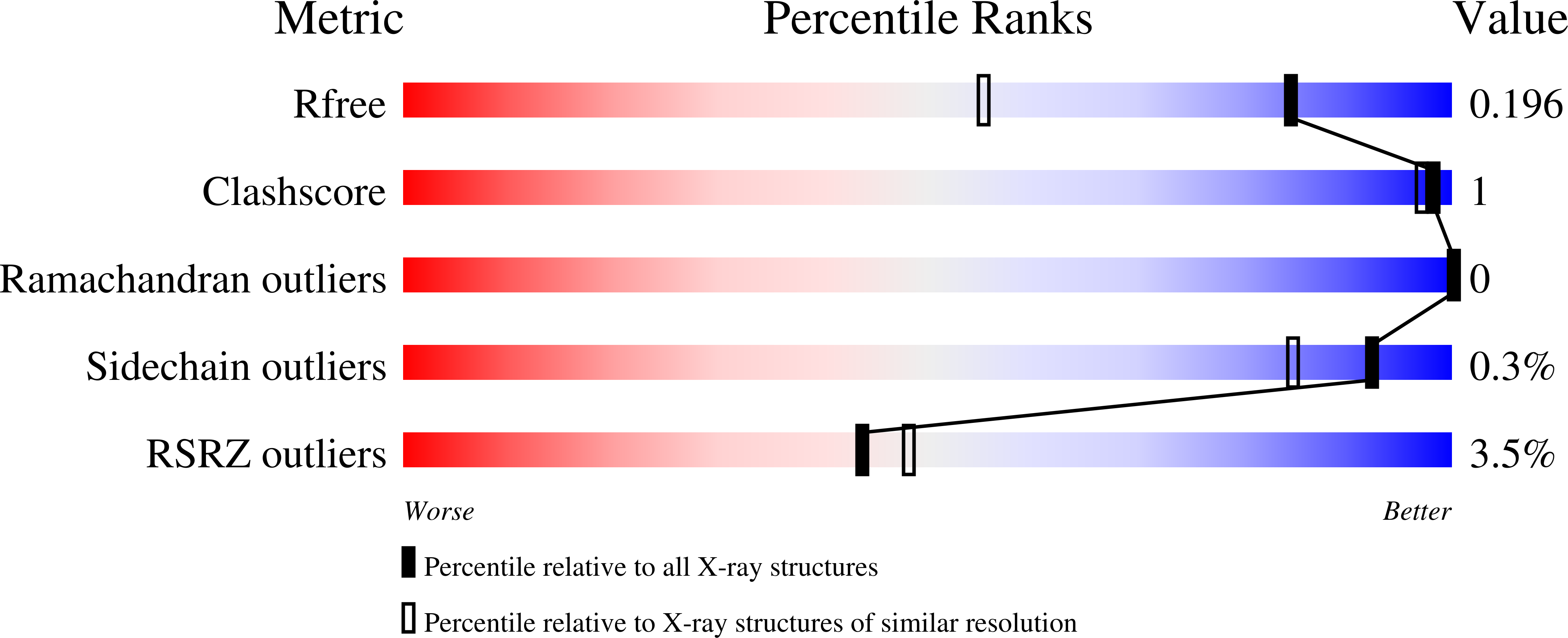
1.50 Å
R-Value Free:
0.19
R-Value Work:
0.18
R-Value Observed:
0.18
Space Group:
C 1 2 1
Macromolecular Entities
Structures with similar UniProt ID
Protein Blast
Polymer Type:polypeptide(L)
Molecule:F5/8 type C domain protein
Gene (Uniprot):CPF_1489
Chain IDs:A
Chain Length:484
Number of Molecules:1
Biological Source:Clostridium perfringens (strain ATCC 13124 / DSM 756 / JCM 1290 / NCIMB 6125 / NCTC 8237 / Type A)
Primary Citation
Architecturally complex O -glycopeptidases are customized for mucin recognition and hydrolysis.
Proc.Natl.Acad.Sci.USA 118 ? ? (2021)
PMID: 33658366 DOI: 10.1073/pnas.2019220118

Abstact

A challenge faced by peptidases is the recognition of highly diverse substrates. A feature of some peptidase families is the capacity to specifically use post-translationally added glycans present on their protein substrates as a recognition determinant. This is ultimately critical to enabling peptide bond hydrolysis. This class of enzyme is also frequently large and architecturally sophisticated. However, the molecular details underpinning glycan recognition by these O-glycopeptidases, the importance of these interactions, and the functional roles of their ancillary domains remain unclear. Here, using the Clostridium perfringens ZmpA, ZmpB, and ZmpC M60 peptidases as model proteins, we provide structural and functional insight into how these intricate proteins recognize glycans as part of catalytic and noncatalytic substrate recognition. Structural, kinetic, and mutagenic analyses support the key role of glycan recognition within the M60 domain catalytic site, though they point to ZmpA as an apparently inactive enzyme. Wider examination of the Zmp domain content reveals noncatalytic carbohydrate binding as a feature of these proteins. The complete three-dimensional structure of ZmpB provides rare insight into the overall molecular organization of a highly multimodular enzyme and reveals how the interplay of individual domain function may influence biological activity. O-glycopeptidases frequently occur in host-adapted microbes that inhabit or attack mucus layers. Therefore, we anticipate that these results will be fundamental to informing more detailed models of how the glycoproteins that are abundant in mucus are destroyed as part of pathogenic processes or liberated as energy sources during normal commensal lifestyles.

Legend

Protein

Chemical

Disease

Primary Citation of related structures
Feedback Form
Name
Email
Institute
Feedback