7JRH image
Deposition Date 2020-08-12
Release Date 2020-09-09
Last Version Date 2025-04-02
Entry Detail
PDB ID:
7JRH
Keywords:
Title:
X-ray crystal structure of a cyclic peptide containing medin(19-25) and medin(31-37)
Biological Source:
Source Organism:
Homo sapiens (Taxon ID: 9606)
Method Details:
Experimental Method:
Resolution:
1.32 Å
R-Value Free:
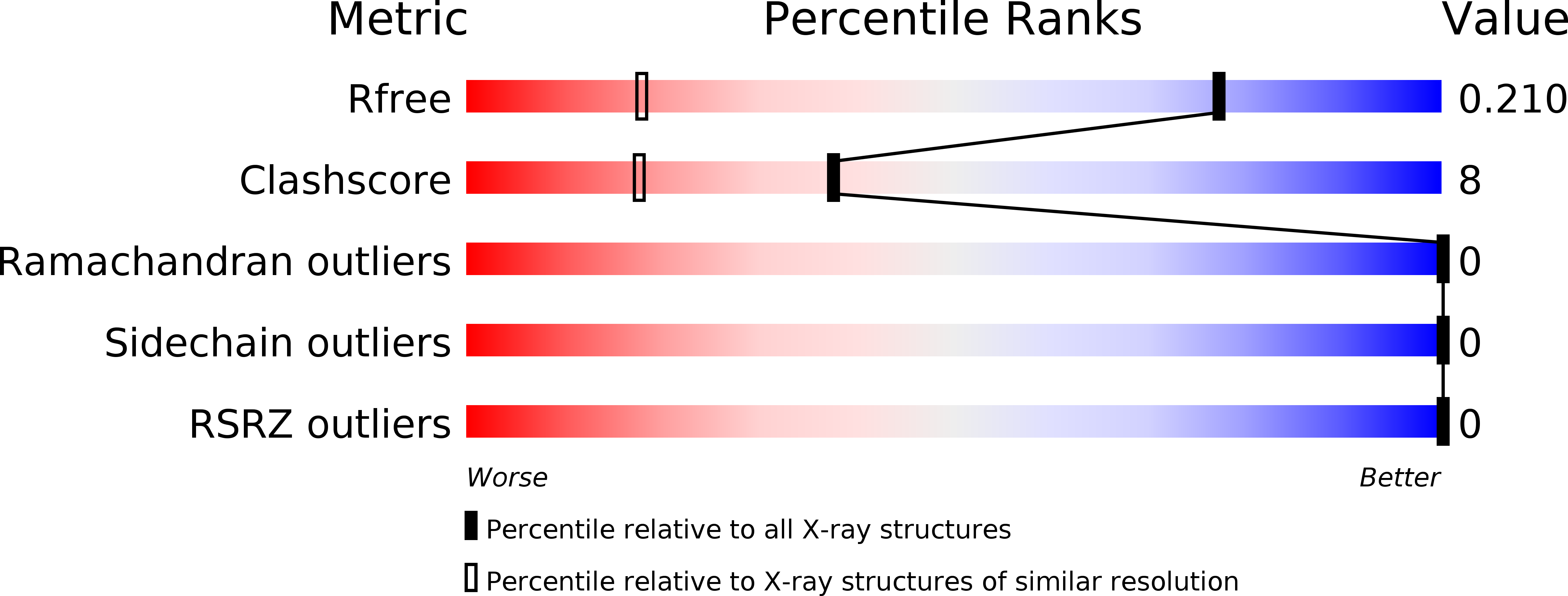
0.21
R-Value Work:
0.17
R-Value Observed:
0.18
Space Group:
I 2 3
Macromolecular Entities
Polymer Type:polypeptide(L)
Molecule:Cyclic peptide ASP-GLN-TRP-MLE-GLN-VAL-ASP-ORD-GLU-VAL-THR-GLY-ILE-ILE-THR-ORD
Chain IDs:A
Chain Length:16
Number of Molecules:1
Biological Source:Homo sapiens
Ligand Molecules
Primary Citation
Interpenetrating Cubes in the X-ray Crystallographic Structure of a Peptide Derived from Medin 19-36 .
J.Am.Chem.Soc. 142 15870 15875 (2020)
PMID: 32816461 DOI: 10.1021/jacs.0c06143

Abstact

Amyloidogenic peptides and proteins are rich sources of supramolecular assemblies. Sequences derived from well-known amyloids, including Aβ, human islet amyloid polypeptide, and tau have been found to assemble as fibrils, nanosheets, ribbons, and nanotubes. The supramolecular assembly of medin, a 50-amino acid peptide that forms fibrillary deposits in aging human vasculature, has not been heavily investigated. In this work, we present an X-ray crystallographic structure of a cyclic β-sheet peptide derived from the 19-36 region of medin that assembles to form interpenetrating cubes. The edge of each cube is composed of a single peptide, and each vertex is occupied by a divalent metal ion. This structure may be considered a metal-organic framework (MOF) containing a large peptide ligand. This work demonstrates that peptides containing Glu or Asp that are preorganized to adopt β-hairpin structures can serve as ligands and assemble with metal ions to form MOFs.

Legend

Protein

Chemical

Disease

Primary Citation of related structures
Feedback Form
Name
Email
Institute
Feedback