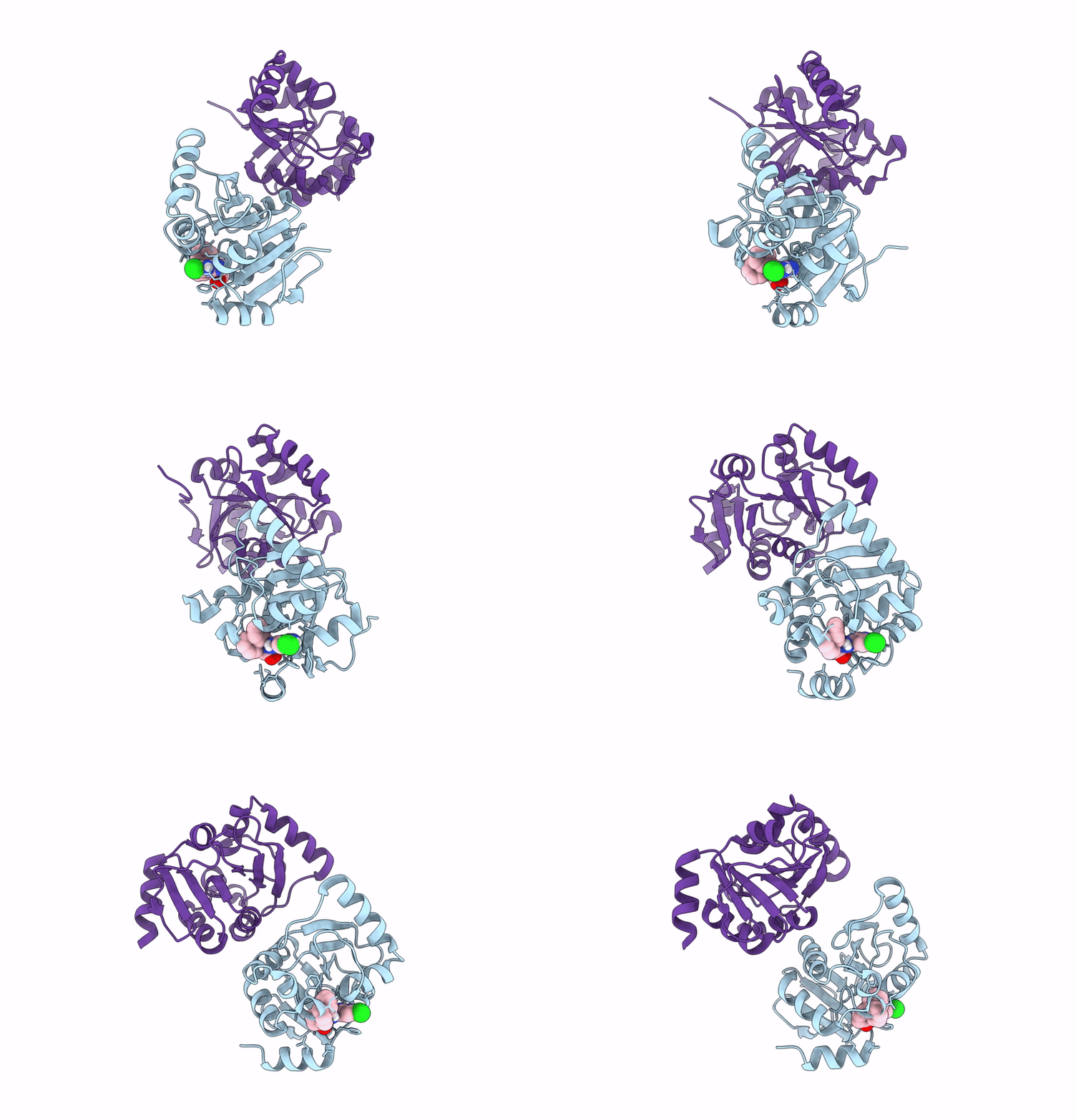
7HI2 image
Deposition Date 2024-09-16
Release Date 2025-08-20
Last Version Date 2025-08-20
Entry Detail
PDB ID:
7HI2
Keywords:
Title:
PanDDA analysis group deposition -- Crystal structure of SARS-CoV-2 NSP3 macrodomain in complex with AVI-0000682
Biological Source:
Method Details:
Experimental Method:
Resolution:
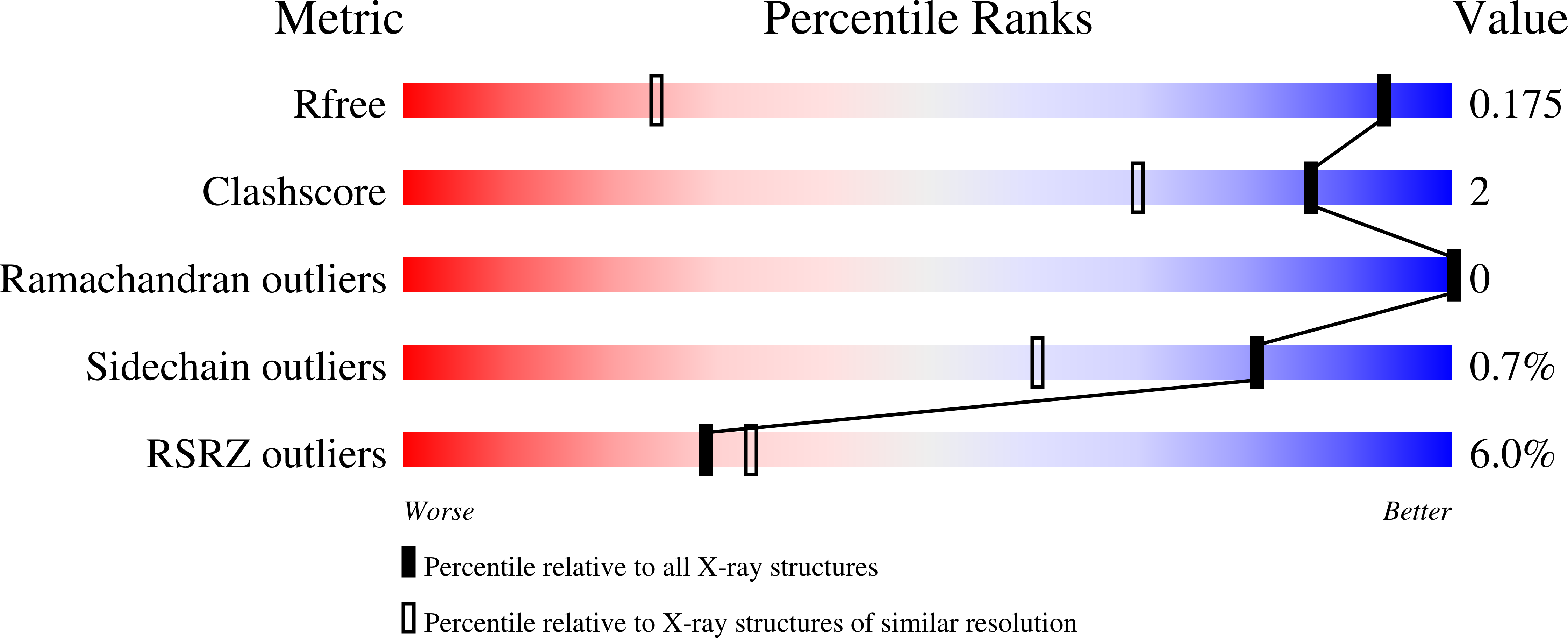
1.03 Å
R-Value Free:
0.17
R-Value Work:
0.15
R-Value Observed:
0.15
Space Group:
P 43
Macromolecular Entities
Structures with similar UniProt ID
Protein Blast
Polymer Type:polypeptide(L)
Molecule:Non-structural protein 3
Gene (Uniprot):rep
Chain IDs:A, B
Chain Length:169
Number of Molecules:2
Biological Source:Severe acute respiratory syndrome coronavirus 2
Ligand Molecules
Primary Citation
Expanding automated multiconformer ligand modeling to macrocycles and fragments.
Elife 14 ? ? (2025)
PMID: 40586518 DOI: 10.7554/eLife.103797

Abstact

Small molecule ligands exhibit a diverse range of conformations in solution. Upon binding to a target protein, this conformational diversity is reduced. However, ligands can retain some degree of conformational flexibility even when bound to a receptor. In the Protein Data Bank, a small number of ligands have been modeled with distinct alternative conformations that are supported by macromolecular X-ray crystallography density maps. However, the vast majority of structural models are fit to a single-ligand conformation, potentially ignoring the underlying conformational heterogeneity present in the sample. We previously developed qFit-ligand to sample diverse ligand conformations and to select a parsimonious ensemble consistent with the density. While this approach indicated that many ligands populate alternative conformations, limitations in our sampling procedures often resulted in non-physical conformations and could not model complex ligands like macrocycles. Here, we introduce several improvements to qFit-ligand, including integrating RDKit for stochastic conformational sampling. This new sampling method greatly enriches low-energy conformations of small molecules and macrocycles. We further extended qFit-ligand to identify alternative conformations in PanDDA-modified density maps from high-throughput X-ray fragment screening experiments, as well as single-particle cryo-electron microscopy density maps. The new version of qFit-ligand improves fit to electron density and reduces torsional strain relative to deposited single-conformer models and our prior version of qFit-ligand. These advances enhance the analysis of residual conformational heterogeneity present in ligand-bound structures, which can provide important insights for the rational design of therapeutic agents.

Legend

Protein

Chemical

Disease

Primary Citation of related structures
Feedback Form
Name
Email
Institute
Feedback