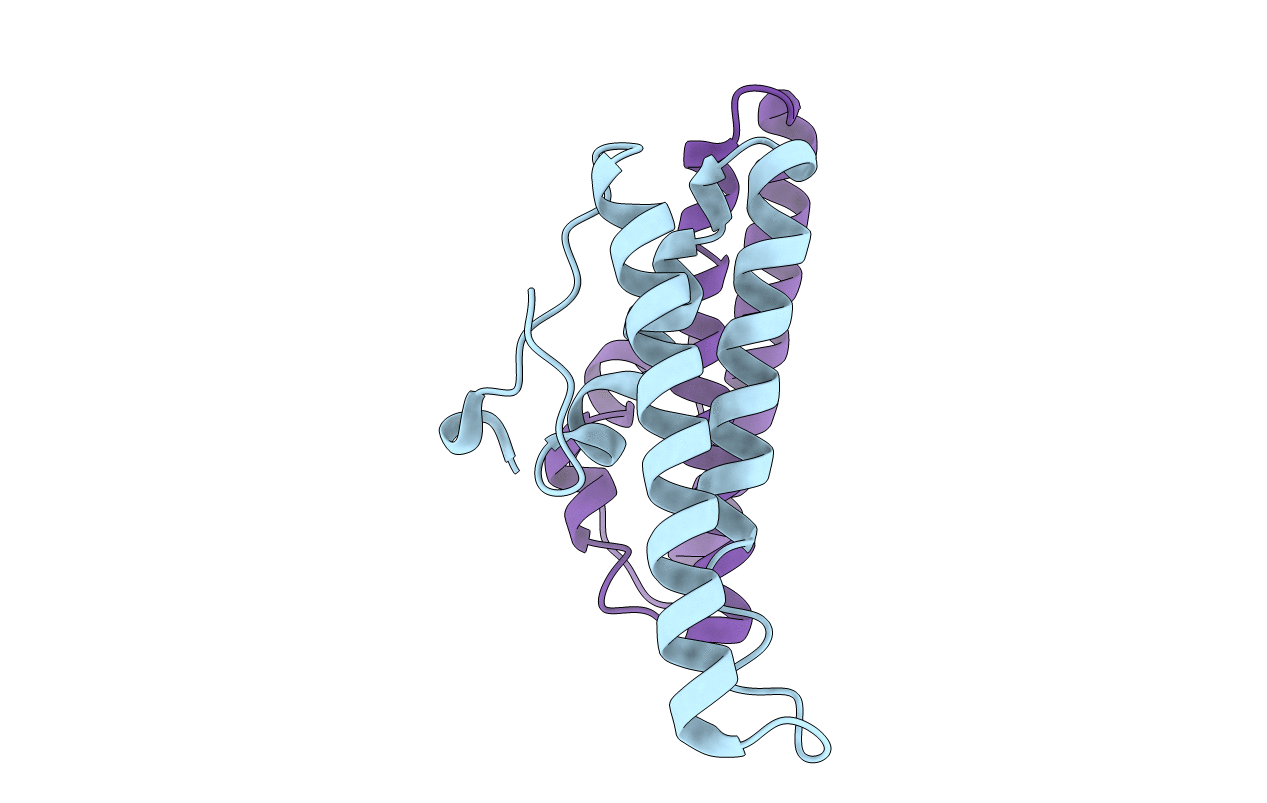
7F7P image
Deposition Date 2021-06-30
Release Date 2022-05-25
Last Version Date 2024-05-29
Entry Detail
PDB ID:
7F7P
Keywords:
Title:
AcrIIC4
Biological Source:
Source Organism:
Host Organism:
Method Details:
Experimental Method:
Resolution:
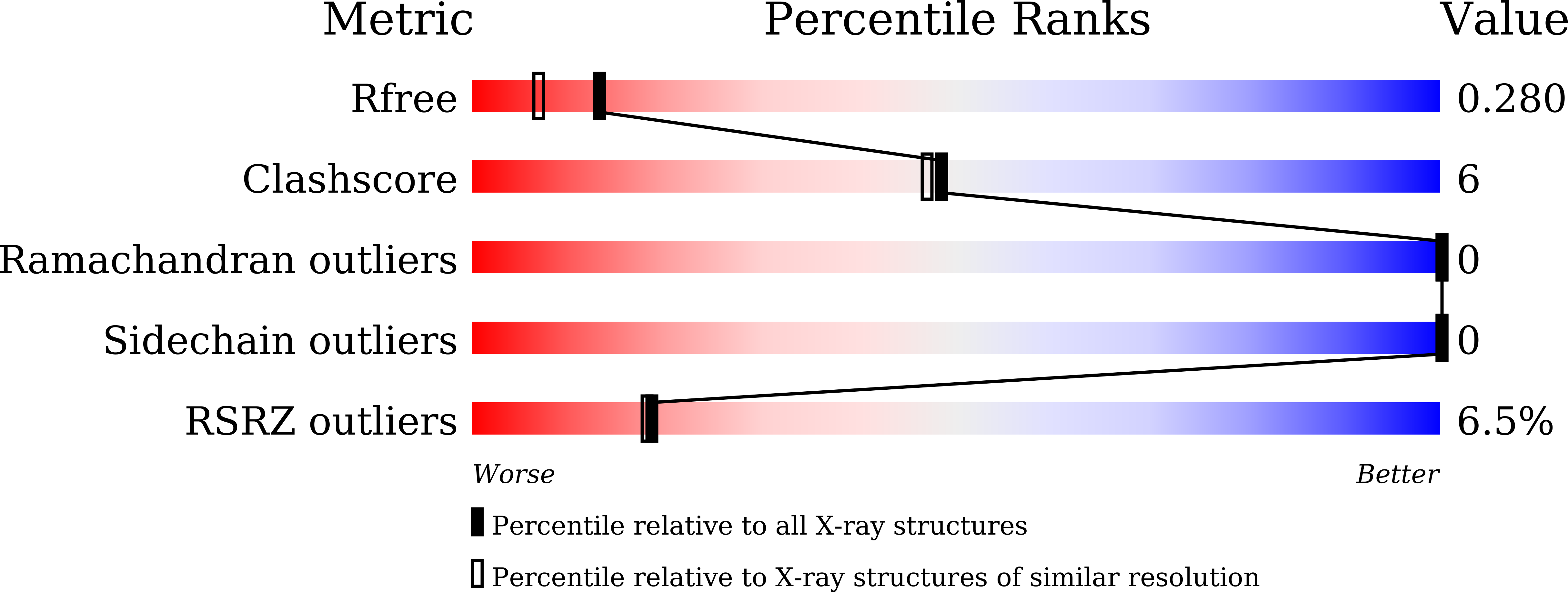
2.03 Å
R-Value Free:
0.27
R-Value Work:
0.22
R-Value Observed:
0.22
Space Group:
P 1 21 1
Macromolecular Entities
Structures with similar UniProt ID
Protein Blast
Polymer Type:polypeptide(L)
Molecule:anti-CRISPR protein AcrIIC4
Gene (Uniprot):NCTC10672_00033, NCTC10672_02354
Chain IDs:A, B
Chain Length:96
Number of Molecules:2
Biological Source:Haemophilus parainfluenzae
Primary Citation
Crystal structure of the anti-CRISPR, AcrIIC4.
Protein Sci. 30 2474 2481 (2021)
PMID: 34676610 DOI: 10.1002/pro.4214

Abstact

Clustered regularly interspaced short palindromic repeats (CRISPRs)-CRISPR-associated protein systems are bacterial and archaeal defense mechanisms against invading elements such as phages and viruses. To overcome these defense systems, phages and viruses have developed inhibitors called anti-CRISPRs (Acrs) that are capable of inhibiting the host CRISPR-Cas system via different mechanisms. Although the inhibitory mechanisms of AcrIIC1, AcrIIC2, and AcrIIC3 have been revealed, the inhibitory mechanisms of AcrIIC4 and AcrIIC5 have not been fully understood and structural data are unavailable. In this study, we elucidated the crystal structure of Type IIC anti-CRISPR protein, AcrIIC4. Our structural analysis revealed that AcrIIC4 exhibited a helical bundle fold comprising four helixes. Further biochemical and biophysical analyses showed that AcrIIC4 formed a monomer in solution, and monomeric AcrIIC4 directly interacted with Cas9 and Cas9/sgRNA complex. Discovery of the structure of AcrIIC4 and their interaction mode on Cas9 will help us elucidate the diversity in the inhibitory mechanisms of the Acr protein family.

Legend

Protein

Chemical

Disease

Primary Citation of related structures
Feedback Form
Name
Email
Institute
Feedback