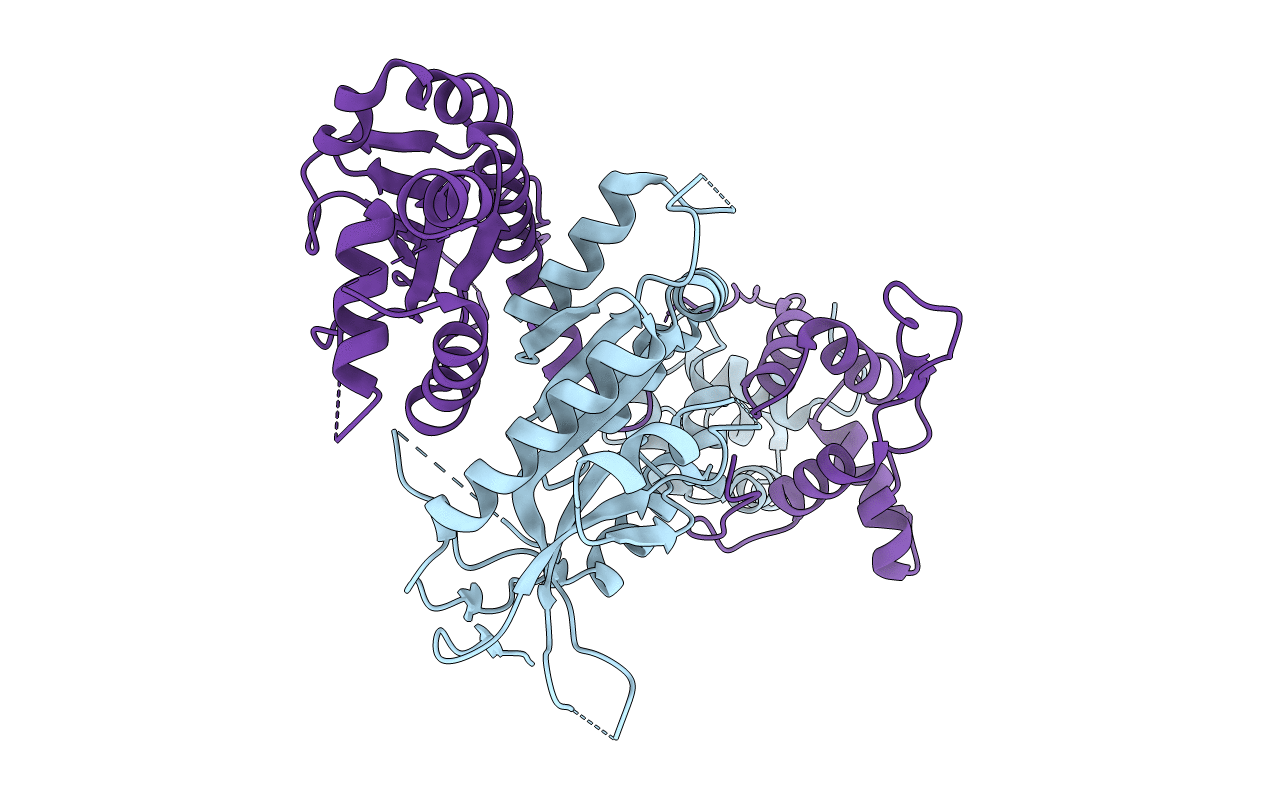
7F6L image
Deposition Date 2021-06-25
Release Date 2022-03-02
Last Version Date 2023-11-29
Entry Detail
PDB ID:
7F6L
Title:
Crystal structure of human MUS81-EME2 complex
Biological Source:
Source Organism(s):
Homo sapiens (Taxon ID: 9606)
Expression System(s):
Method Details:
Experimental Method:
Resolution:
3.20 Å
R-Value Free:
0.28
R-Value Work:
0.22
Space Group:
P 41
Macromolecular Entities
Structures with similar UniProt ID
Protein Blast
Polymer Type:polypeptide(L)
Molecule:Crossover junction endonuclease MUS81
Gene (Uniprot):MUS81
Chain IDs:A
Chain Length:306
Number of Molecules:1
Biological Source:Homo sapiens
Structures with similar UniProt ID
Protein Blast
Polymer Type:polypeptide(L)
Molecule:Probable crossover junction endonuclease EME2
Gene (Uniprot):EME2
Chain IDs:B
Chain Length:379
Number of Molecules:1
Biological Source:Homo sapiens
Ligand Molecules
Primary Citation
Crystal structure of the human MUS81-EME2 complex.
Structure 30 743 752.e3 (2022)
PMID: 35290797 DOI: 10.1016/j.str.2022.02.015

Abstact

MUS81 is an important structure-specific endonuclease responsible for the processing of stalled replication forks and recombination intermediates. In human, MUS81 functions by forming complexes with its regulatory subunits EME1 and EME2, playing distinct roles in G2/M and S phases. Although the structures of MUS81-EME1 have been intensively studied, there is no structure information available about MUS81-EME2. Here, we report the crystal structure of MUS81-EME2, which reveals an overall protein fold similar to that of MUS81-EME1 complex. Further biochemical and structural characterization shows that the MUS81-EME1 and MUS81-EME2 complexes are identical in substrate recognition and endonuclease activities in vitro, implying that the distinct cellular roles of the two complexes could arise from temporal controls in cells. Finally, an extensive structure-guided mutagenesis analysis provides implications for the molecular basis of how the MUS81-EME endonucleases recognize various DNA substrates in a structure-selective manner.

Legend

Protein

Chemical

Disease

Primary Citation of related structures
Feedback Form
Name
Email
Institute
Feedback