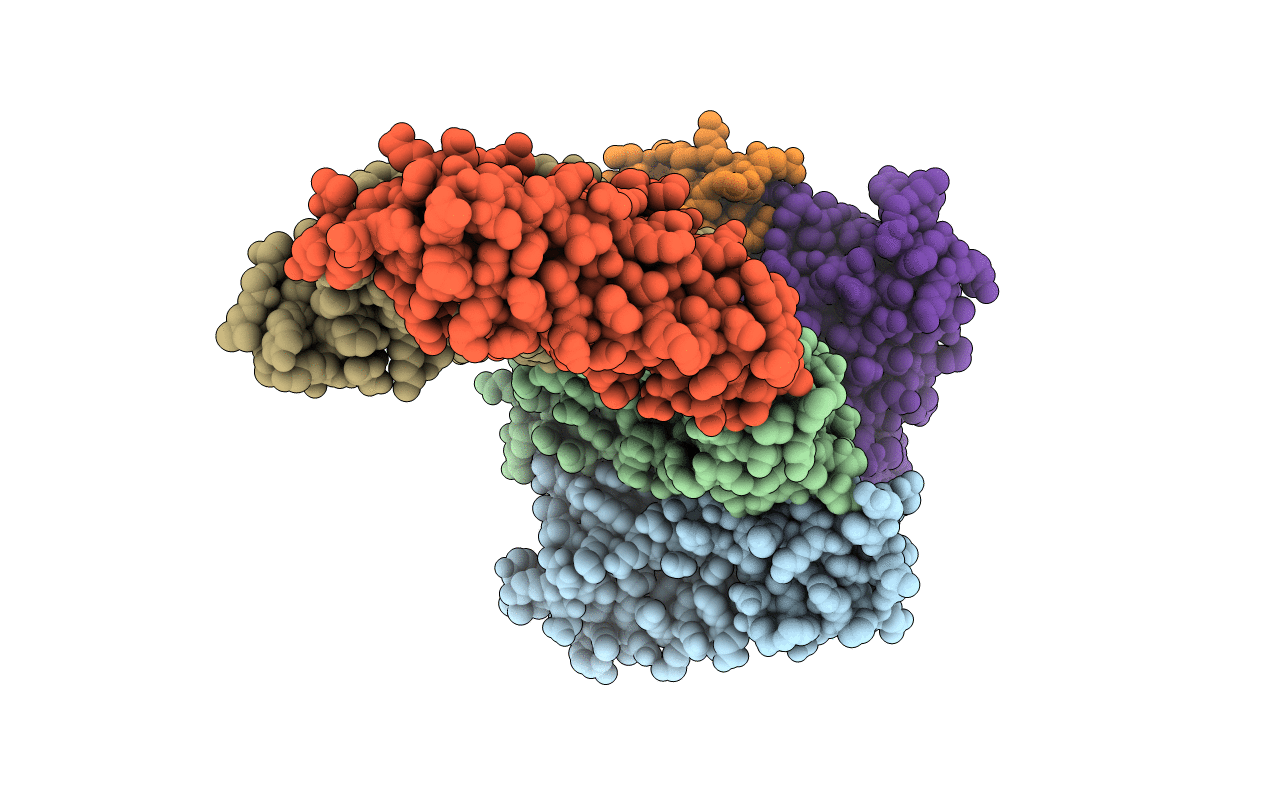
7EK4 image
Deposition Date 2021-04-03
Release Date 2021-12-29
Last Version Date 2023-11-29
Entry Detail
PDB ID:
7EK4
Title:
prawn ferritin to coordinate with heavy metal ions
Biological Source:
Source Organism:
Method Details:
Experimental Method:
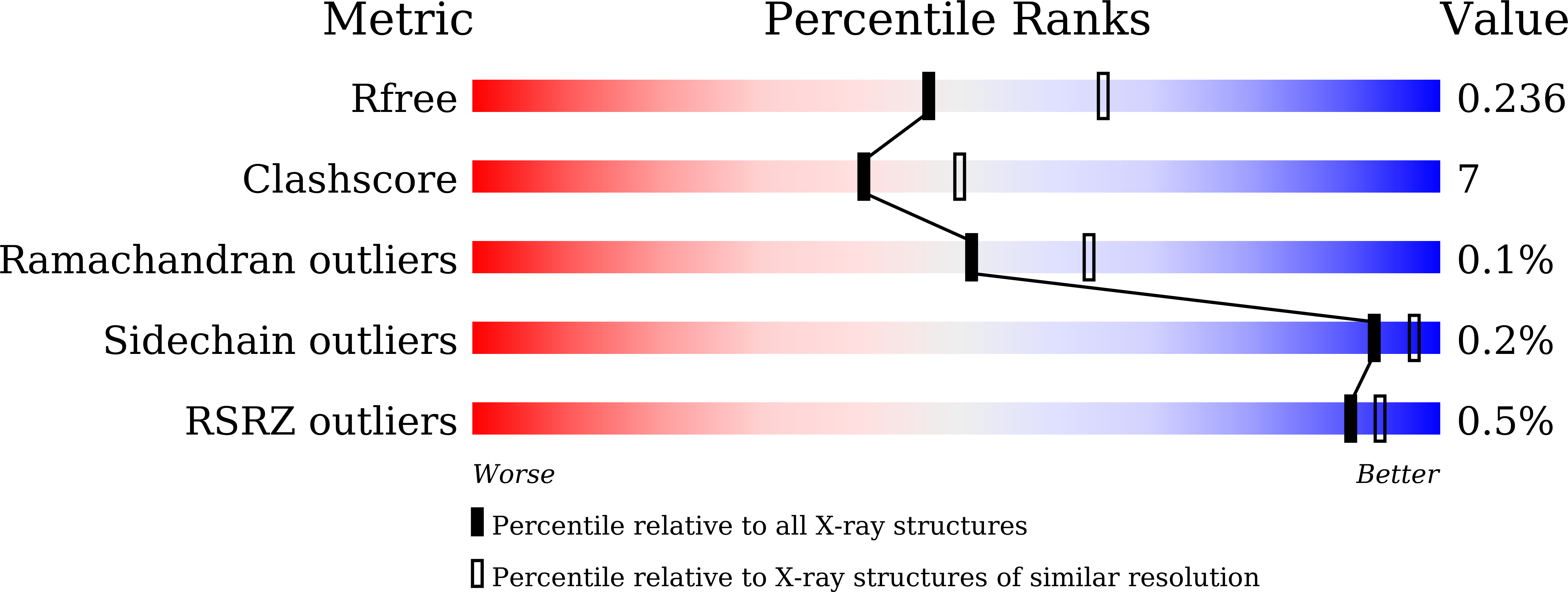
Resolution:
2.30 Å
R-Value Free:
0.23
R-Value Work:
0.19
R-Value Observed:
0.19
Space Group:
I 4
Macromolecular Entities
Structures with similar UniProt ID
Protein Blast
Polymer Type:polypeptide(L)
Molecule:Ferritin
Chain IDs:A, B, C, D, E, F
Chain Length:169
Number of Molecules:6
Biological Source:Marsupenaeus japonicus
Primary Citation
Structural Insights for the Stronger Ability of Shrimp Ferritin to Coordinate with Heavy Metal Ions as Compared to Human H-Chain Ferritin.
Int J Mol Sci 22 ? ? (2021)
PMID: 34360624 DOI: 10.3390/ijms22157859

Abstact

Although apoferritin has been widely utilized as a new class of natural protein nanovehicles for encapsulation and delivery of nutraceuticals, its ability to remove metal heavy ions has yet to be explored. In this study, for the first time, we demonstrated that the ferritin from kuruma prawns (Marsupenaeus japonicus), named MjF, has a pronouncedly larger ability to resist denaturation induced by Cd2+ and Hg2+ as compared to its analogue, human H-chain ferritin (HuHF), despite the fact that these two proteins share a high similarity in protein structure. Treatment of HuHF with Cd2+ or Hg2+ at a metal ion/protein shell ratio of 100/1 resulted in marked protein aggregation, while the MjF solution was kept constantly clear upon treatment with Cd2+ and Hg2+ at different protein shell/metal ion ratios (50/1, 100/1, 250/1, 500/1, 1000/1, and 2500/1). Structural comparison analyses in conjunction with the newly solved crystal structure of the complex of MjF plus Cd2+ or Hg2+ revealed that cysteine (Cys) is a major residue responsible for such binding, and that the large difference in the ability to resist denaturation induced by these two heavy metal ions between MjF and HuHF is mainly derived from the different positions of Cys residues in these two proteins; namely, Cys residues in HuHF are located on the outer surface, while Cys residues from MjF are buried within the protein shell. All of these findings raise the high possibility that prawn ferritin, as a food-derived protein, could be developed into a novel bio-template to remove heavy metal ions from contaminated food systems.

Legend

Protein

Chemical

Disease

Primary Citation of related structures
Feedback Form
Name
Email
Institute
Feedback